What Are Corbels? A Beginner’s Guide
Published August 20, 2026
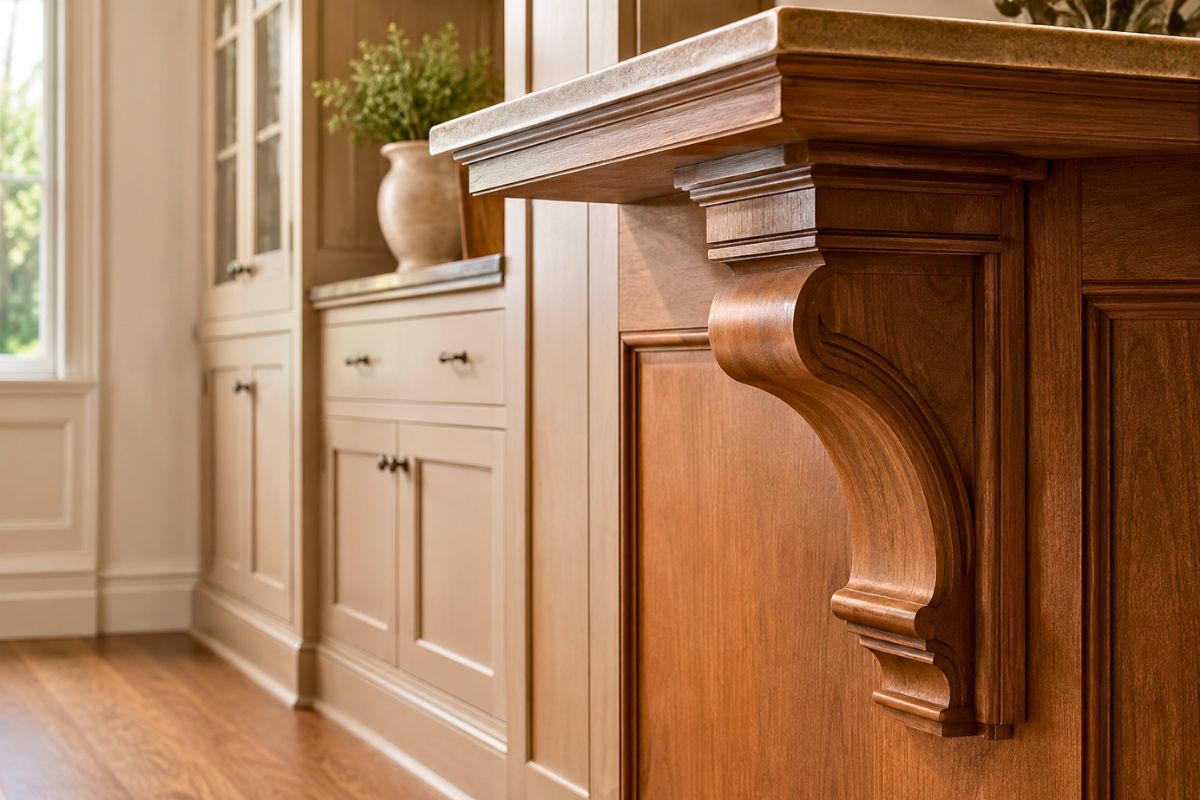
Corbels are bracket-like architectural elements that project from a wall or vertical surface and may provide structural support or serve as a decorative detail. Today, they commonly appear beneath kitchen island overhangs, fireplace mantels, shelves, cabinetry, and other architectural features.
Many homeowners and DIYers recognize the look without knowing the name. Once you know what to look for, you’ll start spotting corbels throughout traditional millwork and home interiors.
One distinction matters when choosing or installing corbels: decorative ones are not automatically load-bearing. If a corbel will support a significant load, confirm its rating and installation requirements first.
What Is a Corbel, Exactly?
A corbel is a bracket that projects from a wall or vertical surface, typically tapering or curving upward to meet and support whatever sits above it. The word comes from the Old French corbel, meaning “raven,” a reference to the way the bracket can jut outward like a bird’s beak.
How Corbels Traditionally Provided Structural Support
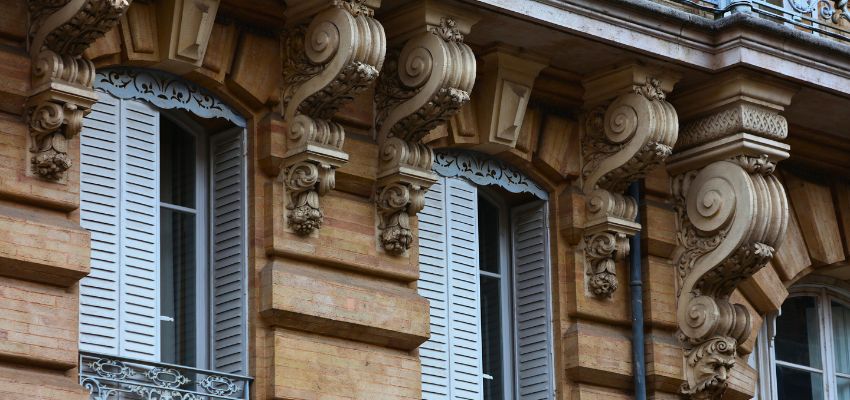
In traditional masonry construction, corbels were used as structural supports. Builders stacked stone or brick in stepped, projecting courses to support arches, balconies, towers, and floor beams. Each corbel transferred weight back into the wall, providing a structural solution without extra framing or visible supports.
Decorative Corbels Vs. Structural Corbels: What’s the Real Difference?
A structural corbel is designed, rated, and installed to carry a specific load. A decorative corbel is intended primarily to add architectural detail and should not be assumed capable of supporting significant weight.
If a corbel will carry a countertop, shelf, mantel, or other heavy element, check the manufacturer’s load rating and installation requirements before purchase or installation. If those specifications are unavailable or unclear, do not assume the product is suitable for structural use; consult a qualified professional instead.
A Brief History of Corbels in Architecture
Corbel-like projecting supports appear in architectural traditions dating back thousands of years, including ancient Egyptian and later European architecture. In structural applications, projecting supports provided a way to extend surfaces outward while transferring loads back toward the supporting wall or structure.
Many early corbels served primarily functional purposes. Gothic builders used projecting stone supports in a range of structural applications, including balconies and other architectural elements. As woodworking and carving techniques developed and decorative traditions evolved during the Renaissance and Baroque periods, craftsmen created increasingly elaborate designs featuring acanthus leaves, scrolls, human figures, and floral motifs.
What Are Corbels Used For in Modern Homes?
- Kitchen islands and countertop overhangs are among the most common applications. A pair of corbels beneath a raised bar counter can give the overhang a finished appearance.
- Fireplace mantels benefit from corbels flanking the mantel shelf. The traditional bracket-style silhouette works particularly well with Craftsman, Colonial, and transitional interiors.
- Shelves and corbel-supported tables can use corbels for structural or decorative purposes, depending on the product and installation. For load-bearing applications, use a corbel specifically rated for the intended load and install it according to the manufacturer’s requirements.
- Cabinetry, range hoods, and doorways are other common placements. Corbels beneath upper cabinets or flanking a range hood add architectural detail while helping the cabinetry connect visually with surrounding millwork.
Popular Styles of Corbels: Which One Fits Your Home?
Corbel styles range from spare and geometric to ornate and sculptural. The right choice depends on both the architecture of the home and the surrounding millwork.
- Traditional and classic corbels feature simple S-curves or ogee profiles. They work well with Colonial, transitional, and farmhouse interiors without becoming overly elaborate.
- Acanthus leaf and carved corbels draw from Greco-Roman motifs. With deeper carving and more ornamentation, they suit formal, Mediterranean-influenced, and traditional spaces.
- Mission and simple-profile corbels use straight lines and restrained ornament. These are a natural fit for Craftsman, Arts and Crafts, and contemporary-traditional homes.
- Baroque and highly decorative corbels are statement pieces with scrolling, layered, and richly detailed profiles. Use them selectively so they function as focal points rather than competing with other architectural details.
How to Choose the Right Corbels for Your Project
Consider the Corbel’s Size and Proportions
A corbel that’s too small can look like an afterthought, while one that’s too large may overwhelm the surface around it. Before choosing a size, measure the available mounting height and depth, the surface the corbel will support or decorate, and the surrounding millwork. For countertop overhangs, also record the overhang depth and consider the countertop material, intended load, corbel capacity, spacing, and installation method.
Choose a Wood Species and Finish to Match your Millwork
Corbels are commonly available in poplar, pine, maple, white oak, and other wood species. Choose based on the desired finish and how closely the corbel needs to match the existing millwork. Unfinished corbels can be stained or painted to coordinate with cabinetry, moulding, trim, and other architectural details. When matching existing woodwork, compare the finish, grain, species, and profile together rather than relying on color alone.
Match the Corbel Style to Your Home’s Architectural Character
A deeply carved Baroque corbel in a minimalist kitchen can feel disconnected from the surrounding millwork. For example, simple Shaker-style cabinets and clean-lined trim generally pair more naturally with a mission or classic-profile corbel than with a heavily ornamented design. Consider the entire room rather than choosing a corbel in isolation.
Decide whether the corbel is decorative or structural before purchasing. For a decorative application, focus on the corbel’s dimensions, profile, material, and finish. For a load-bearing application, confirm the product’s load rating, mounting requirements, and required structural support before purchase. Do not adapt a decorative product for structural use unless it is specifically designed and rated for that application.
How Are Corbels Installed?
Hanging Vs. Structurally Mounting Corbels
Some decorative corbels are designed to hang using a keyhole slot on the back that drops onto a screw in the wall. This method is relatively simple and provides a clean appearance.
Structural corbels require appropriate hardware and a substrate capable of carrying the intended load, such as properly located studs or structural blocking. The hardware and mounting method depend on the design, wall construction, intended load, and how that load is distributed. For stone countertop overhangs or heavy floating shelves, determine the required structural support and hardware before installation rather than relying on the corbel alone to carry the load.
How to Use Corbels Without Overwhelming Your Design
Coordinate Corbels with Surrounding Architectural Details
Corbels work best when their profile relates to the surrounding woodwork. Pair them with crown moulding, baseboards, casing, and other details that share similar lines, proportions, or period influences. A Craftsman-style corbel alongside Craftsman door casing, for example, creates a cohesive look because the two details share similar lines and proportions.
Use corbels selectively. A well-placed pair beneath a mantel shelf or flanking a range hood can create a focal point, while repeating the same detail throughout a room may make the design feel busy.
Frequently Asked Questions
What is the difference between a corbel and a bracket?
The terms can overlap, but traditionally, a corbel is a projecting masonry or wood element that supports a load and transfers it back toward the wall. “Bracket” is a broader term that can describe structural or decorative supports. In residential woodworking, the terms are often used interchangeably.
Can decorative corbels hold weight?
Decorative corbels should not be assumed to support structural loads. They may support light objects when properly mounted, but countertops, heavy shelves, and other significant loads require a corbel specifically rated for the application and installed according to the manufacturer’s requirements.
How many corbels do I need for a countertop overhang?
There’s no universal number. For a small decorative overhang, two corbels may be used for visual balance, but structural support requires sizing and spacing based on the countertop material, overhang depth, intended load, corbel capacity, and installation method. Follow the manufacturer’s support requirements where available, or consult a qualified installer for structural applications.
What wood species are corbels typically made from?
Common choices include poplar, pine, maple, and white oak. Poplar is often chosen for painted finishes, while pine offers an affordable and easy-to-finish option. Maple and white oak are suitable for stained or natural finishes. The best species depends on the desired finish and how closely the corbel needs to match existing millwork.
Are corbels hard to install?
Decorative corbels with keyhole slots are generally straightforward to hang and require only basic tools. Structural installations require more planning, particularly when locating studs or installing blocking. For significant loads, a qualified professional can help determine the appropriate mounting method.
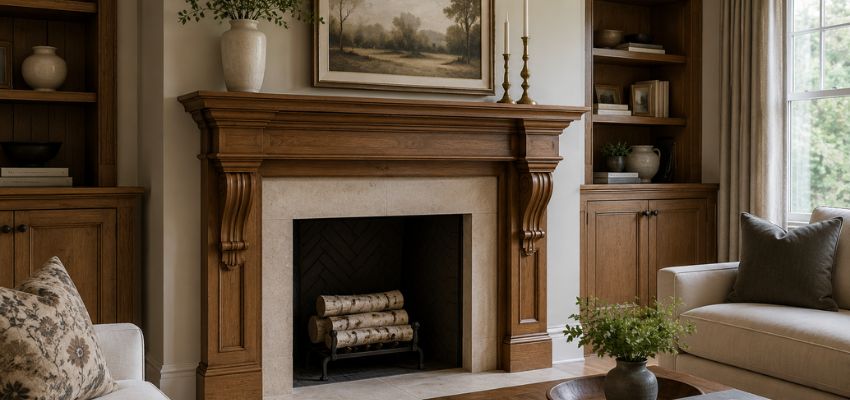
Choosing the Right Corbels for Your Project
The right corbel can add definition beneath a countertop, around a fireplace mantel, or alongside cabinetry while complementing the surrounding millwork.
Before buying, confirm the corbel’s dimensions, material, finish, and intended installation method. If it will carry weight, verify the manufacturer’s load rating and installation requirements rather than relying on appearance.
Looking for materials to complement your corbels? Explore Vintage & Specialty Wood for reclaimed and specialty wood products that can work alongside corbels in cabinetry, mantels, shelving, and other architectural projects.
Hire The Timber Experts For Your Next Project
Vintage & Specialty Wood should be your source of the highest quality timbers from around the world. When it comes to fabricating and installing reclaimed wood or specialty wood products in your home, we don’t cut corners. We offer many reclaimed wood and specialty wood products such as Douglas Fir, white oak, and much more. We also offer timber framing and wood flooring services as well. Contact our team today to speak to a timber expert about what Vintage & Specialty Wood can do for you.

This Blog Is Fact Checked
This content has undergone meticulous fact-checking by our team of internal experts. Gain a deeper understanding of the high editorial standards we uphold on our website here.

About The Author
Hi, I’m Corinne Grace, a nursing graduate from Riverside College who enjoys writing about woodworking. Read as I cover how to choose between hardwoods and softwoods, how stains and finishes perform on different species, and so much more. My goal is to give woodworkers clear, well-researched guides they can use for their next project.