How To Clean a Sticky Wooden Table: Best Methods To Try
Published on June 18, 2026
Ever run your hand over a wooden table only to find it feels tacky, no matter how much you clean it? A sticky wooden table is a common household problem, but it doesn’t mean your furniture is ruined. The issue is usually caused by grease and grime, humidity changes, or a finish that’s starting to break down. Without knowing the cause, it’s easy to grab the wrong cleaner and make the problem worse. If you want to know how to clean a sticky wooden table for good, first identify the source of the stickiness.
In this article, we’ll identify the source of the stickiness, clean your table with finish-safe methods, and remove stubborn residue. We’ll also cover how to care for antique pieces and prevent the problem from returning. Grab a microfiber cloth and restore your table’s smooth, natural feel.
Why Is Your Wooden Table Sticky?
Before cleaning your table, it helps to identify the source of the problem. The stickiness can almost always be traced back to one of these common culprits.
Grease And Food Residue
This is the most common reason for stickiness on kitchen and dining tables. Cooking oils, food splatters, and sugar drink spills build up gradually with everyday use. Because the residue accumulates slowly, you may not notice it until the entire surface feels tacky.
Furniture Polish Buildup
While furniture polish can protect wood, overapplication can cause problems. Wax- and silicone-based polishes can leave behind a thin film if they aren’t buffed away properly. Over time, these layers attract dust and develop a gummy texture.
High Humidity And Moisture
Wood naturally responds to its environment. In high humidity, some finishes absorb moisture from the air, causing them to feel temporarily sticky. The problem often resolves itself once the humidity level drops and conditions inside stabilize.
Worn Or Breaking-Down Finish
Age, sunlight, and heat can cause finishes like varnish, lacquer, and polyurethane to break down over time. If the surface is still tacky after a thorough cleaning, the finish itself has likely started to fail.
Residue From Cleaning Products
Ironically, some cleaning products can cause stickiness. Harsh all-purpose sprays, ammonia-based cleaners, or improperly mixed solutions can react with a table’s finish or leave a residue.
How To Tell What Type of Stickiness You Have
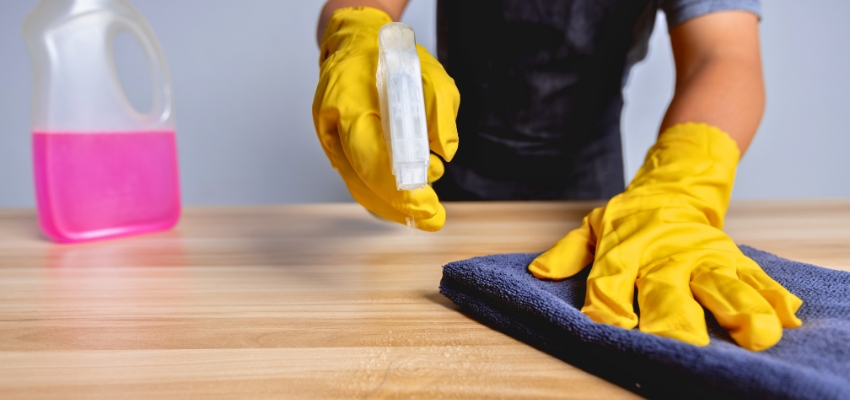
A quick diagnosis will save you time and help protect your table.
- If the stickiness wipes away easily, you’re likely dealing with surface grease or dirt. Mild soap and water should solve it.
- If the tackiness returns shortly after cleaning, the buildup of polish or wax is the likely culprit and may require further treatment.
- If the surface feels permanently gummy, the finish is probably deteriorating, and cleaning alone won’t fix the issue.
- If the table is an antique, proceed cautiously and test any product on an inconspicuous section first, as older finishes can react poorly to certain chemicals.
Cleaning Supplies You’ll Need
You probably have most of these supplies on hand. Gather everything before you begin to make the process smoother.
- Microfiber cloths
- Mild dish soap
- Warm water
- White vinegar
- Sponge or soft cloth
- Dry towel
- Cotton swabs or a soft toothbrush (optional, for tight spots)
Optional Supplies For Tougher Stains
If the first method doesn’t work, you might need stronger cleaning supplies:
- Mineral spirits
- Paste wax
- Protective gloves
Step-by-Step: How To Clean a Sticky Wooden Table
Start with the gentlest cleaning method first, moving on to stronger solutions only if needed. Always wipe following the direction of the wood grain.
Step 1: Remove Dust And Loose Debris
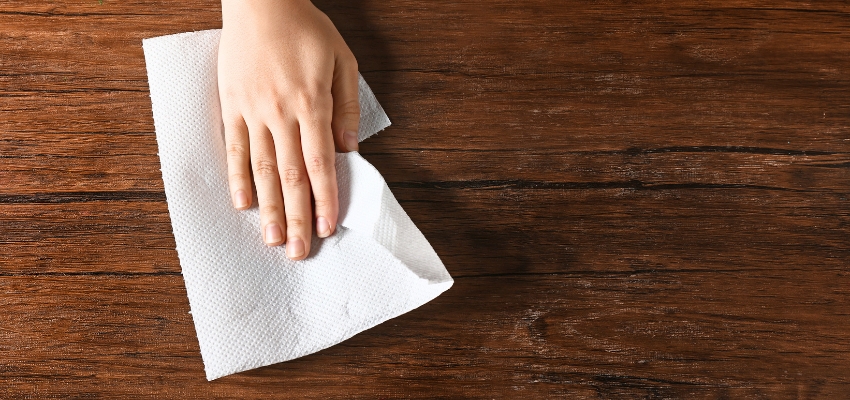
Use a dry microfiber cloth to wipe the entire surface and remove any dust or crumbs. Turn the cloth to a clean section as you go to avoid spreading dirt.
Step 2: Start With Mild Soap And Water
Incorporate a few drops of dish soap into a bowl of warm water. Immerse a soft cloth in the solution, wringing it out until it’s damp but not dripping.
Gently wipe the sticky areas, following the direction of the wood grain. Be careful not to use too much water, as this can damage the wood.
Step 3: Dry The Surface Completely
Immediately dry the table with a clean, dry towel. Any lingering moisture can cause water stains, warping, or even mold growth, so don’t skip this step.
Step 4: Use A Vinegar Solution If Residue Remains
If the surface is still sticky, mix equal parts white vinegar and water. Test the solution by applying it to an obscured spot first to ensure it doesn’t damage the finish.
Apply it sparingly with a damp cloth, following the wood grain.
Wipe the site with a clean, damp cloth, then dry the table immediately and thoroughly.
Step 5: Repeat As Needed
For stubborn buildup, you may need to repeat the cleaning process. Do not scrub aggressively, as this can scratch the finish and cause more damage. A little patience will produce better results.
How To Clean Your Table Based on Its Finish
Different wood finishes react differently to cleaning products. If you’re unsure about your table’s finish, always start with the mildest cleaning method and test it on a hidden spot first.
- Polyurethane finishes. Since polyurethane is a durable finish, it’s generally safe to clean using mild dish soap and water. For more stubborn residue, try a diluted vinegar solution.
- Lacquer finishes. Lacquer requires a gentle touch. Use mild soap and water, and steer clear of acidic or solvent-based cleaners that can damage the coating.
- Shellac finishes. Shellac is sensitive to alcohol and acidic products. Avoid using vinegar, as it can dissolve or cloud the finish.
- Waxed wood furniture. Carefully remove surface buildup with a soft cloth. Avoid acidic cleaners, as they can strip away the protective wax layer.
- Oiled wood finishes. Clean with minimal moisture. If the wood looks dry or dull after cleaning, apply a reconditioning oil made for that finish.
- Antique and unknown finishes. If you’re unsure of the finish, always test cleaning products on an inconspicuous spot first. If you notice a negative reaction, stop and consult a professional.
What if the Table Is Still Sticky After Cleaning?
If the table is still tacky after cleaning, the issue may be more than just everyday grime.
Polish And Wax Buildup
Old layers of polish and wax can become sticky over time. To remove them, dab a small amount of mineral spirits on a clean cloth and carefully massage based on the direction of the wood grain. Wipe away the loosened buildup with a separate cloth.
Before you begin, test the mineral spirits on a concealed spot to ensure it doesn’t damage the finish. Always work in a well-ventilated area and wear protective gloves.
Finish Failure
If a surface remains tacky after repeated cleaning, the finish itself may be failing.
Common signs of finish failure include:
- A finish that never fully cures
- Soft or gummy spots
- Persistent dullness
- An uneven sheen
When the protective coating breaks down, cleaning alone won’t solve the problem.
When Refinishing May Be Necessary
If cleaning doesn’t remove the stickiness, refinishing is the most effective long-term solution. This process involves stripping the damaged coating and applying a new finish to restore the piece’s protection and appearance.
When To Call A Furniture Restoration Professional
Some pieces are best left to an expert. Consider professional restoration for:
- Valuable antiques
- Cherished family heirlooms
- Rare or collectible furniture
- Finish damage that’s too extensive for routine maintenance
How To Safely Clean a Sticky Antique Wood Table
Antique furniture requires special care. The goal is not to make an old piece look new, but to preserve its character while removing the sticky residue.
- Protect the original patina. The soft glow that develops on antique furniture over decades of use, known as patina, is part of its beauty and value. Aggressive cleaning can permanently remove it, so clean only as much as is necessary to preserve its finish.
- Identify older finishes. Many antiques have a shellac finish rather than a modern coating. Shellac reacts poorly with alcohol and acidic cleaners, so identifying the finish before you begin can prevent costly damage.
- Use the least aggressive method first. Start with the gentlest approach, such as a barely damp cloth. Only move on to stronger cleaning solutions if needed. When it comes to antiques, a conservative approach protects both the piece’s surface and its value.
- Start conservatively. Start with the gentlest cleaning method, like a slightly damp microfiber cloth. If that doesn’t work, you can move on to stronger solutions, but only after spot-testing in an inconspicuous area.
- Know when DIY isn’t the best option. If a piece is particularly fragile, valuable, or sentimental, professional restoration is often the safest bet. An experienced restorer can preserve the furniture’s craftsmanship and value.
Products To Avoid When Cleaning a Sticky Wooden Table
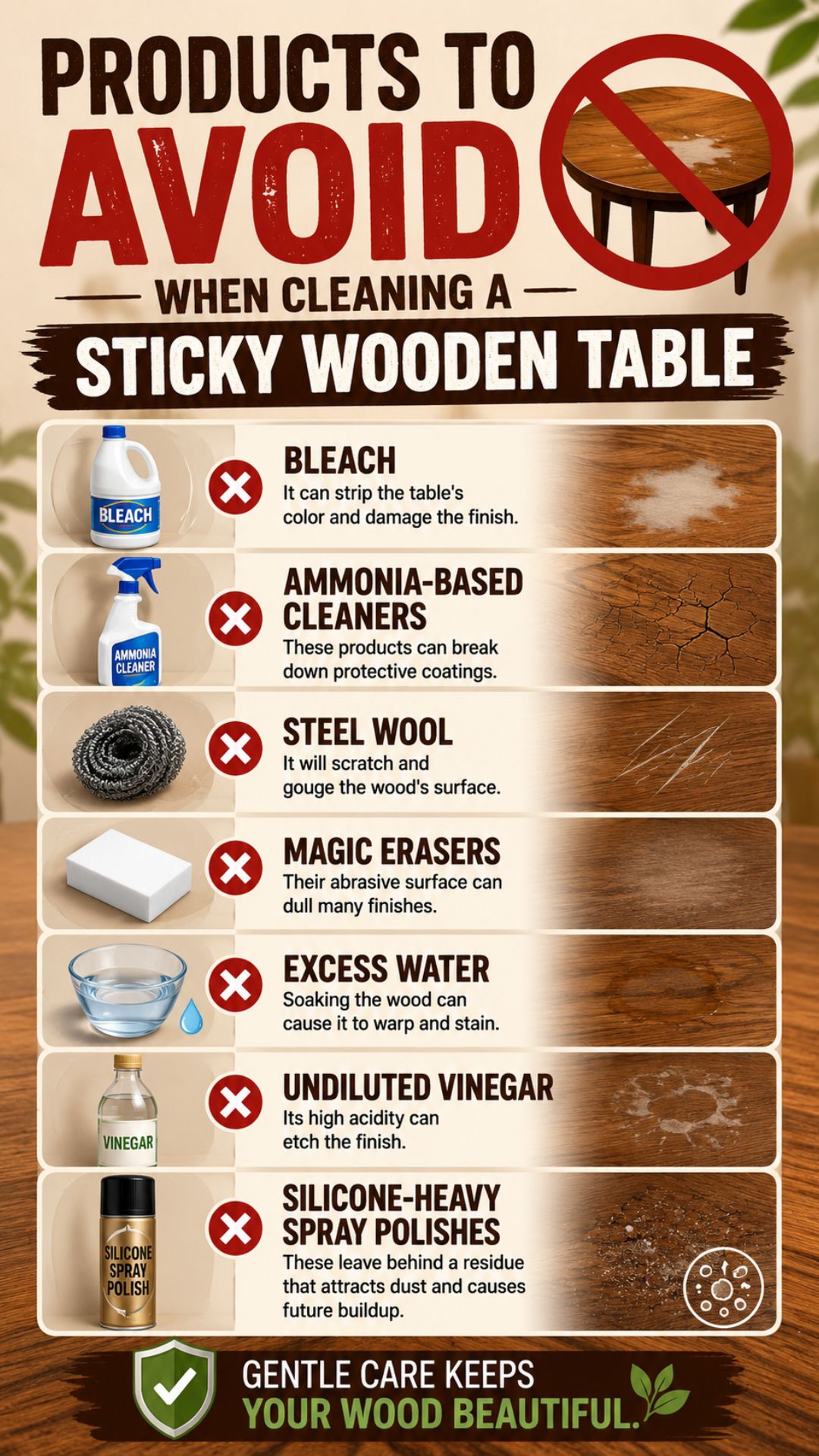
While some cleaning products might seem like a quick fix, they can do more damage than good. Avoid the following:
- Bleach: It can strip the table’s color and damage the finish.
- Ammonia-based cleaners: These products can break down protective coatings.
- Steel wool: It will scratch and gouge the wood’s surface.
- Magic erasers: Their abrasive surface can dull many finishes.
- Excess water: Soaking the wood can cause it to warp and stain.
- Undiluted vinegar: Its high acidity can etch the finish.
- Silicone-heavy spray polishes: These leave behind a residue that attracts dust and causes future buildup.
How To Keep a Wooden Table From Getting Sticky
A few simple habits can keep stickiness from returning.
- Wipe up spills immediately before they dry.
- Dust weekly with a microfiber cloth.
- Avoid overusing furniture polish and buff away any excess.
- Use coasters and placemats to protect the surface from moisture and food.
- Maintain stable indoor humidity when possible.
- Clean the table periodically to prevent buildup.
Frequently Asked Questions
Why is my wooden table sticky even after I clean it?
A sticky table isn’t always a sign that you missed a spot. While grease, food residue, and furniture polish buildup are common causes, persistent tackiness can indicate that the finish itself is deteriorating. Humidity may also temporarily soften certain finishes. If the stickiness returns soon after cleaning, it may be time to look beyond surface grime.
What is the safest way to clean a sticky wooden table?
Start with the gentlest method possible. Brush the surface with a microfiber cloth, then wipe it with a soft cloth doused with warm water and mild dish soap. Clean with the grain and dry the table immediately afterward to protect the finish.
Can I use vinegar to remove stickiness from a wooden table?
Yes, if mild soap and water don’t fully remove the residue, and the finish can tolerate it. Use a solution of equivalent parts white vinegar and water, apply it sparingly, and always test it in an inconspicuous spot first. Avoid vinegar on shellac, waxed, antique, or otherwise delicate finishes.
How do I know if the sticky surface is residue or a damaged finish?
If cleaning removes the tackiness and it doesn’t return, surface buildup was likely the cause. If the sticky feeling persists, comes back quickly, or is accompanied by dullness, soft spots, or an uneven sheen, the finish may be failing and require restoration.
What cleaning products should I avoid on wooden tables?
Avoid bleach, ammonia-based cleaners, undiluted vinegar, steel wool, magic erasers, abrasive scrubbers, and excessive water. These products can scratch the surface, weaken protective coatings, or damage the finish. For routine care, stick to microfiber cloths and gentle, wood-safe cleaners.
Is it better to refinish a sticky wooden table instead of cleaning it repeatedly?
If multiple gentle cleanings don’t solve the problem, refinishing may be the better option. Persistent tackiness often means the finish has degraded from age, heat, sunlight, or moisture exposure. Refinishing restores the protective layer and can extend the life of the table.
Are natural cleaning methods environmentally friendly and effective?
They can be. Mild dish soap, biodegradable wood cleaners, and using only the amount of product needed can reduce exposure to harsh chemicals. However, natural ingredients aren’t automatically harmless. Vinegar, for example, can damage some finishes if overused, so always match the cleaner to the surface.
How can I prevent my wooden table from becoming sticky again?
Regular maintenance goes a long way. Clean spills promptly, dust weekly, use coasters and placemats, avoid excessive furniture polish, and keep indoor humidity at stable levels. Small habits like these help preserve both the finish and the appearance of your table.
Restore the Smooth Finish Without the Guesswork
Learning how to clean a sticky wooden table isn’t about finding the strongest cleaner on the shelf. It’s about finding the right solution for the specific problem. Most sticky surfaces can be restored with patient, finish-safe cleaning and regular maintenance. If cleaning proves ineffective, it’s important to recognize the signs of polish buildup or finish failure. This will help you decide whether to attempt a deeper restoration or call a professional. With a thoughtful approach, you can protect your furniture’s beauty and keep your wooden table looking its best for years.
Working on a bigger wood project? Vintage & Specialty Wood is your source for high-quality reclaimed and specialty timber from around the world. We offer reclaimed beams, Douglas Fir, white oak, timber framing, wood flooring, and more. Visit Vintage & Specialty Wood to speak with a timber expert about your project.
Hire The Timber Experts For Your Next Project
Vintage & Specialty Wood should be your source of the highest quality timbers from around the world. When it comes to fabricating and installing reclaimed wood or specialty wood products in your home, we don’t cut corners. We offer many reclaimed wood and specialty wood products such as Douglas Fir, white oak, and much more. We also offer timber framing and wood flooring services as well. Contact our team today to speak to a timber expert about what Vintage & Specialty Wood can do for you.

This Blog Is Fact Checked
This content has undergone meticulous fact-checking by our team of internal experts. Gain a deeper understanding of the high editorial standards we uphold on our website here.

About The Author
Hi, I’m Corinne Grace, a nursing graduate from Riverside College who enjoys writing about woodworking. Read as I cover how to choose between hardwoods and softwoods, how stains and finishes perform on different species, and so much more. My goal is to give woodworkers clear, well-researched guides they can use for their next project.