Wood Floor Identification: Find Your Floor Type
Published June 11, 2026
Have you ever looked at your wood floors and wondered what type of wood they are? While wood floors add warmth and value to a home, many owners don’t know the species under their feet. This isn’t just a matter of curiosity. Not knowing can lead to costly mistakes when refinishing, repairing, or maintaining your floors. Proper wood floor identification is crucial because it shapes how you care for, repair, and even value your home.
In this article, we’ll walk you through a simple process for wood floor identification. We’ll cover a four-step identification method, how to recognize common hardwood species, and what to do in tricky situations like older homes or when you only have a photo. We’ll also discuss when to call a professional. Keep reading to gain confidence in understanding your floors.
Why Identifying Your Wood Floor Matters
Your floor species affects far more than appearance. Knowing your floor type influences many things. It impacts how you should refinish it. It affects your maintenance routine and repair outcomes. It can even change how appraisers and buyers value your home. Once you know your species, every decision about care and upkeep becomes easier.
Identify Your Wood Floor: Here’s Why It Matters
- Choosing the right refinishing method. Various species react differently to sanding, staining, and finishing. Open-grained woods like oak soak up stain readily and show rich color. Dense, closed-grain woods like maple can blotch when stained and often look best with a clear or light finish. Knowing your species helps you avoid costly refinishing mistakes.
- Matching replacement boards. When a board gets damaged, you’ll want a seamless repair. Red oak and white oak look similar at a glance but differ in tone and grain, and mismatched boards stand out. Correctly identifying your species ensures replacement pieces blend in rather than draw the eye.
- Determining home value. Certain species carry more weight with buyers and appraisers. Premium woods such as walnut, wide-plank heart pine, or quartersawn white oak can boost perceived value. Accurate identification helps you describe your floors honestly during a sale or appraisal.
- Selecting appropriate cleaning products. Cleaning recommendations vary by wood type and finish. Softer woods scratch more easily and may require gentler care. Knowing both your species and finish helps you choose products that preserve rather than damage the surface.
- Understanding durability. Some species naturally resist dents and wear better than others. Knowing your floor’s durability helps you protect it. You can take preventive measures in high-traffic areas. It also helps you set realistic expectations for its long-term appearance.
How To Identify Wood Floor Flooring: The 4-Step Process
No single characteristic can confirm a wood species on its own. To get the most accurate identification, look at several features together.
Step 1: Determine Whether Your Flooring Is Solid Or Engineered
Before naming a species, confirm what kind of flooring you have.
Signs of solid hardwood:
- Thicker boards, typically around ¾ inch
- Tongue-and-groove edges along the sides
- Visible evidence of multiple sanding cycles in older floors
Signs of engineered hardwood:
- A layered, plywood-like structure visible at the edge or in a vent cutout
- A thin real-wood veneer over a substrate
- Floating, glued, or stapled installation methods
If you see the end of a board, look for natural growth rings. A repeating, perfectly uniform grain often signals a veneer of a printed surface rather than solid wood.
Step 2: Examine The Wood Grain Pattern
Grain is one of the fastest ways to narrow down a species.
Open-grain woods have a visibly porous texture you can sometimes feel:
- Oak
- Ash
Closed-grain woods feel smoother and look more uniform:
- Maple
- Birch
Distinctive grain characteristics to look for:
- Cathedral patterns: Arched, layered grain common in flatsawn oak.
- Straight grain: Tight, parallel lines often found in quartersawn boards.
- Mineral streaks: Dark, contrasting lines typical of hickory.
- Ray flecks: Shimmering, flaked patterns that are a hallmark of quartersawn oak.
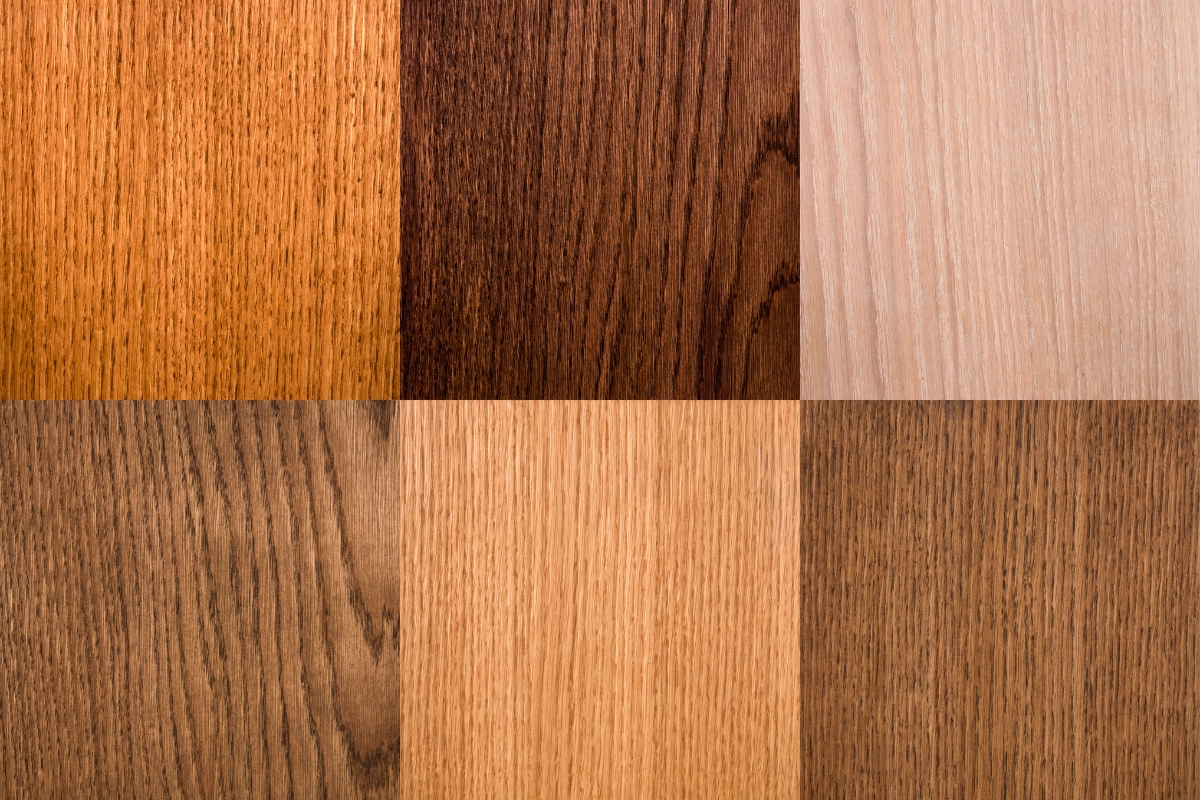
Step 3: Identify The Wood By Color
Color offers quick clues, though it isn’t foolproof.
Light-colored wood floors
- Maple: Creamy white to pale golden
- Ash: Lustrous white to pale tan
- White oak: Light brown with a slight gray or olive cast
Medium-toned wood floors
- Red oak: Warm pink to reddish brown
- Hickory: Light tan to medium brown with strong contrast
- Cherry: Light to medium reddish brown
Dark wood floors
- Walnut: Rich chocolate brown, sometimes with a purple cast
- Mahogany: Reddish to deep brown
- Stained species: Dark because of the finish, not the natural color
Note: Stains, finishes, sunlight exposure, and aging can dramatically alter a floor’s appearance. When possible, inspect an inconspicuous unfinished edge to see the wood’s true color.
Step 4: Check Hardness And Wear Patterns
The way a floor wears can provide valuable clues about its species.
- Assess dent resistance. Press a fingernail into a hidden edge. Softer woods like pine dent easily, while oak and hickory resist.
- Evaluate scratches. Deep and widespread scratches may indicate a softer species. Shallow surface marks often suggest a harder wood.
- Examine high-traffic wear. Hallways, entryways, and living spaces can reveal how well the wood withstands everyday use.
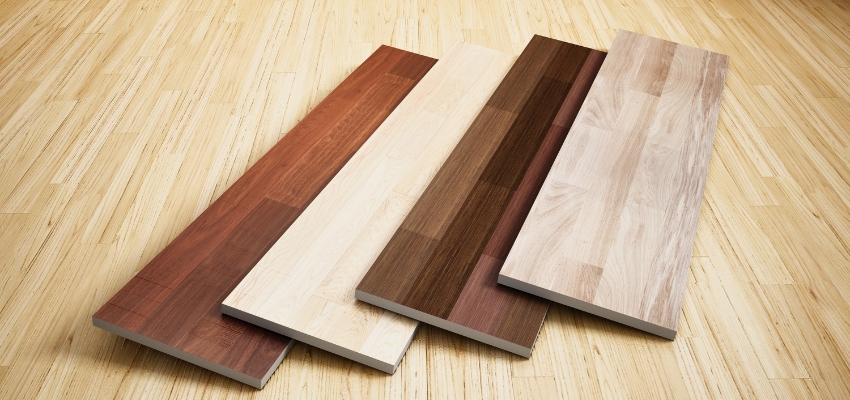
You can use the Janka Hardness Scale to support these observations. This scale measures a wood’s resistance to denting and wear. Red oak, rated at 1290, serves as the industry benchmark. Maple measures around 1450, while hickory ranks among the hardest domestic species at 1820. Softer woods such as American cherry (950) and walnut (1010) fall below oak in durability.
How To Identify Common Hardwood Floor Species
Identifying common wood flooring species is easier when you know what to look for. Grain, color, and wear patterns can help narrow down your options. Use the following profiles to learn more about each wood’s appearance, history, and practical applications.
Oak
Oak is the most common hardwood flooring in American homes, valued for its durability, versatility, and timeless appeal.
Red oak characteristics
- Warm pink to reddish-brown undertones
- Often used as the benchmark for comparing other flooring species.
- Popular in both traditional and modern interiors
White oak characteristics
- Neutral to olive-brown tones with little to no red
- Known for its improved moisture resistance due to its closed cellular structure
- Frequently used in historic homes and spaces exposed to changing humidity levels.
Essential differences between red oak and white oak
- Color: Red oak leans pink and reddish, while white oak has brown, gray, or olive undertones
- Texture: White oak generally appears smoother and more refined
- Water resistance: White oak performs better in moisture-prone environments. It has long been favored in demanding applications.
Maple
Maple features a fine, subtle grain and a creamy, light appearance that complements modern interiors. Its smooth, uniform look was a favorite during the Art Deco era. Today, it remains popular in gyms, kitchens, and contemporary homes. Maple is both durable and elegant. It appeals to homeowners who want a clean, minimalist aesthetic.
HIckory
Hickory stands out for its dynamic color variation. It often shifts from creamy sapwood to medium-brown heartwood within a single board. Those bold, contrasting streaks are among its most recognizable traits. Its rugged appearance makes it ideal for rustic interiors. Its exceptional resilience is perfect for busy households.
Pine
Pine offers a warm, inviting appearance marked by visible knots and natural character. It appears frequently in older and historic homes, where its lived-in patina adds charm over time. Most pine species dent and wear more easily than hardwoods. However, old-growth heart pine is an exception. It’s prized for its density, rich coloration, and distinctive historical appeal.
Walnut
Walnut is known for its rich, chocolate-brown tones. These are sometimes accented by subtle purple undertones. Its dark heartwood contrasts with its lighter sapwood, creating visual depth. The wood’s smooth grain contributes to an elegant and luxurious appearance. Walnut is often chosen for formal spaces where aesthetics take priority over maximum durability.
Cherry
Cherry features a satiny finish and a smooth, occasionally wavy grain pattern. Over time, its reddish-brown color deepens into a sophisticated patina. This gives the wood added warmth and character. Cherry’s refined appearance makes it a popular choice. It’s often selected for lower-traffic rooms and traditional interiors.
Identifying Wood Floors In Older Homes
The type of wood, board dimensions, and regional availability of historic floors can provide clues to their age.
Historic Flooring Trends
Wood preferences evolved over time:
- Pine dominated from roughly 1800 to 1920.
- Oak rose to prominence during the Victorian era between approximately 1850 and 1930.
- Maple gained popularity during the 1920s.
- Hickory became more common between 1930 and 1950 as homeowners wanted durable, practical materials.
Wide-Plank Construction
Very wide boards often suggest an older home. They were milled when large, old-growth trees were more readily available. Wide pine and oak planks can provide valuable clues about a home’s age and origin.
Antique Pine Flooring
Historic heart pine floors often display:
- A striking mix of deep-red heartwood and pale-yellow sapwood
- Tight, pinstripe-like grain patterns associated with old-growth timber
- Greater density than many modern pine products
These characteristics help distinguish antique pine from newer materials.
Old-Growth Oak Flooring
Antique oak floors frequently combine flatsawn and quartersawn boards within the same installation. Quartersawn sections are prized for their decorative look and craftsmanship. They are a defining feature of many Victorian and Arts and Crafts homes.
Regional Differences
Geography influenced the species available to builders:
- Eastern white pine dominated the Northeast.
- Longleaf pine was common throughout the Southeast.
- Red and white oak were widely used across the central states.
As railroad networks expanded, oak flooring became increasingly accessible throughout the country.
Can You Identify Wood Flooring From Photos?
Photos can provide useful clues, but they have limitations.
What Experts Can Determine From Images
A quality photograph may reveal:
- Grain texture and pattern
- General color and tone
- Board width and layout
- Distinctive features such as knots, mineral streaks, or ray flecks
Limitations Of Photo Identification
Photo-based identification is affected by lighting conditions, image quality, and surface finishes. Stains and glare can alter color perception. They might also obscure important details. This makes definitive identification from images alone difficult.
When Physical Samples Are Necessary
For greater confidence, a physical sample is often required. A freshly sanded edge exposes the wood’s natural color. Examining the end grain under magnification can help confirm the species. This is useful when photographs are inconclusive.
When To Call A Flooring Expert
Some situations benefit from professional evaluation and experience.
- Historic restoration projects: Matching the original species and milling techniques is key. This preserves the floor’s authenticity and value.
- Extensive repairs: Large replacements can be complex. You might need to source discontinued materials. Custom milling may also be required. These situations often present difficult sourcing challenges.
- Insurance claims: Accurate species identification can support documentation, valuation, and claim assessments.
- High-value reclaimed flooring: Rare and antique woods often warrant verification before purchase, sale, or installation.
Frequently Asked Questions
How can I identify what type of wood floor I have?
Start by examining the floor’s color, grain pattern, plank width, and surface texture. Exposed edges, like those near floor vents or thresholds, can also reveal clues about the wood species and construction.
How can I tell if my floor is solid hardwood or engineered wood?
Look for a visible cross-section of a board. Solid hardwood is a single portion of wood from top to bottom. Engineered flooring has a real wood top sheet bonded to multiple underlying layers.
What are the most common types of wood flooring found in homes?
Oak is the most popular choice, followed by pine, maple, hickory, and walnut. The type of wood used often depends on the home’s age, location, and the desired look and durability.
Can I identify wood flooring from the grain pattern alone?
Not always. Grain patterns can narrow down the possibilities. However, accurate identification also requires considering other factors. You should look at the wood’s color, hardness, and pore structure.
What happens if I misidentify my wood flooring?
If you misidentify your wood flooring, you might end up with mismatched repairs or using the wrong refinishing methods. You could also use cleaning products that damage the floor’s appearance and shorten its lifespan.
Can I match new flooring to my existing wood floors?
Yes, but it might take some research. To create a seamless look, match the wood species, plank dimensions, grain pattern, and stain color of the original flooring.
Can the age of my home help identify my wood flooring?
Yes. The age of your home can provide valuable clues about the wood species used. For example, older homes often feature wood species popular during certain periods. Pine was common in the 19th and early 20th centuries. Oak was frequently used in mid-century homes.
How do I identify replacement boards for discontinued flooring?
Finding replacement boards for discontinued flooring can be tricky. You’ll need to match the species, dimensions, grain, and finish. These should align with your existing boards. Reclaimed wood suppliers, salvage yards, or online wood floor identification resources can help you find a close match.
The First Step To Beautiful, Long-Lasting Floors
Knowing the story behind your floors is the first step to preserving their character. The process of wood floor identification involves determining its construction type, examining the grain and color, and assessing its hardness and wear. Compare these findings to common wood species. If you’re unsure, it’s best to seek a professional evaluation to ensure proper care and protect your investment. Understanding your floors is key to maintaining their beauty.
Working with reclaimed or specialty wood? Vintage & Specialty Wood supplies high-quality timbers from around the world. Our selection includes reclaimed heart pine, new white oak, and Douglas fir, among others. Our timber experts can help you find the right wood for any project, from matching a historic floor to planning a custom installation. Contact us today to bring authentic character to your next project.
Hire The Timber Experts For Your Next Project
Vintage & Specialty Wood should be your source of the highest quality timbers from around the world. When it comes to fabricating and installing reclaimed wood or specialty wood products in your home, we don’t cut corners. We offer many reclaimed wood and specialty wood products such as Douglas Fir, white oak, and much more. We also offer timber framing and wood flooring services as well. Contact our team today to speak to a timber expert about what Vintage & Specialty Wood can do for you.

This Blog Is Fact Checked
This content has undergone meticulous fact-checking by our team of internal experts. Gain a deeper understanding of the high editorial standards we uphold on our website here.

About The Author
Hi, I’m Corinne Grace, a nursing graduate from Riverside College who enjoys writing about woodworking. Read as I cover how to choose between hardwoods and softwoods, how stains and finishes perform on different species, and so much more. My goal is to give woodworkers clear, well-researched guides they can use for their next project.