Most Expensive Wood Types In The World Explained
Published May 14, 2026
What makes a block of wood worth more than gold? Wood has been a staple in craftsmanship for centuries, and some species symbolize ultimate luxury. These timbers are valued for their rarity, logging restrictions, age, and high demand among collectors and artisans. People seek out the most expensive wood for its unmatched beauty, durability, and rich history. Some woods derive value from luxury woodworking applications, while others, such as agarwood, are prized mainly for the rare aromatic resin they produce. As these woods become harder to source legally and sustainably, their prices continue to rise.
In this article, we’ll explore the factors that drive timber prices and highlight the most expensive wood types available. Whether you’re a woodworker searching for premium materials or simply curious about rare timber, read on to discover some of the world’s most valuable natural resources.
What Makes The Most Expensive Wood So Valuable?
Limited Supply And Slow Tree Growth
Many of the world’s most valuable woods come from old-growth forests with strict geographic limitations. Trees that produce high-quality, dense heartwood often have notoriously slow regeneration rates. They can take decades or even centuries to mature to a harvestable size, naturally limiting the available supply.
Trade Restrictions And Conservation Laws
Protecting endangered species plays a major role in timber valuation. Organizations like CITES (the Convention on International Trade in Endangered Species of Wild Fauna and Flora) heavily regulate or ban the trade of certain protected timber species.
Strict export quotas and bans make exotic wood scarce, increasing its value. International rules limit harvesting and export.
Unique Appearance, Density, And Fragrance
Beyond scarcity, expensive wood commands a premium due to its physical properties. Figured grain patterns, rich coloration, and extreme density make these woods highly desirable. In some cases, natural oils and distinct scents add another layer of value, creating a truly multi-sensory material.
The Most Expensive Wood Varieties In The World
Agarwood (Aquilaria malaccensis)
Agarwood is considered among the most expensive wood species in the world. It’s also one of the rarest. This is due to its unusual resin formation process. Agarwood’s worth does not stem from traditional woodworking, but from a unique resin triggered by a specific mold infection. Since this resin is incredibly rare, agarwood is highly valued in perfumes and incense.
African Blackwood (Dalbergia melanoxylon)
African Blackwood is known for its extreme density and durability. It’s often considered one of the most expensive tree species used commercially. It remains the premier choice for crafting woodwind instruments like clarinets and oboes. However, severe conservation concerns and a very slow growth rate keep its market price exceptionally high.
Snakewood (Brosimum guianense)
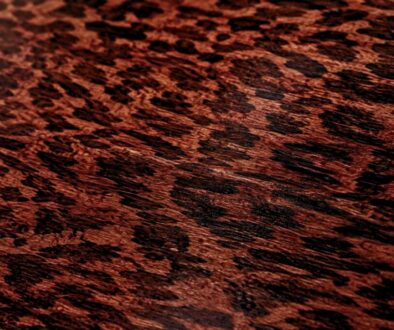
Snakewood, native to South America, displays a distinctive snakeskin-like grain pattern that makes it instantly recognizable. Its high cost and brittle properties limit its use in large projects. Instead, it is commonly reserved for small artisan crafts such as custom knife handles and luxury pen blanks.
Brazilian Rosewood (Dalbergia nigra)
Brazilian Rosewood is esteemed by collectors and luthiers for its historic use in high-end acoustic guitars. Today, strict export restrictions under CITES Appendix I apply. This makes legally sourced, pre-ban pieces highly valuable.
Pink Ivory (Berchemia zeyheri)
With a royal history tied to Southern African tribes, Pink Ivory wood is famous for its vibrant pink coloration and rarity. Artisans primarily use it for decorative applications and custom jewelry.
Ebony (Diospyros spp.)
Ebony is famous for its deep black appearance. It remains highly sought after for decorative woodworking and musical instruments. Varieties like Macassar ebony and Gaboon ebony differ slightly in striping and origin. Both share exceptional density and a high conservation status.
Red Sandalwood (Pterocarpus santalinus)
Red Sandalwood boasts a distinctive red color and rich cultural significance. Unfortunately, illegal logging concerns have severely impacted its wild populations. This has led to intense international trade monitoring. It has also caused market values to surge.
Honduran Rosewood (Dalbergia stevensonii)
This expensive wood is especially popular among luthiers, who value its rich tonal properties. It is highly prized for marimba bars and acoustic guitar backs. However, strict logging regulations restrict its availability.
Thuya Burl (Tetraclinis articulata)
Thuya Burl is harvested primarily in the Atlas Mountains of Morocco. It features an exotic burl figure packed with swirling ‘eyes.’ Its exceptional beauty makes it a favorite for luxury decor, including high-end humidors and dashboard veneers.
Ancient Bog Oak
Rather than a specific species, Ancient Bog Oak refers to oak logs preserved in peat bogs for thousands of years. The process gives the wood a dark, fossil-like appearance and immense collector appeal, as each piece is a literal slice of ancient history.
Sandalwood (Santalum)
Indian Sandalwood (Santalum album) holds exceptional fragrance value, retaining its scent for decades. Its aromatic oils are widely used in perfumes, carvings, incense, and traditional cultural practices across Asia. Overharvesting has made genuine, mature sandalwood incredibly scarce and highly valuable.
Cocobolo (Dalbergia retusa)
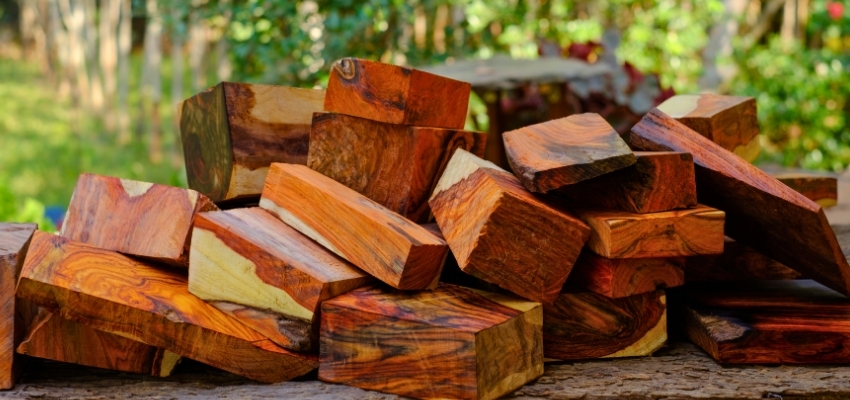
Cocobolo wood stands out due to its vibrant natural coloration, which shifts through a spectrum of oranges, reds, and deep browns. Its natural oils and exceptional durability make it perfect for fine woodworking. However, it requires careful handling.
Koa (Acacia koa)
With its native Hawaiian origin, Koa wood is deeply ingrained in island culture. Pieces with a wavy, “curly koa” grain are rare. This makes them highly sought after. They’re often used for luxury ukuleles and custom furniture.
Lignum vitae (Guaiacum spp.)
Lignum vitae is considered one of the densest and heaviest commercial woods in the world. It has natural self-lubricating properties. Historically, this made it invaluable for marine and industrial uses. It was often used for ship propeller bearings and clockwork mechanisms.
Amboyna Burl (Pterocarpus indicus)
Amboyna Burl is a highly figured burl wood typically sourced from Narra trees (Pterocarpus indicus). Its dramatic red-and-gold swirling patterns make it a prized veneer material for luxury automobiles and custom cabinetry.
Where Expensive Wood Is Commonly Used
- Furniture and interior design: Master woodworkers use these exceptional materials. They create heirloom-quality tables, cabinets, and architectural accents.
- High-end musical instruments: Luthiers demand woods with specific acoustic properties and resonant densities. Rare woods shape the tonal qualities of concert-grade guitars, violins, and woodwinds.
- Decorative veneers and artisan crafts: Solid blocks of rare timber can be very expensive. Craftsmen often slice them into thin decorative veneers. These are used for yacht interiors, custom cabinetry, and upscale wall panels.
- Custom knives, pens, and collectibles: Small offcuts of the most expensive wood rarely go to waste. Artisans use them to craft high-value pocket knife scales, fountain pens, and custom jewelry.
How Much Does Expensive Wood Cost?
Average Price Per Board Foot
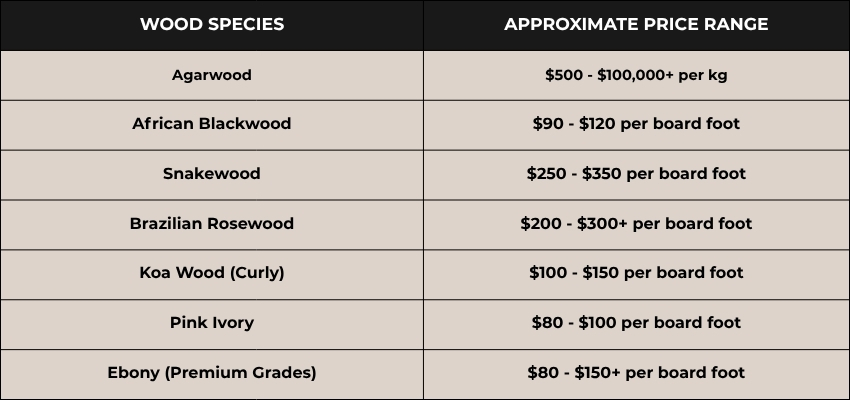
Wood prices fluctuate constantly based on market conditions, legality, figure grade, dimensions, and geographic origin. The following table provides approximate estimates.
Factors That Affect Wood Prices
The ultimate price of a board depends on its age, the prominence of its figure (such as curls or burls), and its legal sourcing status. Global supply disruptions and collector demand also heavily influence market prices.
Why Does The Price Of Rare Wood Change So Quickly?
Prices can spike overnight. This is due to changing trade restrictions, export bans, or a decline in legal inventory. When a species is added to a CITES appendix, documented supplies often become significantly more valuable.
Sustainable Alternatives To Rare Wood
- Plantation-grown exotic woods: To combat deforestation, many suppliers now offer plantation-grown exotic woods. These trees are cultivated specifically for harvest, relieving pressure on wild, old-growth forests.
- Engineered and reclaimed wood options: Engineered woods and high-quality veneers can mimic the look of rare timber. Reclaimed wood is another excellent alternative. It provides a rich history and tight grain. No living trees need to be cut.
Always ask for documentation when purchasing exotic timber. Look for FSC (Forest Stewardship Council) certifications and ensure the seller complies strictly with CITES guidelines.
Frequently Asked Questions
What is the most expensive wood in the world?
Agarwood holds the title of the most expensive wood in the world. Agarwood’s value stems from a rare, fragrant resin. This resin occurs naturally and is used in perfumery. High-grade agarwood can fetch up to $100,000 per kilogram.
What is the rarest wood in the world?
Some woods, like African Blackwood and Brazilian Rosewood, are extremely rare. This is due to severe overharvesting. They also have slow growth cycles. Additionally, strict international trade bans have made them harder to find.
Why is agarwood so expensive?
Agarwood is very expensive. It comes from Aquilaria trees. Only a small number of these trees get infected with a specific mold. This mold produces a valuable, dark, and highly aromatic resin.
Which expensive wood is best for furniture?
Koa, Ebony, Brazilian Rosewood, and Thuya Burl are some of the most sought-after luxury woods for furniture. They are valued for their beauty, durability, and rarity. Each also has a distinctive grain pattern.
Is Brazilian Rosewood illegal?
Owning Brazilian Rosewood isn’t entirely illegal. However, its international commercial trade is banned under CITES Appendix I. An exception is made for wood with proper documentation. This documentation must prove it was harvested before the 1992 restrictions.
Can you legally buy rare wood today?
Yes, you can legally buy rare wood today. However, it must come from a reputable dealer. This dealer must follow international laws, hold the right CITES permits, and use ethical sourcing practices.
The Lasting Value Of The World’s Most Expensive Wood
The high price of rare wood is driven by its natural scarcity, slow growth, and high demand from luxury industries. As environmental regulations tighten, the value of the most expensive wood species will only increase when legally sourced. Purchasing from legal, sustainable sources is crucial to preserving rare wood species while enjoying their beauty and durability. The future of the luxury timber market depends on balancing conservation, plantation growth, and reclaimed materials.
If you are looking for premium materials for your next architectural or design project, turn to the experts. Vintage & Specialty Wood is a premier timber company offering high-quality reclaimed and specialty wood products, including custom beams and flooring. Explore their sustainable timber selections to elevate your space.
Hire The Timber Experts For Your Next Project
Vintage & Specialty Wood should be your source of the highest quality timbers from around the world. When it comes to fabricating and installing reclaimed wood or specialty wood products in your home, we don’t cut corners. We offer many reclaimed wood and specialty wood products such as Douglas Fir, white oak, and much more. We also offer timber framing and wood flooring services as well. Contact our team today to speak to a timber expert about what Vintage & Specialty Wood can do for you.

This Blog Is Fact Checked
This content has undergone meticulous fact-checking by our team of internal experts. Gain a deeper understanding of the high editorial standards we uphold on our website here.

About The Author
Experience, exploration, and knowledge are the hallmarks of writer Rei Bayucca. Her dedication to crafting articles that both inspire and educate will leave you thinking long after you’ve finished reading.