How to Make Wood Drawers Slide Easier: 8 Simple Steps
Published August 27, 2026
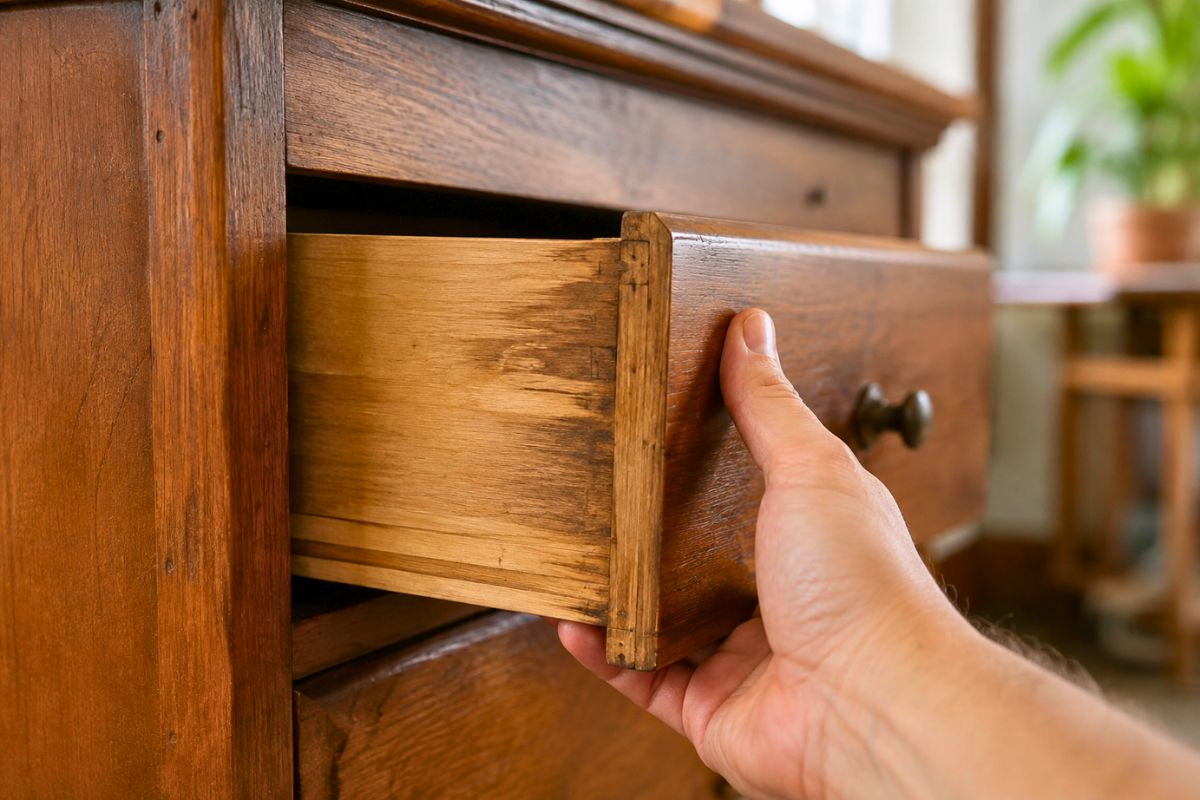
Sticky wooden drawers are a small problem that can quickly become frustrating. A drawer that catches, drags, or takes extra force to open indicates unnecessary friction between the drawer and its runners or cabinet opening.
Fortunately, many sticking drawers can be fixed without replacing the entire drawer. Cleaning the runners, identifying where the wood rubs, applying appropriate wood wax, and making a small adjustment often restore smooth movement. More serious problems, like badly worn runners or significant warping, may require repair or replacement.
If you want to know how to make wood drawers slide easier, start with the simplest fix and work toward more involved repairs only when necessary.
Why Do Wooden Drawers Stick?
Wooden drawers can become difficult to open for several reasons. Before using lubricant or sandpaper, identify the cause of resistance. This makes it easier to choose the right fix and avoid removing more wood than necessary.
Wood Expands and Contracts With Humidity
Wood responds to changes in moisture in its environment. During humid periods, it gains moisture and expands; during drier conditions, it loses moisture and contracts. A drawer that fits comfortably when built or during a dry season may become tight as humidity rises. WOOD Magazine describes this as a common cause of drawers binding after seasonal humidity changes.
The effect is often most noticeable when a drawer begins rubbing along one side or becomes harder to open during humid weather.
Dirt and Debris Build Up on the Runners
Dust, crumbs, sawdust, and other debris can collect where the drawer and cabinet meet. Even a properly fitted drawer can feel rough when dirt accumulates in the runners, grooves, or contact points.
Cleaning these surfaces is a sensible first step before applying wood drawer lubricant.
Wood-on-Wood Surfaces Become Rough
Traditional wooden drawers may ride on wooden runners, with the bottom edges of the drawer sides providing sliding contact. Guides keep the drawer aligned and limit side-to-side movement. Every opening and closing cycle creates friction, and years of use can leave these surfaces rough or uneven.
Heavy wear can eventually hollow out a wooden runner. At that point, lubrication alone is unlikely to solve the problem. It may be best to replace severely worn runners instead of repeatedly compensating with lubricant.
The Drawer Is Misaligned
A loose joint, shifted runner, uneven guide, or slightly twisted drawer can cause binding. Adding wax may reduce friction temporarily but will not fix an alignment problem.
Traditional drawer construction relies on properly positioned runners and guides to support the drawer and control side-to-side movement.
The Wood Has Swollen or Warped
A drawer can become too tight because one or more surfaces have swollen or changed shape. If the problem is minor, carefully removing a small amount of material may restore clearance. Avoid sanding or planing the entire drawer simply because it feels tight. The better approach is to find the specific area causing the interference and correct that area gradually.
How to Make Wood Drawers Slide Easier: Step-by-Step
A practical approach is to work through the problem in stages: inspect, clean, test, lubricate, and make physical adjustments only if needed.
Step 1: Remove the Drawer and Inspect the Runners
Empty the drawer and remove it from the cabinet or furniture.
Drawer removal depends on its construction. Some wooden drawers lift out, while others pull forward and tilt. Once removed, inspect:
- Drawer sides and bottom edges
- Wooden runners
- Runner grooves
- Cabinet guides
- Contact points
- Joints and fasteners
- Areas showing visible wear
Look for scratches, shiny rubbing marks, accumulated debris, loose components, or worn finish.
Rubbing marks are useful because they show exactly where the drawer is binding. Check these marks before removing material from a sticking drawer.
Step 2: Clean the Drawer Tracks and Contact Surfaces
Remove dust and debris from the drawer and cabinet.
A soft brush, vacuum, or clean cloth can clear the runners and guides. Pay special attention to corners and grooves where debris collects.
Do not simply cover a dirty runner with wax. Debris trapped between two moving wooden surfaces can continue to increase friction and contribute to wear.
Once the surfaces are clean, make sure they are dry before moving on.
Step 3: Test the Drawer Fit Before Lubricating
Temporarily reinstall the drawer and move it slowly in and out to identify exactly where the resistance occurs.
Pay attention to where the resistance occurs:
- Does it stick as soon as you start opening it?
- Does it become difficult halfway through its travel?
- Does it bind when nearly closed?
- Does one side feel tighter than the other?
- Does the drawer rock or move unevenly?
A drawer that feels generally smooth but slightly rough may just need lubrication. If it stops at the same point every time, look for a high spot, swelling, worn runner, or alignment problem. Lubricant reduces friction but does not fix damaged or poorly fitted components.
Step 4: Apply Wood Wax for Drawers
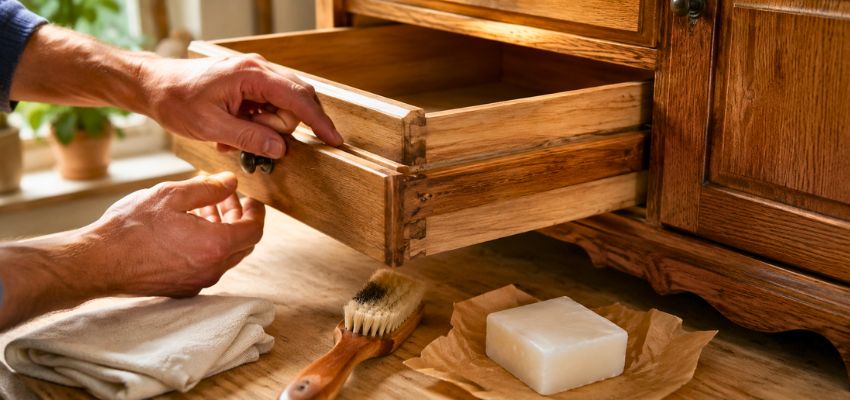
For traditional wood-on-wood drawers, wax is a straightforward way to reduce friction. Apply paraffin wax to drawer sides to help create a smooth sliding surface.
To apply wax:
- Remove the drawer.
- Rub a thin layer of paraffin or suitable paste wax onto the wooden contact surfaces.
- Concentrate on the wooden surfaces that actually make contact, such as the drawer sides, drawer-side bottoms, runners, or guides, depending on the drawer’s construction.
- Reinstall the drawer.
- Open and close it several times to distribute the wax.
- Wipe away any obvious excess.
A light coating is usually enough. Covering the drawer with a heavy layer of wax offers no advantage.
Traditional furniture-restoration techniques also use wax on runners, guides, and drawer-side surfaces after fitting and smoothing the drawer.
Step 5: Test the Drawer Again
Open and close the drawer several times after applying the wax.
If it moves smoothly, no further repair may be necessary. If it still catches at the same point, inspect that area instead of applying more wax.
Step 6: Sand Rough or Swollen Areas if Necessary
If cleaning and waxing do not solve the problem, inspect the drawer again for areas that are too tight or visibly rough.
For minor swelling or roughness, remove a small amount of material from the problem area using a suitable hand tool or fine-grit abrasive. Test the fit frequently:
- Identify the rubbing point.
- Remove the drawer.
- Carefully remove a small amount of material from the affected surface.
- Remove the dust and debris.
- Reinstall the drawer and test the fit.
- Repeat only if needed.
Remove small amounts of material from drawer sides when seasonal swelling causes binding, with repeated fit checks until the drawer moves freely.
Do not aggressively sand the entire drawer side. Removing too much material can leave the drawer loose and affect how it sits and moves within the cabinet opening.
For valuable, antique, or finely made furniture, more extensive material removal may be better left to an experienced furniture restorer.
Step 7: Repair or Adjust Damaged Drawer Components
If the drawer continues to bind, inspect its construction for:
- Loose joints
- Damaged or worn runners
- Worn guides
- Loose fasteners
- Misaligned runners
- Twisted drawer components
- Excessive wear on contact surfaces
If a runner or other component is badly worn, repair or replacement may be more effective than continued lubrication. On older furniture, the bottoms of drawer sides can wear and may need attention.
Step 8: Consider Replacing or Upgrading Drawer Slides
Some drawers use traditional wooden runners, while others use mechanical slides. The two systems require different troubleshooting approaches, so identify which type you have before choosing a repair method.
If modern hardware is installed and damaged, replacing the slides may be the simplest solution. If an older piece relies on traditional wooden runners, repairing them may better preserve its original construction and appearance.
Modern mechanical slides can provide smoother operation and features such as full extension, but the cabinet and drawer must be compatible with the replacement hardware.
For an antique or period piece, repairing the original wooden runners is often preferable if preserving the furniture’s original construction and appearance is important.
What Is the Best Wood Drawer Lubricant?
For traditional wood-on-wood drawers, dry wax is generally the most straightforward place to start. Paraffin wax is a suitable choice for wooden drawer sides and sliding surfaces.
Paraffin Wax
Paraffin wax is readily available and simple to apply, often sold as canning wax. Some candles are made from paraffin, but candle-wax formulations vary, so a product labeled as paraffin is more reliable.
Rub a thin layer onto the surfaces where the wood contacts. Then work the drawer back and forth to distribute the wax.
Paste Wax or Furniture Wax
A suitable paste wax can also work well on traditional wood-on-wood drawer surfaces. Traditional furniture-restoration techniques use wax on runners, guides, and drawer-side surfaces after fitting.
If the furniture has an existing finish, choose a wax appropriate for that surface and follow the product’s application instructions.
Candle Wax or Plain Soap
White candle wax and unscented soap are inexpensive household alternatives when dedicated paraffin wax is not available.
These may provide a quick reduction in friction, but a purpose-appropriate wax is better when maintaining wooden furniture rather than making a temporary repair.
Wax Paper
Wax paper can transfer a small amount of wax onto a wooden contact surface and is a simple household option when paraffin or furniture wax is unavailable.
What About Silicone Spray, Graphite, or Oil?
Silicone spray, graphite powder, and oils are sometimes suggested as alternatives, but they are not interchangeable with wax for traditional wood-on-wood drawer surfaces. Wax is the better starting point for this type of drawer.
Be cautious with oil-based products, especially on unfinished or finely finished furniture. Choose a lubricant intended for the drawer’s material and finish, and check product instructions if unsure.
How to Fix Drawer Slides When Lubrication Does Not Work
If cleaning and waxing do not solve the problem, check the fit, alignment, and condition of components.
- Check for Loose or Misaligned Hardware. Inspect the runners, guides, screws, and joints. A shifted runner can cause the drawer to rub against one side of the opening, and correcting the alignment may solve the problem without removing material from the drawer.
- Look for Warped or Swollen Wood. Inspect the drawer for visible distortion and fresh rubbing marks. If swelling is causing the binding, make only small adjustments and check the fit frequently.
- Repair Worn Wooden Runners. Severely worn or damaged runners may need repair or replacement rather than further lubrication.
- Replace Old Mechanical Slides. If the drawer uses metal slides, inspect the hardware for bent components, damaged rollers, loose mounting screws, or other failures. If the slides are beyond repair, replacement may be the most practical option. Make sure the replacement hardware is compatible with the drawer dimensions and cabinet construction.
How to Prevent Wooden Drawers From Sticking Again
Once you know how to make drawers slide easier, a little routine maintenance can help prevent the problem from returning.
Keep Drawer Runners Clean
Periodically remove dust and debris from the runners and contact surfaces.
This is particularly useful for drawers exposed to crumbs, sawdust, dirt, or other fine debris.
Keep Indoor Humidity Relatively Stable
Because wood responds to changes in moisture, large swings in indoor humidity can contribute to dimensional movement.
Climate control during humid periods can help minimize swelling.
Maintaining reasonably stable indoor conditions can help reduce repeated seasonal movement.
Inspect Drawers for Early Signs of Wear
Do not wait until a drawer becomes extremely difficult to open.
Watch for:
- New rubbing sounds
- Increasing resistance
- Uneven movement
- Scratches on runners
- Loose joints
- Visible runner wear
Catching these problems early can turn a larger repair into a simple adjustment or maintenance task.
Reapply Wax When Necessary
Wax is a maintenance treatment, not a cure for every drawer problem.
If a properly aligned, undamaged drawer becomes rough again, a light application of suitable wax may restore smooth movement. If the same point keeps sticking, inspect the cause rather than adding more lubricant.
Common Mistakes to Avoid When Making Wood Drawers Slide Easier
- Applying Lubricant Without Cleaning the Drawer. Clean the runners and contact surfaces before applying wax. Otherwise, debris can remain trapped between the moving surfaces.
- Sanding Too Much Wood Away. Make small adjustments and test the fit frequently. Removing too much material can leave the drawer loose and affect how it sits in the opening.
- Applying Too Much Wax. A heavy coating is unnecessary. A thin, even layer is generally enough to reduce friction on wooden runners.
- Ignoring Structural Damage. If the drawer is twisted, a runner is severely worn, or a component has shifted, lubrication will not correct the underlying problem.
- Using the Wrong Product for the Drawer Hardware. Traditional wooden runners and modern mechanical slides are different systems. Identify the drawer mechanism before choosing a lubricant or repair method. What works for a wood-on-wood runner may not be appropriate for metal hardware.
Frequently Asked Questions
What makes wood drawers slide easier?
Start by cleaning the contact surfaces and identifying where the drawer is rubbing. For traditional wood-on-wood drawers, a thin layer of paraffin or suitable paste wax may reduce friction. If the drawer still binds, check for alignment problems, swelling, rough surfaces, or worn runners.
What is the best wood wax for drawers?
Paraffin wax is a practical choice for traditional wood-on-wood drawer surfaces, while suitable paste wax is another established option. Apply a light coating to the surfaces that actually contact each other rather than covering the drawer with excess product.
What can I use as a wood drawer lubricant?
For traditional wood-on-wood drawers, paraffin wax or suitable paste wax is a good starting point. Plain candle wax, unscented soap, and wax paper can serve as household alternatives.
How do you fix sticky wooden drawers?
Clean the runners, identify the sticking point, and test the fit. Apply wax if the problem is primarily friction. If it still sticks in the same location, check for swelling, roughness, misalignment, or damaged runners before considering sanding or repair.
How do you fix drawer slides?
First, identify whether the drawer uses traditional wooden runners or mechanical slides. Wooden runners can often be cleaned, waxed, or adjusted, while damaged mechanical slides may need adjustment or replacement.
Should I sand a wooden drawer that sticks?
Yes, if a specific area has swollen or become rough enough to cause binding. Remove only a small amount of material at a time and test the fit frequently; do not sand the entire drawer simply because it feels tight.
Can humidity make wooden drawers stick?
Yes. Changes in moisture can cause wood to change dimensionally. A drawer that fits properly during a dry period can become tight as the wood gains moisture in a more humid environment.
How often should you lubricate wooden drawers?
There’s no universal schedule. Apply a light coating of wax when the surfaces become rough or resistant. If the drawer repeatedly sticks, check for alignment, swelling, or wear rather than adding more wax.
When should you replace wooden drawer slides?
Consider replacement when a runner is severely worn, cracked, structurally damaged, or no longer provides a stable sliding surface.
Enjoy Smooth-Gliding Drawers Again
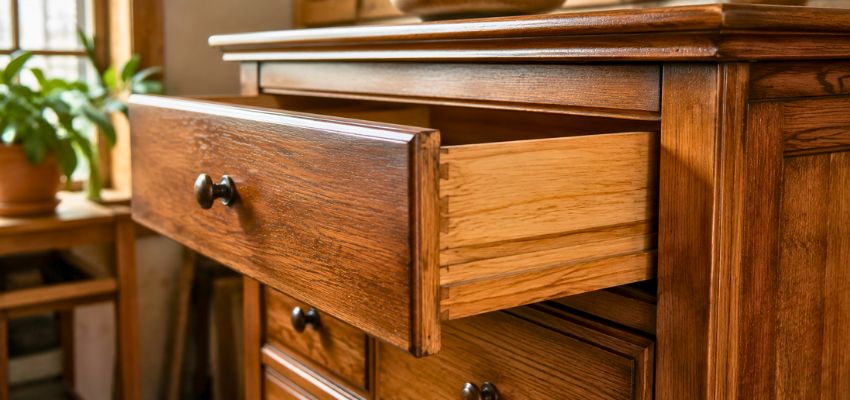
Learning how to make wood drawers slide easier often comes down to finding the cause before reaching for a more involved repair. Start by cleaning the contact surfaces and applying a light coat of suitable wood wax. If the drawer still sticks, check for swelling, misalignment, worn runners, or damaged hardware before sanding or replacing anything.
With traditional wood-on-wood drawers, make small adjustments and test the fit frequently rather than removing large amounts of material at once. If cleaning, waxing, and careful fitting do not restore smooth movement, the drawer may need a more substantial repair.
For woodworking projects that require quality reclaimed or specialty lumber, Vintage & Specialty Wood supplies materials including Douglas Fir and white oak, along with timber framing and wood flooring services.
Hire The Timber Experts For Your Next Project
Vintage & Specialty Wood should be your source of the highest quality timbers from around the world. When it comes to fabricating and installing reclaimed wood or specialty wood products in your home, we don’t cut corners. We offer many reclaimed wood and specialty wood products such as Douglas Fir, white oak, and much more. We also offer timber framing and wood flooring services as well. Contact our team today to speak to a timber expert about what Vintage & Specialty Wood can do for you.

This Blog Is Fact Checked
This content has undergone meticulous fact-checking by our team of internal experts. Gain a deeper understanding of the high editorial standards we uphold on our website here.

About The Author
Experience, exploration, and knowledge are the hallmarks of writer Rei Bayucca. Her dedication to crafting articles that both inspire and educate will leave you thinking long after you’ve finished reading.