Can You Use Olive Oil on Wood? What to Know

Published September 9, 2026
Olive oil is sometimes used as a household polish for wooden furniture because it can temporarily deepen the wood’s appearance and add a subtle sheen. Whether it’s appropriate depends on the wood, its existing finish, and its intended use.
So, can you use olive oil on wood? It can change the appearance of some wooden surfaces but is not a universal wood finish or necessary long-term treatment. For finished furniture, the existing finish should guide your choice of maintenance product. Olive oil is not recommended as a routine treatment for cutting boards or other food-contact surfaces.
That distinction matters when caring for quality timber. Reclaimed and specialty wood vary considerably in age, surface condition, finish, and character, so a treatment that works on one piece should not be applied automatically to another.
Can You Use Olive Oil on Wood?
Olive oil can temporarily change the appearance of some wood surfaces. However, it’s not generally recommended as a routine wood-care treatment. The existing finish, condition, and intended use of the wood should be considered when choosing the right maintenance product. A small amount may add sheen or enrich dry-looking wood, but the result depends heavily on the surface and its finish.
The species, condition, preparation, and finish all affect how a piece should be maintained. A reclaimed beam with an aged patina, for example, should not be treated the same way as newly finished furniture. If the finish is unknown, identify it if possible or test any treatment in a small, inconspicuous area first.
It’s important to distinguish a polish from a wood finish. Purpose-made finishes are formulated for specific properties such as durability, moisture resistance, or surface protection. Olive oil should not be treated as a substitute for a dedicated finishing or maintenance product.
What Does Olive Oil Do to Wood?
Olive oil primarily affects the appearance of the wood surface, rather than repairing or restoring the timber. On a suitable surface, a small amount may add sheen, deepen the appearance of the wood, or make minor imperfections less noticeable.
These effects are primarily cosmetic. Olive oil does not repair scratches on damaged timber, and it should not be treated as equivalent to a purpose-made protective finish.
Too much oil can leave a greasy or sticky residue that attracts dust and becomes harder to remove over time. This is especially important with reclaimed and specialty wood. The grain, texture, and patina are central to the character of these materials. Unnecessary buildup can compromise their appearance and integrity.
If You Choose to Use Olive Oil on Wood Furniture
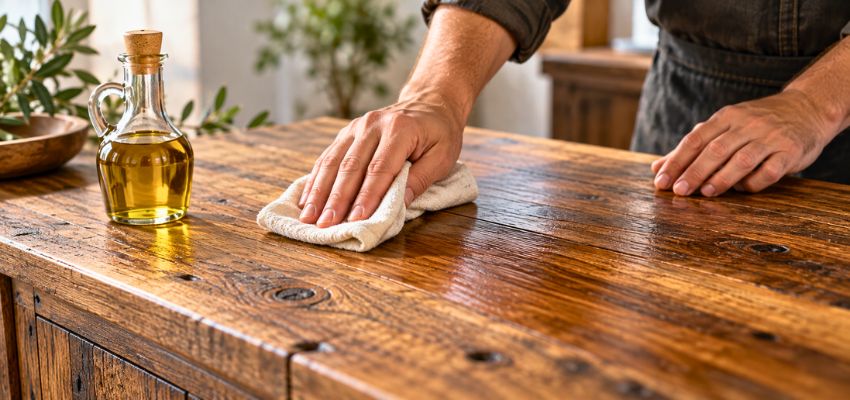
Olive oil is not generally the first choice for maintaining finished wood furniture. If a surface looks dry or dull, first identify the existing finish and check the manufacturer’s or woodworker’s care instructions. If you choose to test olive oil, limit the test to a small, inconspicuous area rather than treating the entire piece.
1. Clean the Surface
Remove loose dust and surface dirt using a cleaning method appropriate for the existing finish. The surface should be clean and dry before any treatment is tested.
2. Identify or Test the Finish
Determine the existing finish if possible. If it’s unknown, test a small, hidden area and check for changes in color, sheen, or texture before proceeding.
3. Apply a Small Amount
Put a small amount of olive oil on a clean, soft cloth. Do not pour it directly onto the timber.
4. Wipe With the Grain
Gently wipe the test area in the direction of the grain. Use just enough oil to treat the surface lightly.
5. Remove Excess
Use a clean section of the cloth to remove any remaining oil. The surface should not feel wet, greasy, or sticky.
6. Check the Result
Check the test area after application. If the surface remains oily, sticky, darker, or attracts dust, do not continue. Use a care method appropriate for the existing finish instead.
Take particular care with valuable, antique, reclaimed, or specialty wood. When a surface is valuable or its finish is uncertain, preserving the existing finish or natural patina is often more important than a temporary increase in sheen. In these cases, a purpose-specific care method is the better choice.
Will Olive Oil Go Rancid on Wood?
Olive oil residue can oxidize and deteriorate over time. If enough oil remains on the surface, the residue may develop an unpleasant odor. It can also contribute to buildup that becomes harder to remove.
This is one reason repeated applications are not better. Adding more oil to a surface with residue can compound the problem rather than improve its appearance.
If the surface becomes greasy, sticky, dusty, or develops an unpleasant odor after olive oil is applied, stop adding oil. Clean it using a method appropriate for the existing finish.
Can You Use Olive Oil on a Wood Cutting Board?
Olive oil is generally not recommended as a routine treatment for wood cutting boards.
Cutting boards differ from decorative furniture. They are food-contact surfaces exposed to repeated washing, moisture, food particles, and knife use. A product that works on furniture is not automatically safe or suitable for a surface used to prepare food.
For cutting boards and other food-contact wood surfaces, choose a product specifically designed for food-contact wood care. Always follow the board manufacturer’s care instructions.
What Should You Use Instead of Olive Oil?
The right wood-care product depends on the timber, existing finish, and intended use.
For finished furniture, use a maintenance product suited to the existing finish. Follow the manufacturer’s or woodworker’s care instructions. For cutting boards and other food-contact surfaces, choose a product designed for that purpose.
Reclaimed and specialty wood often requires extra care. This is especially true when preserving an existing patina, maintaining a finished surface, or preparing the wood for a new application. For valuable timber, a project-specific approach is better than a generic household treatment.
What If You Already Put Olive Oil on Wood?
If you have applied olive oil, don’t add more just because the surface looks dry. Check how the wood feels first.
If it’s clean, smooth, and free of excess residue, leave it alone rather than applying more oil. If it feels greasy or sticky, gently remove the surface excess with a clean, dry cloth. If residue persists, use a cleaning method appropriate for the existing finish instead of applying more oil.
If the surface develops an unpleasant odor or persistent buildup, use a cleaning method suited to the existing finish. If the finish is unknown or the piece is valuable, consult a qualified woodworker or conservator before attempting deeper cleaning. Antique, reclaimed, or specialty wood requires extra care to preserve its original character.
Frequently Asked Questions
Can you use olive oil on wood furniture?
Olive oil can temporarily change the appearance of some wood furniture, but it’s not generally recommended as a routine maintenance treatment. If you choose to test it, use very little and start with an inconspicuous area.
Does olive oil protect wood?
Olive oil may temporarily improve the appearance of some wood. However, it’s not a substitute for a purpose-made protective finish.
Can olive oil remove scratches from wood?
No. Olive oil cannot repair scratches. It may temporarily reduce the appearance of minor surface imperfections, but this effect is not permanent.
How often should you put olive oil on wood?
There’s no universal application schedule, and repeated use can contribute to residue and buildup. For regular maintenance, follow care recommendations appropriate to the wood and its existing finish.
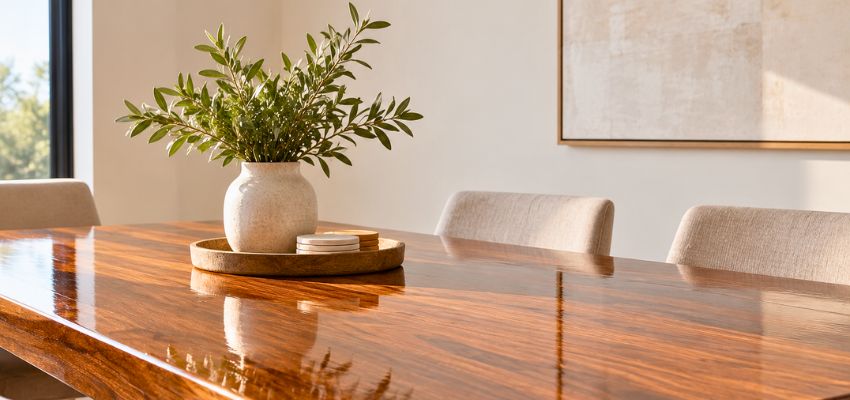
Caring for Your Wood Properly
Olive oil can temporarily change the appearance of some wood furniture. However, good wood care starts with understanding the material and its finish. This is especially important with reclaimed and specialty wood, where grain, age, texture, and patina contribute to the timber’s character. The right maintenance approach should preserve those qualities. It should not add residue or alter an existing finish.
If you’re unsure how to care for a reclaimed wood surface or are considering wood for a new project, choosing the right material and finish from the start can make a significant difference. Vintage & Specialty Wood specializes in reclaimed and specialty timber for flooring, wall and ceiling planking, beams, timber framing, and custom architectural applications.
Planning a reclaimed or specialty wood project? Contact Vintage & Specialty Wood to discuss your project, explore available materials, and find the right timber for your space.
Hire The Timber Experts For Your Next Project
Vintage & Specialty Wood should be your source of the highest quality timbers from around the world. When it comes to fabricating and installing reclaimed wood or specialty wood products in your home, we don’t cut corners. We offer many reclaimed wood and specialty wood products such as Douglas Fir, white oak, and much more. We also offer timber framing and wood flooring services as well. Contact our team today to speak to a timber expert about what Vintage & Specialty Wood can do for you.

This Blog Is Fact Checked
This content has undergone meticulous fact-checking by our team of internal experts. Gain a deeper understanding of the high editorial standards we uphold on our website here.

About The Author
Experience, exploration, and knowledge are the hallmarks of writer Rei Bayucca. Her dedication to crafting articles that both inspire and educate will leave you thinking long after you’ve finished reading.