Key Elements for the Perfect Modern Tuscan Style Kitchen
Published July 15, 2026
Are you drawn to the warmth and character of a Tuscan style kitchen but want a space that feels fresh rather than rooted in early-2000s trends? Many homeowners love the timeless appeal of Tuscan design. However, they prefer an interpretation that’s lighter and more refined. This approach is much better suited to modern living.
Modern Tuscan kitchens capture the warmth of the Italian countryside. They skip the heavy decorations of the past. Instead, they focus on cleaner lines and softer colors. Thoughtful materials make the space inviting and functional. The final look is effortlessly timeless.
Whether you’re planning a full renovation or adding Tuscan touches to your existing kitchen, knowing the style’s key elements is important. It helps you make design choices that will stay beautiful for years to come. This foundation also makes it easier to explore the style’s origins and key features.
What Is a Tuscan Style Kitchen?
The Origins of Tuscan Kitchen Design
Tuscan kitchen design draws inspiration from the farmhouses and villas of Tuscany, Italy. Traditionally, these homes were built using local stone, clay, and timber. These kitchens were designed to be practical and durable. Above all, they were welcoming spaces where family and friends naturally gathered.
The style entered American homes in the late 19th and early 20th centuries before surging in popularity during the early 2000s. At that time, the style was known for richly stained cabinetry and dark granite countertops. It also featured ornate wrought iron accents and layered decorative finishes.
Traditional vs. Modern Tuscan Kitchen
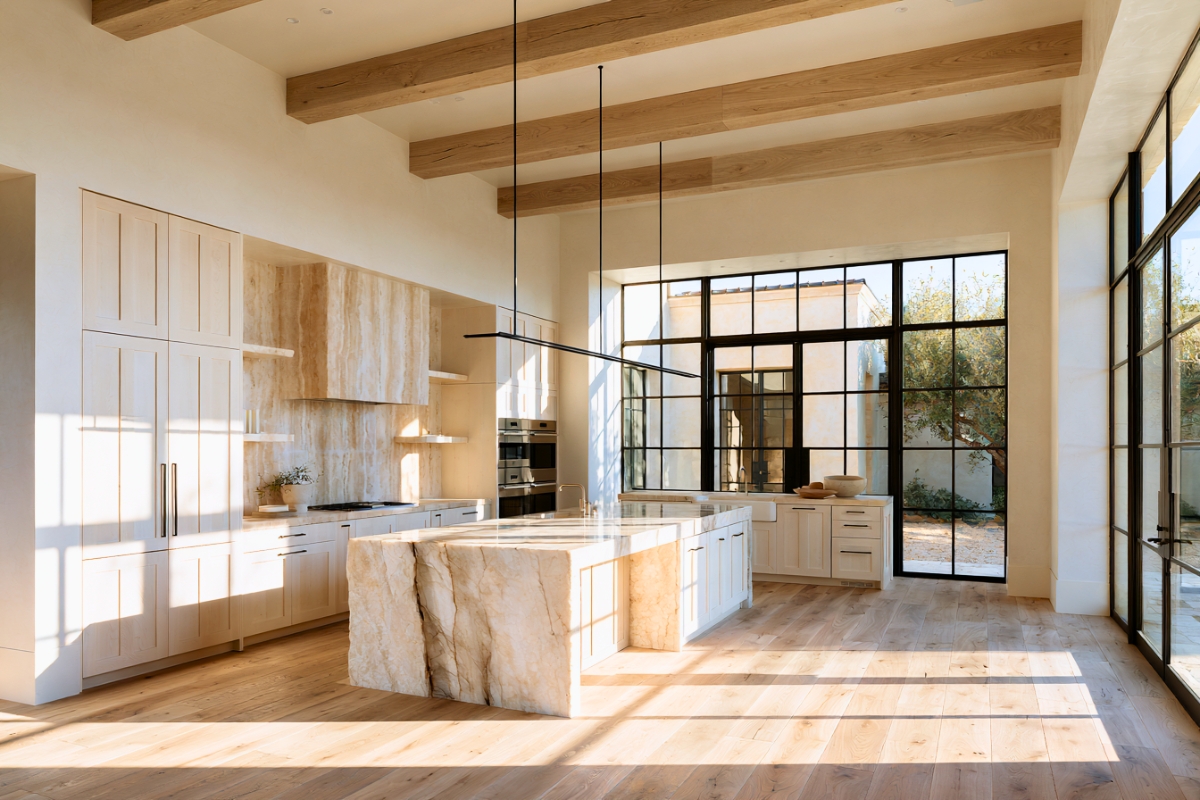
Traditional Tuscan kitchens use deep, earthy colors like terracotta and olive green. They also feature heavily carved cabinets and dark natural stone. Modern designs keep the warmth and texture of the original style, but they simplify the look. They use lighter neutral colors and shaker-style cabinets. Simple iron accents and clean lines keep the Old World feel without looking dated.
Defining Characteristics of a Tuscan Style Kitchen
Tuscan kitchens, whether traditional or modern, share several defining features. These include exposed wood beams, natural stone surfaces, and warm earth tones. Wrought iron accents and abundant wood are also common throughout. The style doesn’t chase perfectly uniform finishes. Instead, it celebrates durable, tactile materials that build character over time. These elements add lasting depth and warmth to the home.
Essential Elements of a Modern Tuscan Style Kitchen
Exposed Wood Beams for Authentic Tuscan Character
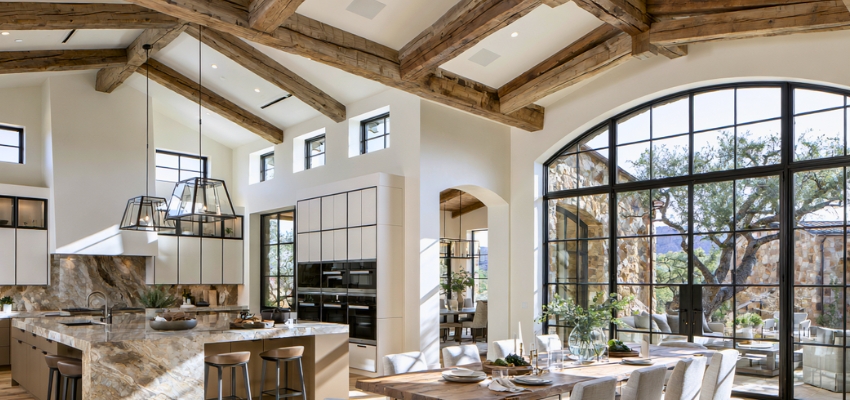
Exposed wood beams are a defining feature of Tuscan design. They add warmth, texture, and architectural character to any kitchen. In modern spaces, beams often have a natural finish or are made from reclaimed timber. This lets the wood’s grain and age show through, becoming a key part of the room’s charm.
Warm, Earth-Toned Color Palettes
Modern Tuscan palettes soften the traditional mix of terracotta and olive green. They blend these tones with creamy whites, warm taupes, and soft grays. Muted blues or subtle green accents add contrast while maintaining the relaxed, earthy feel that defines the style.
Natural Stone Countertops and Backsplashes
Natural stone remains a cornerstone of Tuscan kitchen design. Honed marble, travertine, and warm-toned quartz are popular choices for Tuscan kitchens. Unlike heavily polished surfaces, they offer a softer, more understated finish. They also preserve the timeless appeal of natural materials.
Timeless Wood Cabinetry With Clean Lines
Modern Tuscan kitchens swap ornate raised-panel doors for shaker-style cabinetry. These cabinets feature simple, well-proportioned profiles. Finishes in warm oak, walnut, or lightly whitewashed tones keep the space bright while preserving its natural warmth.
Rustic Wood Flooring for Lasting Warmth
Wood flooring anchors the room and ties together ceiling beams, cabinetry, and other natural materials. You can choose reclaimed boards or new hardwood with a rustic finish. The goal is lasting character, not a perfectly uniform look.
Wrought Iron and Aged Metal Accents
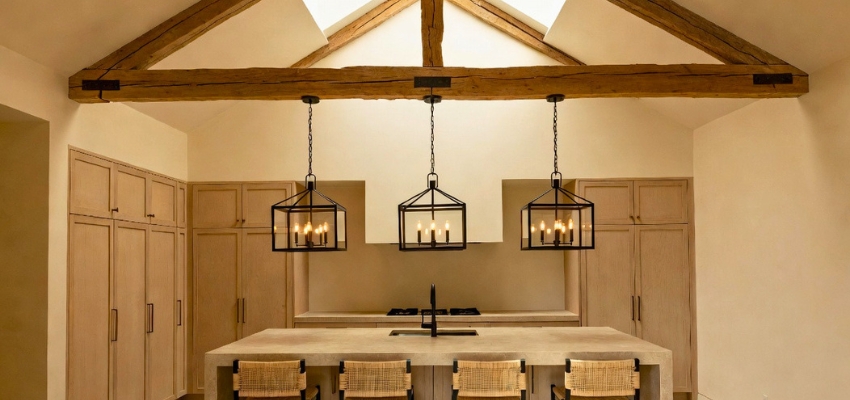
Wrought iron still plays an important role but with a lighter touch than in traditional Tuscan kitchens. Simple pendant lights or a statement chandelier add subtle contrast. Understated cabinet hardware keeps the look clean. Brass or bronze accents bring warmth without overwhelming the space.
Layered Lighting for a Warm, Inviting Kitchen
Lighting brings the entire design together. Pair a wrought iron fixture above the island with under-cabinet task lighting. Add warm ambient illumination to complete the look. This creates a space that feels both functional and welcoming all day long.
How Reclaimed Wood Enhances Tuscan Kitchen Design
Why Reclaimed Wood Fits the Tuscan Style
Reclaimed wood is a natural fit for Tuscan design. The style originated in farmhouses where materials were repaired, repurposed, and reused out of necessity. Reclaimed wood carries visible history. Nail holes, saw marks, and a weathered patina give it a character that freshly milled lumber simply can’t replicate.
Beyond appearance, reclaimed wood offers practical advantages. Having aged over decades, it is often denser and more dimensionally stable than freshly cut lumber. Choosing reclaimed materials reduces demand for newly harvested timber and gives existing wood a second life.
Where To Incorporate Reclaimed Wood
Reclaimed wood works throughout a Tuscan-inspired kitchen. Use it for exposed ceiling beams, floating shelves, and kitchen islands. It also works well for range hoods and accent walls. Whether it’s a bold architectural feature or a small finishing detail, reclaimed wood adds texture and character. It’s a natural fit for a style that celebrates organic materials.
Choosing the Right Wood Species
Hardwoods like oak, walnut, and maple are highly durable. This makes them perfect for countertops and high-traffic flooring. Reclaimed pine and Douglas fir are softer. They’re often salvaged from old barns and buildings. These woods work best for ceiling beams, shelving, and decorative accents.
Whichever species you choose, work with a reputable supplier. Make sure they kiln-dry and treat the lumber before installation. This preparation ensures the wood is stable, clean, and ready for long-term use. Vintage & Specialty Wood offers reclaimed beams, flooring, and other timber products. Their materials help bring authentic Tuscan character to your project..
How to Design a Modern Tuscan Kitchen
- Modern Tuscan kitchens balance rustic and contemporary elements. Pair natural materials like wood, stone, and iron with clean, uncluttered lines. Avoid layering decorative trim over textured surfaces. Instead, let the materials speak for themselves.
- Choose authentic materials whenever possible. Natural stone, solid wood, and iron develop character with age. They give the kitchen a warm, lived-in quality. It’s a look that manufactured alternatives simply can’t replicate.
- Integrate modern appliances intentionally. A statement range or custom hood can serve as a visual centerpiece. Meanwhile, panel-ready refrigerators and dishwashers help maintain a cohesive design. They blend in seamlessly without competing for attention.
- Keep the space open, bright, and functional. Larger windows flood the space with natural light. Open shelving keeps the kitchen feeling airy and accessible. A generously sized island offers room to work, gather, and connect. Together, these elements honor the welcoming spirit of Tuscan design.
Common Mistakes to Avoid When Creating a Tuscan Style Kitchen
- Using too many decorative elements. Ornate corbels and elaborate ironwork can overwhelm a space. Excessive detailing has the same effect. The result feels cluttered rather than inviting. Choose one or two statement pieces instead. Let them add character while natural materials take center stage.
- Choosing cool or stark color schemes. Cool greys and blue-toned finishes can work against the warmth that defines Tuscan design. Even in modern interpretations, warm neutrals create a more cohesive and authentic look.
- Mixing incompatible styles. Tuscan kitchens pair naturally with Mediterranean or modern farmhouse influences. These styles share a common emphasis on texture and natural materials. High-gloss cabinetry and ultra-minimalist finishes often compete with the style’s rustic character.
- Replacing natural materials with artificial alternatives. Laminate wood grain and faux stone can look convincing at first glance. But they rarely offer the same depth or texture as the real thing. They also don’t age as gracefully over time. Authentic materials contribute more to the timeless appeal that defines a Tuscan-inspired kitchen.
Frequently Asked Questions
What is a Tuscan style kitchen?
A Tuscan style kitchen is inspired by the farmhouses and villas of Italy’s Tuscany region. It emphasizes natural materials and warm earth tones. Features like exposed wood beams, stone surfaces, and wrought iron details are key. Together, they create a space that feels both welcoming and timeless.
What makes a modern Tuscan kitchen different?
Modern Tuscan kitchens keep the warmth and natural materials of the traditional style. However, they feature lighter color palettes, simpler cabinetry, and cleaner lines. The result feels more open and contemporary without losing its rustic character.
What materials are commonly used in Tuscan kitchen design?
Tuscan kitchens rely on natural materials. These include natural stone, solid or reclaimed wood, terracotta tile, and wrought iron. These materials are chosen for their durability and timeless character.
Is a Tuscan style kitchen still in style?
Yes. The heavily ornate look of the early 2000s has faded. But the core elements of Tuscan design have not. Natural materials, warm colors, and handcrafted character are still very much in demand. Today’s interpretations simply present them in a lighter, more refined way.
Is reclaimed wood a good choice for a Tuscan kitchen?
Yes. Reclaimed wood honors the style’s heritage of using durable, natural materials. It adds rich texture and character. New lumber simply can’t replicate this look. When properly sourced and prepared, it’s well-suited for beams, shelving, islands, and flooring.
Timeless Design Starts With the Right Materials
A modern Tuscan style kitchen isn’t defined by ornate details or decorative finishes. Its lasting appeal comes from natural materials and balanced proportions. It relies on quality craftsmanship that grows more beautiful with age. Exposed beams, natural stone, wrought iron, and solid wood cabinets form the foundation. Lighter colors and simpler details give the space a fresh, contemporary feel.
Reclaimed wood brings warmth, texture, and authentic character to a modern Tuscan kitchen. Whether used for ceiling beams, shelving, flooring, or a statement island, it creates a timeless look that’s built to last. Vintage & Specialty Wood offers reclaimed timber and architectural wood products to help bring your vision to life.
Hire The Timber Experts For Your Next Project
Vintage & Specialty Wood should be your source of the highest quality timbers from around the world. When it comes to fabricating and installing reclaimed wood or specialty wood products in your home, we don’t cut corners. We offer many reclaimed wood and specialty wood products such as Douglas Fir, white oak, and much more. We also offer timber framing and wood flooring services as well. Contact our team today to speak to a timber expert about what Vintage & Specialty Wood can do for you.

This Blog Is Fact Checked
This content has undergone meticulous fact-checking by our team of internal experts. Gain a deeper understanding of the high editorial standards we uphold on our website here.

About The Author
Experience, exploration, and knowledge are the hallmarks of writer Rei Bayucca. Her dedication to crafting articles that both inspire and educate will leave you thinking long after you’ve finished reading.