Manufactured Wood vs. Solid Wood: Which is Better?
Published September 30, 2026
Choosing between manufactured wood and solid wood is common when selecting furniture, flooring, or building materials. Each option has advantages and limitations. The right choice depends on factors like intended application, appearance, durability, maintenance, and budget.
So, what is manufactured wood and how does it compare with solid wood? Begin by examining how each material is made and how those differences affect real-world use.
What Is Manufactured Wood?
Manufactured wood is a broad consumer term for engineered wood products. These are made by processing or combining wood fibers, particles, strands, veneers, or other components into panels, boards, or structural products. Manufacturers use adhesives, heat, pressure, or other processes to achieve specific properties. The exact method depends on the product.
Solid wood is cut and milled directly from natural timber. Manufactured wood, by contrast, is engineered from wood-based components. This process produces consistent dimensions and surfaces and can offer predictable performance depending on the product.
Manufactured wood is a broad category, not a single material. Different products are designed for various applications. As a result, their strength, density, moisture performance, appearance, and finishing options vary considerably.
Types of Manufactured Wood
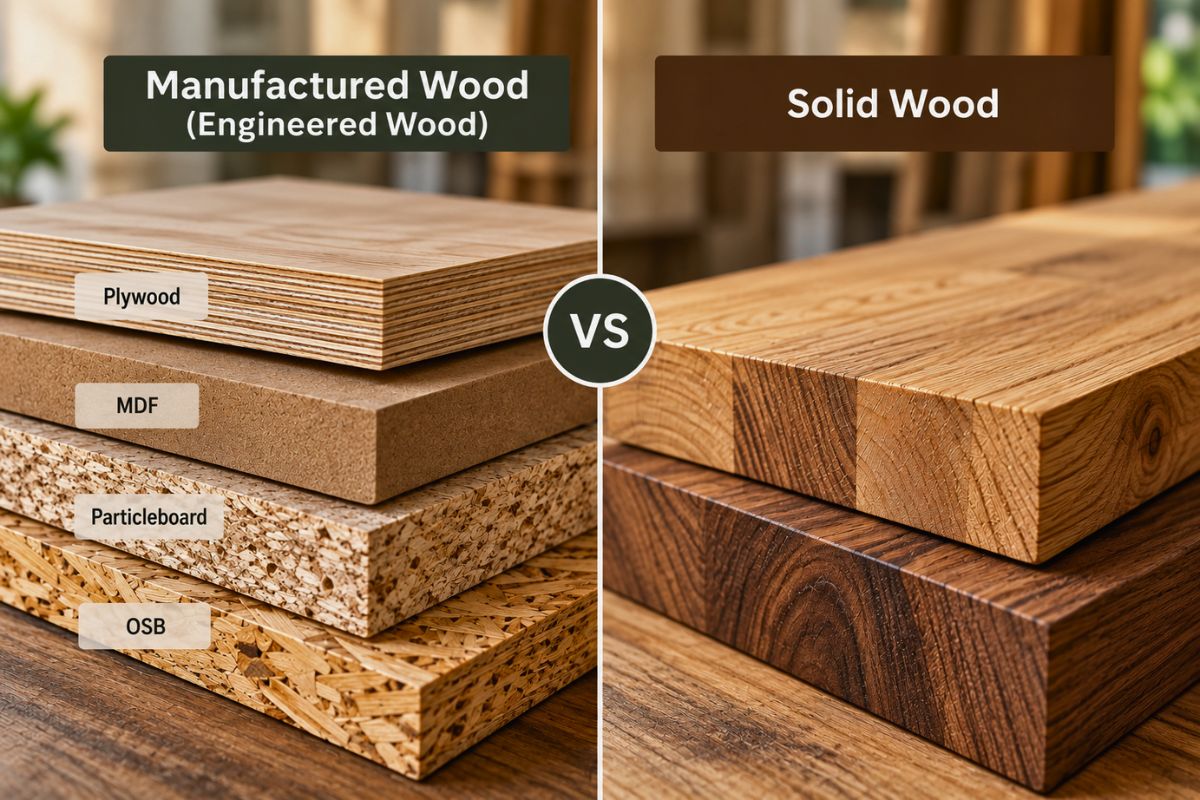
Common types of manufactured wood include:
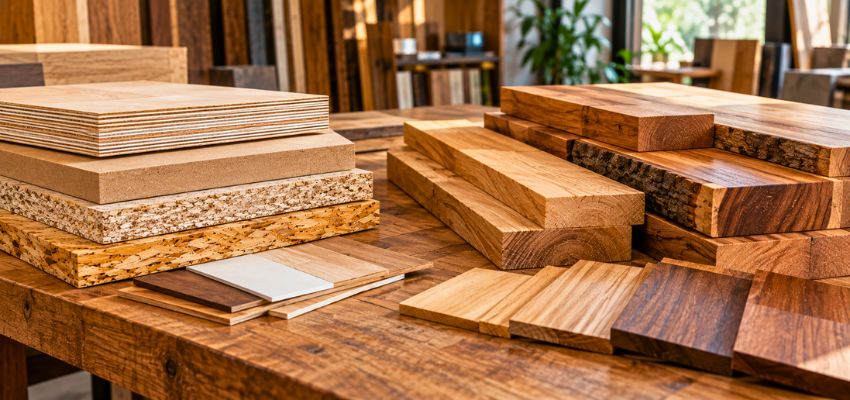
- Plywood: Made by bonding multiple layers of wood veneer together, typically with alternating grain directions to improve strength and stability.
- Medium-density fiberboard (MDF): Made by compressing refined wood fibers with resin into dense, smooth panels. It’s commonly used for furniture, cabinetry, moldings, and interior applications.
- Particleboard: Made from wood particles bonded into panels. It’s widely used in furniture and cabinetry where a cost-effective panel material is appropriate.
- Oriented strand board (OSB): Made from wood strands bonded under heat and pressure. It’s commonly used in structural applications such as wall and roof sheathing.
- Laminated veneer lumber (LVL): Made by bonding layers of wood veneer to create a strong, dimensionally stable engineered wood product used primarily for structural applications.
These products aren’t interchangeable. MDF, plywood, OSB, and LVL have different compositions and applications.
Manufactured Wood vs. Solid Wood: Key Differences
The main difference between manufactured wood and solid wood is how each material is constructed.
Solid wood comes directly from natural timber. It retains the characteristics of the original species, including its grain and natural variation. Manufactured wood is different. It’s made by processing and combining wood-based components into an engineered product.
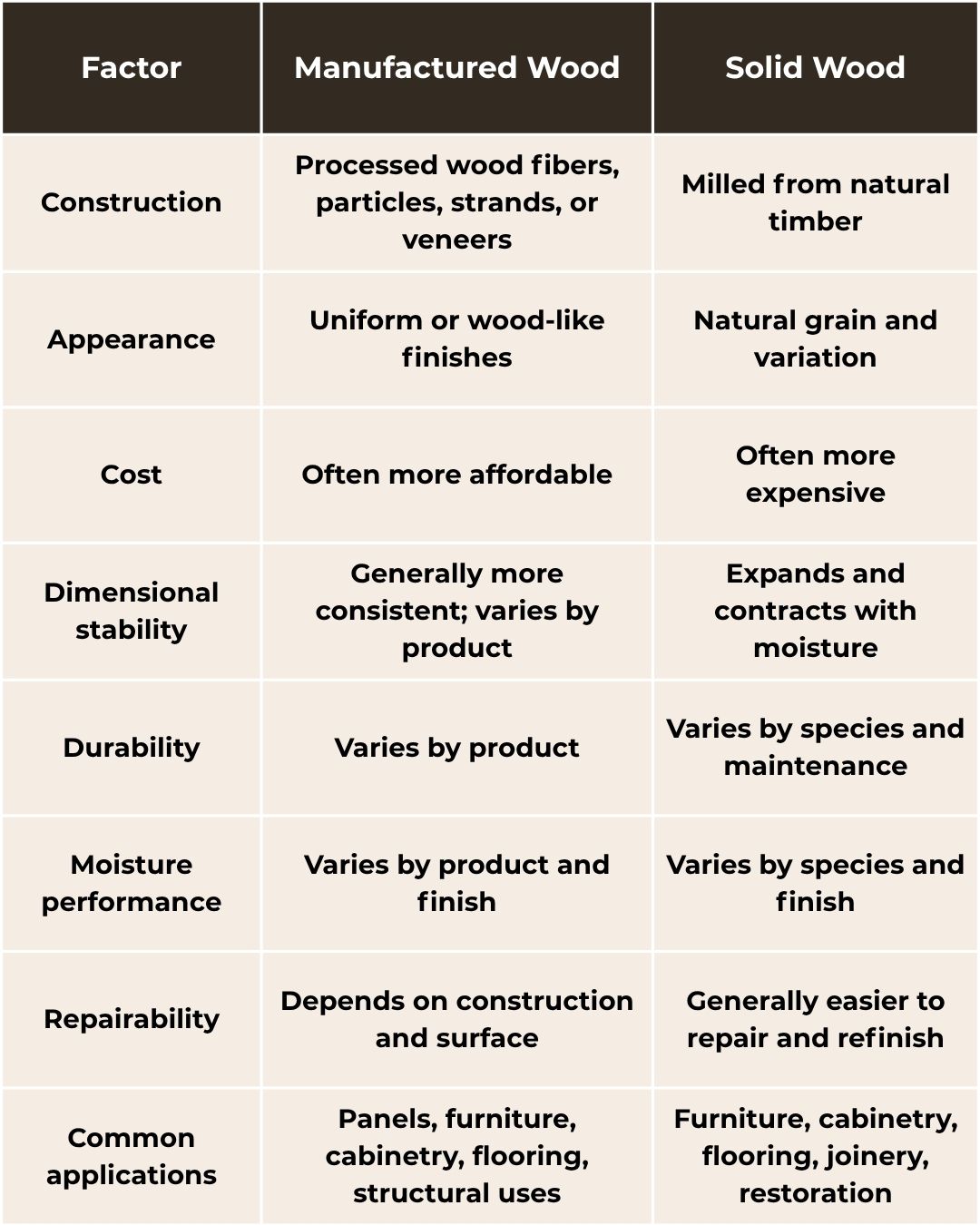
Here’s a quick look at the main differences:
Construction
Solid wood is cut and milled directly from timber. Manufactured wood is made by processing and bonding wood components together. These components include fibers, particles, strands, or veneers, which are combined to create finished products.
Appearance
Solid wood features natural grain patterns, color variations, and knots. These characteristics vary depending on the species of wood. Each piece can have a slightly different appearance.
Manufactured wood can also replicate a natural wood appearance through veneers, decorative surfaces, stains, and other finishes. Products such as MDF are valued for their smooth, uniform surfaces and suitability for painted finishes.
Cost
Manufactured wood is generally more affordable than solid wood, especially for large panels or consistent dimensions. However, pricing varies by type, grade, thickness, finish, and intended use.
Solid wood tends to cost more because it’s sourced directly from timber and may require extra processing, grading, and finishing. Species and lumber quality also significantly affect price.
Dimensional stability
Solid wood naturally responds to changes in moisture and humidity. It can expand, contract, warp, or crack over time, especially if not properly handled, finished, or maintained. Species, construction, and environment all affect how the wood behaves.
Durability
Neither material is inherently more durable in every application.
Solid wood durability depends on species, construction, finish, environment, and maintenance. Manufactured wood varies similarly. Some engineered products are built for demanding structural applications, while others, especially lower-density panels, are more prone to dents, chips, or edge damage.
Compare the specific products rather than assuming one category is universally more durable.
Moisture performance
Moisture resistance varies among manufactured wood products. Some are designed or treated for moisture exposure, while others are intended for dry interior environments. Surface finishes and exposed edges also affect performance.
Solid wood is similarly affected by moisture and humidity fluctuations. Choosing an appropriate species, finish, installation method, and maintenance routine can help manage these effects.
For either material, choose a product suited to the environmental conditions it will face.
Pros and Cons of Manufactured Wood
Manufactured wood offers several practical advantages, but its benefits and limitations depend on the product.
Pros
- Cost-effective: Many manufactured wood products are cheaper than solid wood, especially for large panels and standard dimensions.
- Consistent dimensions: Manufactured wood is produced under controlled conditions, allowing panels and components to meet consistent dimensions and specifications.
- Dimensional stability: Engineered wood products are designed to limit natural movement, making them useful where dimensional consistency is important.
- Wide range of products: Manufactured wood comes in many forms, densities, thicknesses, and structural grades. This versatility suits a wide range of applications, from cabinetry and furniture to structural construction.
- Customizable surfaces: Some manufactured wood products have smooth, uniform surfaces. These can be painted, veneered, laminated, or otherwise finished to suit a project’s needs.
- Efficient use of wood resources: Some products make efficient use of wood components and manufacturing by-products. However, environmental impact varies by manufacturing process, adhesives, energy use, and sourcing practices.
Cons
- Performance varies by product: Manufactured wood is a broad category, not a single material. A panel designed for cabinetry may not be suitable for structural use or prolonged moisture exposure.
- Some products use adhesives and resins: Many engineered wood products rely on adhesives or resins. Depending on the product and resin system, these can affect emissions and indoor-air considerations.
- Some products are difficult to repair or refinish: The ability to sand, refinish, or repair manufactured wood depends on its construction and surface. For example, a thin decorative veneer or laminate offers less scope for refinishing than solid wood.
- Some panels are susceptible to edge damage: Certain manufactured wood products, especially lower-density panels, are more vulnerable to dents, chips, or damage at exposed edges. Proper product selection and finishing can reduce these problems.
Pros and Cons of Solid Wood
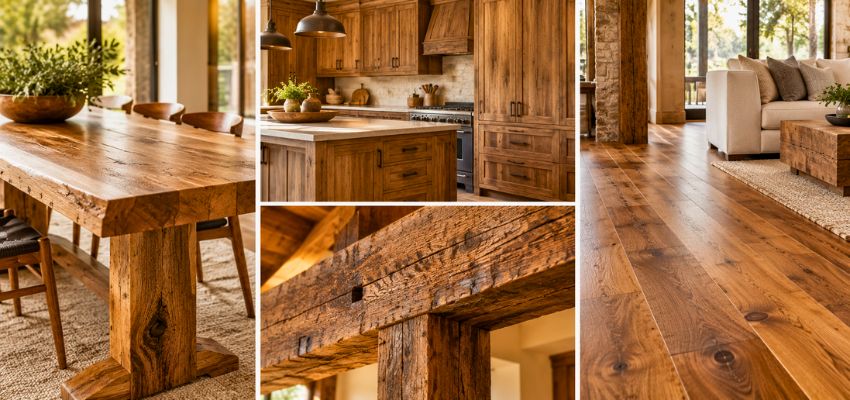
Solid wood remains a favored choice for furniture, flooring, and cabinetry. Its appeal comes from its natural appearance and its ability to be repaired and refinished over time.
Pros
- Natural appearance: Solid wood has distinctive grain patterns and color variations. Each piece has its own unique character and appearance.
- Can often be repaired and refinished: Solid wood can often be sanded, refinished, or restored. This depends on the species, thickness, and construction. These qualities help extend the useful life of furniture and other wood products.
- Long service life when properly maintained: With the right care, well-made solid wood products can last for many years. Their lifespan depends on the wood species, construction quality, environmental conditions, finish, and maintenance.
- Can be reclaimed and reused: Solid timber can often be salvaged from older buildings and furniture for reuse in new projects. Reclaimed wood is valued for its practical qualities and distinctive appearance.
Cons
- Often more expensive: Solid wood often costs more than manufactured wood alternatives. This is especially true when using premium species or high-quality lumber.
- Susceptible to moisture and humidity: Natural wood expands and contracts as moisture levels change. Proper acclimatization, construction, finishing, and maintenance can help reduce the risk of warping and cracking.
- Weight varies by species: Some solid woods are dense and heavy. This can make handling, transportation, and installation more challenging.
- Requires appropriate maintenance: Finishes help protect solid wood from moisture, staining, and wear. Depending on the application, periodic cleaning, refinishing, or other maintenance may be required.
Manufactured Wood vs. Solid Wood: Which Should You Choose?
Neither material is inherently better. The right choice depends on the project.
Manufactured wood may be a good fit when you need:
- consistent dimensions and surfaces;
- a cost-effective material;
- large panels;
- specific engineered or structural properties from a suitable product;
- a smooth surface for painting or finishing; or
- a material designed for a particular application.
Solid wood may be a better fit when you prioritize:
- natural grain and character;
- the ability to repair or refinish the material;
- long-term furniture restoration;
- reclaimed timber; or
- the appearance and feel of a particular wood species.
The key question is not whether wood is manufactured or solid, but whether the specific material suits the application.
Consider the environment, moisture exposure, required strength, appearance, maintenance, and budget.
Frequently Asked Questions
Is manufactured wood real wood?
Manufactured wood products are made from real wood fibers, particles, strands, veneers, or other wood components. Unlike solid wood, these components are processed and engineered into finished products.
Is manufactured wood the same as engineered wood?
Manufactured wood and engineered wood are closely connected terms, and they’re often utilized interchangeably in consumer-facing content. However, terminology can vary by product and industry. Engineered wood refers to wood-based products made by processing or combining wood components. These products are designed to achieve specific performance properties.
Is manufactured wood durable?
Durability depends on the product. Some engineered wood products are designed for structural or demanding applications, while others are intended for furniture or interior use. Choose the product according to its intended application.
Is manufactured wood cheaper than solid wood?
Generally, yes. Most manufactured wood products cost less than solid wood. However, prices vary depending on the material, grade, thickness, finish, and intended application.
Can manufactured wood get wet?
Moisture resistance varies by product. Brief exposure to water may be tolerated by some products, while prolonged moisture or high humidity can damage products that are not designed for those conditions. Check the manufacturer’s specifications before using a particular product in a moisture-prone area.
Can manufactured wood be refinished?
It depends on the product. Some engineered wood can be sanded or refinished, while thin veneers, laminates, and certain panels have limited refinishing potential.
Manufactured Wood vs. Solid Wood: Making the Right Choice
Manufactured wood and solid wood each have their strengths. The right option depends on the project’s requirements, budget, appearance, and intended use.
If your project calls for the character and natural variation of solid timber, Vintage & Specialty Wood is here to help. They offer specialty and reclaimed wood, including hardwoods, softwoods, beams, and boards. Their team can assist with material selection and support your project from design through fabrication and installation.
Contact Vintage & Specialty Wood to discuss your project and find the right wood for your vision.
Hire The Timber Experts For Your Next Project
Vintage & Specialty Wood should be your source of the highest quality timbers from around the world. When it comes to fabricating and installing reclaimed wood or specialty wood products in your home, we don’t cut corners. We offer many reclaimed wood and specialty wood products such as Douglas Fir, white oak, and much more. We also offer timber framing and wood flooring services as well. Contact our team today to speak to a timber expert about what Vintage & Specialty Wood can do for you.

This Blog Is Fact Checked
This content has undergone meticulous fact-checking by our team of internal experts. Gain a deeper understanding of the high editorial standards we uphold on our website here.

About The Author
Judy Ponio is a professional writer for the Vintage & Specialty Wood website blog. Her passion for carpentry and wood working coupled with her commitment to fact based blogging has helped her articles help millions of people over the years.