Signs of Water Damage on Hardwood Floors: 10 Red Flags
Published November 12, 2026
Hardwood floors can withstand years of daily use, but moisture exposure can cause visible and hidden damage. Some problems, like dark stains, swollen boards, and peeling finishes, are easy to recognize. Others, including musty odors, loose planks, and soft areas underfoot, may indicate moisture beneath the surface.
Knowing the signs of water damage on hardwood floors can help you identify problems before they become extensive. Here are 10 warning signs to look for and what they may indicate.
10 Common Signs of Water Damage on Hardwood Floors
Water can affect the flooring, protective finish, adhesives, fasteners, and subfloor. Symptoms depend on the amount of moisture and exposure time.
1. Dark or Discolored Patches on the Wood
Dark brown patches, gray areas, or uneven stains can signal moisture damage, especially when they appear suddenly. Water may penetrate the protective finish and reach the wood, causing discoloration. In some species, chemical reactions can leave stains that remain after the surface dries.
Check around floorboard seams, appliances, windows, and exterior walls. Pet urine, cleaning products, and natural wood-grain variations can also cause discoloration. Stains accompanied by swelling, peeling finish, or persistent musty odors warrant closer inspection.
2. Cupping Along the Edges of Floorboards
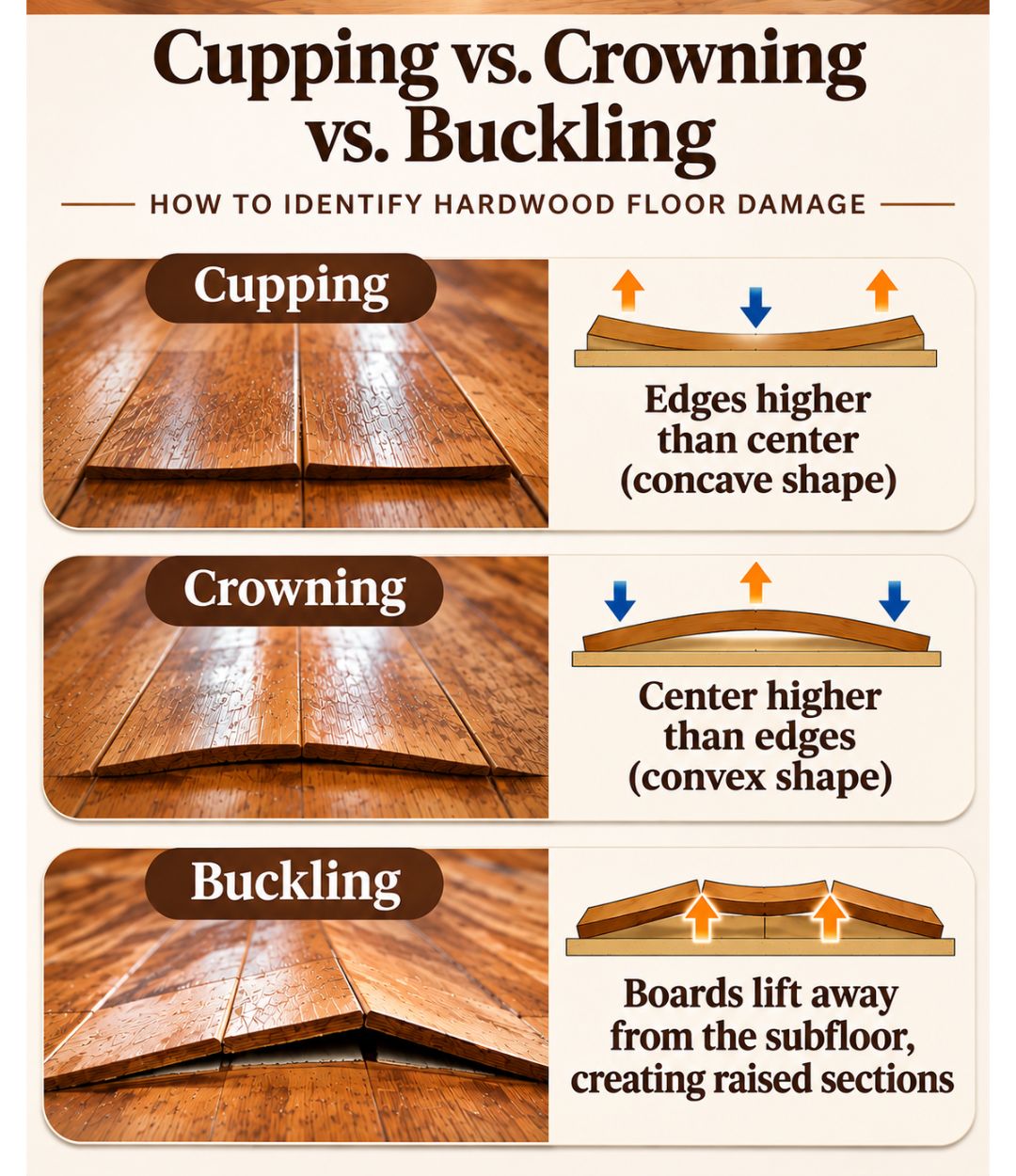
Cupping happens when the boundaries of a hardwood plank rise above its center, creating a shallow, dish-shaped appearance. This often happens when the underside holds more moisture than the top, causing uneven expansion.
The National Wood Flooring Association’s moisture management guidance explains that wood swells when it gains moisture and shrinks when it loses it. Several things can lead to cupping. These include plumbing leaks, damp crawl spaces, moisture rising from concrete subfloors, and high indoor humidity.
Cupping should not be confused with crowning. Cupping creates a concave profile, with the edges higher than the center. Crowning produces the opposite shape, with the center higher than the edges. See the Maple Flooring Manufacturers Association’s explanation of cupping and crowning for more technical information.
Do not sand either condition until the moisture source is fixed and the flooring stabilizes. Some boards may return closer to their original shape as moisture content changes.
3. Swollen or Expanded Hardwood Planks
Hardwood expands when it absorbs moisture. Excessive absorption can make boards wider or thicker, causing them to press against neighboring planks.
Look for tighter joints, raised edges, or boards that appear more prominent than surrounding sections. These changes often occur near plumbing connections, dishwashers, refrigerators, and washing machines.
Moisture can also cause wood-based subfloor materials, such as plywood and oriented strand board (OSB), to swell and weaken.
4. Warped or Uneven Floorboards
Moisture imbalances can distort hardwood boards as different areas expand or contract at different rates. Boards may bend, twist, or develop visible irregularities. Look for rippling, twisting, or sections that no longer sit flush with neighboring planks.
Unlike cupping and crowning, which involve specific changes in a board’s profile, general warping affects its overall shape. Installation problems, poor acclimation, and indoor humidity changes can also contribute.
5. Buckling or Floorboards Lifting From the Subfloor
Buckling is a more severe form of hardwood floor damage. It occurs when boards lift away from the subfloor, creating pronounced raised sections or humps.
Prolonged water exposure can cause boards to expand and press against one another. When they cannot expand freely, they may separate from their attachment to the subfloor.
Buckling may indicate damage to fasteners, adhesives, or underlying materials. Do not force lifted boards back into place. Have a flooring professional assess if the affected section or subfloor needs replacement.
6. Peeling, Blistering, or Bubbling Floor Finish
Water can compromise the floor’s protective coating, causing the finish to deteriorate or separate from the wood. Look for bubbling, blistering, peeling, flaking, or cloudy patches.
A damaged finish does not always mean the entire floor needs replacement. Localized repairs or refinishing may be possible once the moisture source is fixed and the wood stabilizes. Applying another coat of finish over damp wood will not fix the problem.
7. Soft, Spongy, or Unstable Areas Underfoot
A section that feels soft, spongy, or unusually flexible may indicate damage to the underlying floor structure. Water can seep through board seams and collect between the hardwood and subfloor. Prolonged exposure may cause wood-based subfloor materials to swell, warp, or weaken.
You may notice localized movement or a slight sinking sensation. Installation problems and damaged supports can cause similar symptoms. Avoid walking repeatedly over unstable sections and arrange an inspection.
8. Loose Floorboards or Unusual Gaps Between Planks
Changes in board spacing and stability can indicate moisture-related problems. Hardwood expands as it absorbs moisture and contracts as it dries. This movement can create gaps between planks. Prolonged exposure may weaken adhesives or fasteners holding boards in place.
Look for loose planks, unusual gaps, or sections that move when walked on. Gaps do not automatically indicate water damage. Hardwood naturally expands and contracts with indoor humidity, and seasonal gaps may appear during dry months. The NWFA’s moisture management guidance explains these seasonal changes.
Gaps that appear after a leak, especially alongside cupping or discoloration, warrant further investigation.
9. Unusual Squeaking, Popping, or Creaking Sounds
New or unusual sounds can signal movement in the flooring system. They do not always mean water damage.
Moisture-related expansion and contraction can affect how boards fit together and attach to the subfloor. Loose fasteners, weakened adhesive bonds, and subfloor movement can also cause squeaks, pops, or creaks. If these sounds occur alongside discoloration, swelling, or unstable sections, have the area inspected.
10. Water Seeping Through Floorboard Seams
Water appearing between hardwood planks is a concerning sign that moisture may have collected beneath the flooring. You may notice dampness along the seams or moisture that returns after the surface has been wiped dry. This can indicate water beneath the boards or a leak affecting the flooring system.
Possible sources include damaged pipes, leaking appliances, and exterior water intrusion. Removing visible water is not enough if moisture remains underneath. Stop the source, remove standing water, and arrange an inspection.
What Causes Water Damage to Hardwood Floors?
Water damage can come from plumbing leaks, appliance failures, flooding, or high indoor humidity. Some sources are easy to spot. Others hide behind walls, under cabinets, or beneath the flooring.
- Plumbing and appliance leaks: Damaged pipes, loose connections, dishwashers, refrigerators, and washing machines can expose nearby flooring to moisture.
- Flooding and exterior water intrusion: Heavy rain, roof leaks, damaged windows, and poor drainage can introduce water into the home.
- Excessive humidity and subfloor moisture: Damp crawl spaces, poor ventilation, and moisture migrating through concrete or subfloor materials can affect hardwood without a visible leak.
What to Do If You Notice Signs of Water Damage
If you notice possible water damage, take steps to limit further exposure and determine whether moisture has reached the subfloor.
- Stop the water source: Shut off the affected supply if a plumbing or appliance leak is responsible. Address exterior water intrusion when safe to do so.
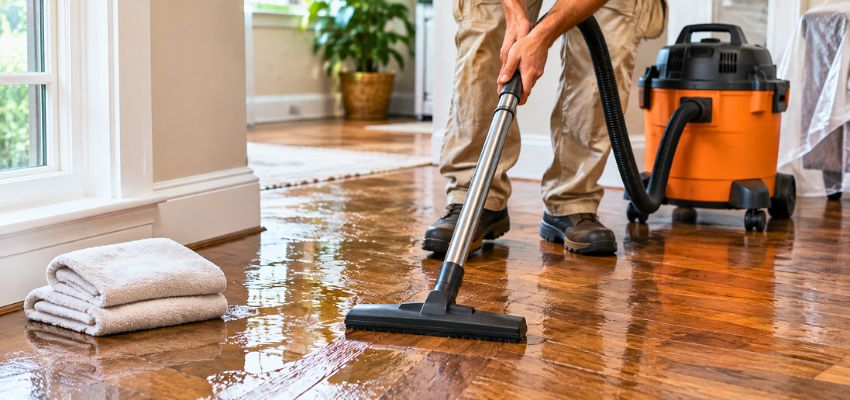
- Remove standing water: Use absorbent towels, a mop, or a suitable wet/dry vacuum. Move rugs and furniture away from the affected area.
- Avoid contaminated floodwater: Do not attempt to clean up water containing sewage or potentially hazardous substances yourself. Follow appropriate safety guidelines and seek professional cleanup.
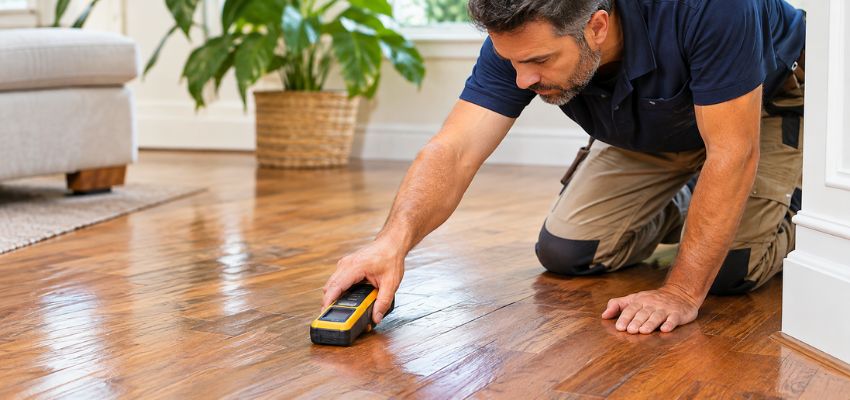
- Arrange moisture assessment: A flooring professional can use moisture meters to compare affected and unaffected areas and check whether the subfloor needs further inspection.
- Delay refinishing: Do not sand, stain, or apply a new finish until the moisture source is corrected and the flooring has stabilized.
For more detailed instructions on water removal, drying, and cleanup precautions, see our guide to wood floor water damage.
Can Water-Damaged Hardwood Floors Be Repaired?
Not every water-damaged hardwood floor needs complete replacement. Minor or localized damage may be repairable once the moisture source is fixed and the flooring has stabilized.
However, extensive buckling, persistent warping, delaminating engineered boards, or structural subfloor damage may require partial or complete replacement. Contaminated floodwater can also make removal necessary.
The right solution depends on the scope of the damage, the flooring construction, and the condition of the subfloor. A flooring professional can assess whether localized repairs or more extensive replacement are appropriate.
To reduce the risk of future moisture problems, clean spills promptly, monitor indoor humidity, and inspect nearby plumbing and appliances for leaks.
Frequently Asked Questions
How quickly can water damage hardwood floors?
It depends on the amount of water, exposure time, flooring construction, and surrounding conditions. A small spill wiped up promptly may not cause lasting damage, but a continuous leak or flood can cause serious problems, especially if water reaches the subfloor.
Can hardwood floors look normal after water damage?
Yes. A dry surface does not always mean the floor is dry. Moisture can remain trapped beneath the boards or in the subfloor. A professional moisture assessment can determine whether the flooring system has dried properly.
Does water damage always cause hardwood floors to buckle?
No. Buckling is a more severe form of moisture-related damage, not an inevitable result of water damage. Other symptoms include discoloration, cupping, swelling, and finish deterioration.
Is cupping in hardwood floors always caused by water damage?
No. Cupping usually results from a moisture imbalance between the top and bottom of a board. Seasonal humidity changes, damp subfloors, and installation conditions also contribute. Identify the cause before deciding on repairs.
Can water-damaged hardwood floors develop mold?
Yes. Ongoing moisture supports mold growth, particularly beneath flooring and in damp subfloor materials. Mold may develop without being visible from the surface. See the EPA’s guidance on mold, moisture, and your home for drying recommendations.
Protect Your Hardwood Floors From Further Damage
Water damage affects more than the appearance of hardwood floors. Left unaddressed, moisture causes boards to swell, warp, loosen, or deteriorate beneath the surface. Recognizing warning signs early can help limit damage and reduce the need for extensive repairs.
If you detect unusual changes in your flooring, address the moisture source promptly. If hidden moisture or structural damage is suspected, arrange a professional inspection before attempting repairs.
For more hardwood flooring advice, maintenance tips, and quality wood products, visit Vintage & Specialty Wood.
Hire The Timber Experts For Your Next Project
Vintage & Specialty Wood should be your source of the highest quality timbers from around the world. When it comes to fabricating and installing reclaimed wood or specialty wood products in your home, we don’t cut corners. We offer many reclaimed wood and specialty wood products such as Douglas Fir, white oak, and much more. We also offer timber framing and wood flooring services as well. Contact our team today to speak to a timber expert about what Vintage & Specialty Wood can do for you.

This Blog Is Fact Checked
This content has undergone meticulous fact-checking by our team of internal experts. Gain a deeper understanding of the high editorial standards we uphold on our website here.

About The Author
Hi, I’m Corinne Grace, a nursing graduate from Riverside College who enjoys writing about woodworking. Read as I cover how to choose between hardwoods and softwoods, how stains and finishes perform on different species, and so much more. My goal is to give woodworkers clear, well-researched guides they can use for their next project.