What Is Petrified Wood? Origins, Uses, and Cool Facts
Published November 25, 2026
A piece of petrified wood may look like an ordinary tree branch or log, but its mineral patterns and stone-like texture reveal a remarkable transformation. Once living wood, it became a fossil preserving details of trees from millions of years ago.
So, what is petrified wood? It is fossilized wood where minerals fill the original tissue’s pores or replace its organic components. This process preserves growth rings, grain patterns, and microscopic structures. Each specimen becomes a record of ancient plant life.
What Is Petrified Wood?
Petrified wood is a fossil formed when minerals preserve the structure of ancient trees. After burial, mineral-rich groundwater moves through its pores, depositing minerals inside. Sometimes, minerals also replace the original organic material.
Silica is a common component. It occurs as quartz, chalcedony, and related silica-rich minerals. Other minerals may be present depending on geological conditions.
How Is Petrified Wood Different From Regular Wood?
Regular wood consists of organic plant tissues, including cellulose and lignin. Petrified wood consists mainly of minerals that have filled or replaced those structures.
This transformation changes its physical properties:
- Weight: It’s generally denser and heavier than ordinary wood of comparable size.
- Hardness: Quartz-rich specimens are much harder than untreated timber.
- Texture: Its surface feels more like stone than natural wood.
- Workability: It cannot be processed using ordinary woodworking methods.
What Minerals Make Up Petrified Wood?
Silica is a common component of petrified wood and may occur as quartz, chalcedony, or agate, a banded form of chalcedony. Other minerals, including iron oxides, manganese compounds, and copper-bearing minerals, can contribute to its color. However, color alone cannot reliably identify a specimen’s mineral composition.
How Does Petrified Wood Form?
Petrified wood forms when buried trees are preserved long enough to mineralize. The process usually starts when a dead tree is covered by sediment, volcanic ash, mud, or other deposits. These materials slow decomposition.
Burial and Preservation of Ancient Wood
Burial protects wood from some of the oxygen and organisms that contribute to decomposition. In volcanic environments, silica from volcanic materials can dissolve into groundwater. This water then flows through the buried wood and creates conditions that support mineralization.
Mineral Replacement and Permineralization
Two important processes help explain how petrified wood forms: permineralization and mineral replacement.
- Permineralization occurs when dissolved minerals precipitate inside the pores and spaces of buried wood, preserving its original structure.
- Mineral replacement occurs when the original organic material dissolves, and inorganic minerals take its place. This can preserve the shape and finer anatomical features of the tree.
These processes may occur together, although their extent varies between specimens. Not all fossilized wood is petrified; some fossil wood is preserved through other processes, such as carbonization.
How Old Is Petrified Wood?
Petrified wood ranges from relatively young geological specimens to fossils hundreds of millions of years old. Its age depends on when the original tree lived and the geological history of the deposit.
For example, the petrified logs at Petrified Forest National Park in Arizona date to approximately 200 million years ago, during the Late Triassic Period.
How Long Does It Take for Wood to Become Petrified?
There’s no universal timeline for petrification. Several factors shape the process: mineral availability, groundwater chemistry, burial conditions, temperature, and original wood structure.
At Petrified Forest National Park, the National Park Service explains how silica from volcanic ash entered buried wood and crystallized within its cellular structure over hundreds to thousands of years. Other deposits may develop under different geological conditions.
The time required for mineralization should be distinguished from the fossil’s age. A specimen may be millions of years old even if mineralization took less time.
How Do Scientists Determine the Age of Petrified Wood?
Scientists usually estimate the age of petrified wood by studying the geological materials around it instead of dating the mineralized wood itself.
Common methods include:
- Radiometric dating: Measuring radioactive isotope decay in suitable minerals, such as zircon from associated volcanic materials.
- Stratigraphic analysis: Examining the position of fossil-bearing layers within geological formations.
- Fossil comparison: Using other fossils found in the same layers to estimate the deposit’s age.
Together, these methods help researchers date fossil-bearing layers and place the original trees on Earth’s geological timeline.
What Does Petrified Wood Look Like?
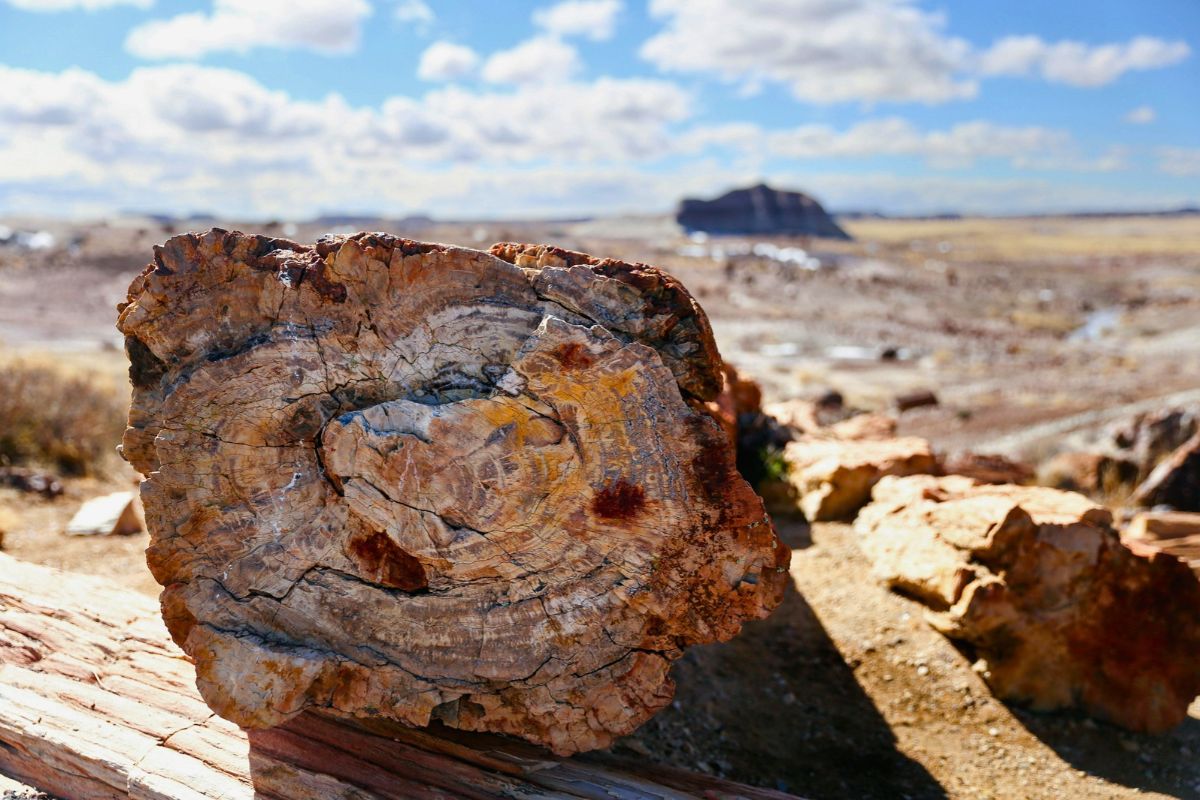
Petrified wood can look like ordinary wood, but its mineral makeup gives it a distinct appearance. Some pieces retain visible tree rings and grain patterns. Others have a crystalline or stone-like surface.
Common Colors and Natural Patterns
Petrified wood occurs in many colors, including brown, red, yellow, orange, black, white, gray, green, blue, and purple. These variations result from trace elements and mineral compounds introduced during fossilization.
Iron compounds contribute to many colors, while other elements can produce additional hues. For example, research on petrified wood color found that iron accounts for many shades, while chromium can produce bright green coloration in some specimens.
A single piece may display bands, swirls, or irregular patterns. Color can hint at a specimen’s mineral makeup, but it cannot confirm its identity or exact mineral content.
Texture, Weight, and Physical Characteristics
Petrified wood has a dense, stone-like texture. Weathered specimens may be rough, while cut and polished pieces can appear smooth and glossy. Quartz-rich specimens are hard but brittle and may chip or fracture on impact.
How to Identify Petrified Wood
Identifying petrified wood requires examining more than color or general appearance. Some ordinary rocks have patterns resembling wood grain. Visual inspection alone cannot always confirm authenticity.
Look for Preserved Wood Grain and Growth Rings
One of the strongest identification clues is recognizable wood anatomy. Look for:
- Circular or curved growth rings.
- Grain patterns that follow the original wood structure.
- Bark-like textures along the outer surface.
- Repeated lines resembling natural wood fibers.
Some specimens also preserve microscopic structures, including wood rays and tracheids. These features provide stronger evidence of fossilized wood than color alone.
Examine Its Weight, Hardness, and Surface
Petrified wood generally feels heavier and more stone-like than ordinary wood. Rough or crystalline textures offer supporting clues, as do internal patterns visible along fractures. However, other rocks may share these traits.
Avoid destructive scratch tests or attempts to break a specimen. These methods can damage a potentially valuable fossil without reliably establishing its identity.
When Should You Get a Specimen Professionally Identified?
Consider getting a professional opinion if a specimen is unusually large, rare, or potentially valuable. You should also do so if someone is selling it as authentic petrified wood.
A qualified geologist, paleontologist, or fossil specialist can examine its structure and mineral composition. Microscopic examination or laboratory analysis may provide stronger evidence than visual inspection alone.
Where Is Petrified Wood Found?
Petrified wood is found in geological deposits around the world. These include the United States, Australia, Brazil, Madagascar, Canada, and Antarctica. This wide distribution shows that fossilized wood can be preserved in many different geological environments.
One of the best-known locations is Petrified Forest National Park in northeastern Arizona. Its colorful fossilized logs date to approximately 200 million years ago.
Visitors can observe these geological features in the park, but removing petrified wood or other natural objects is prohibited.
What Is Petrified Wood Used For?
Petrified wood is not suitable for conventional woodworking. Its distinctive look, however, makes it useful for decorative, artistic, and educational purposes.
Home Decor and Decorative Displays
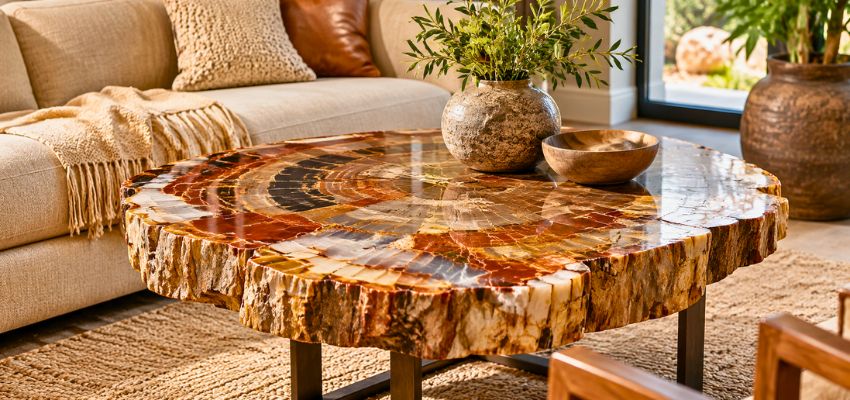
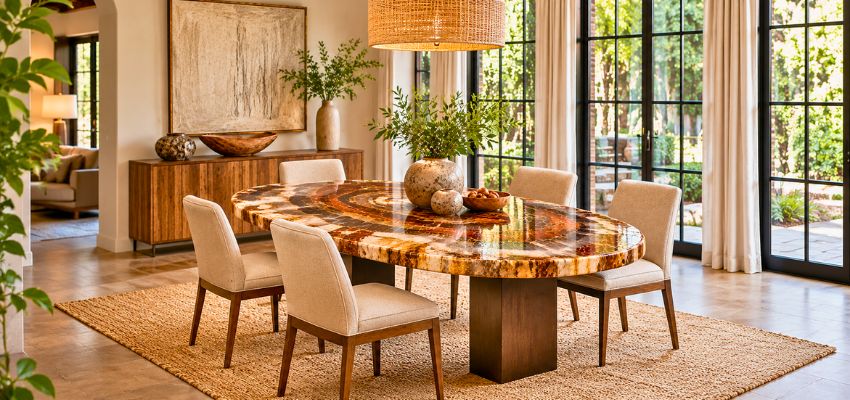
Polished petrified wood adds a natural accent to homes and commercial spaces. Common applications include tabletops, bookends, sculptures, and decorative display pieces. Consider a specimen’s size, weight, finish, and structural condition when selecting one.
Jewelry and Lapidary Art
Petrified wood is used in lapidary work, which involves cutting, shaping, and polishing stones and minerals. Suitable specimens can become pendants, beads, cabochons, and other jewelry components.
Polishing reveals the internal mineral patterns and colors. However, specimens with fractures or uneven mineralization may break during processing.
Collectibles and Educational Displays
Collectors appreciate petrified wood for its geological history, unusual appearance, and preserved plant structures. Specimens also serve educational purposes in schools, museums, and geology collections.
Condition, size, color, preservation quality, provenance, and market demand can influence a specimen’s desirability.
Interesting Facts About Petrified Wood
- Petrified Wood Can Preserve Ancient Tree Rings: Some specimens retain clearly visible growth rings. These can reveal how the original tree grew. They also help researchers study past environmental conditions.
- Some Petrified Trees Were Preserved Standing Upright: Some fossilized trees remain preserved as upright stumps instead of fallen logs. At Florissant Fossil Beds National Monument in Colorado, volcanic mudflows buried ancient redwoods about 34 million years ago. The stumps were preserved as fossils.
- Petrified Wood Provides Evidence of Ancient Environments: Preserved wood anatomy and growth patterns offer clues about ancient plant life and help researchers understand the environments where these trees grew.
Frequently Asked Questions
Is petrified wood a rock or a fossil?
Petrified wood is a fossil with the physical characteristics of stone formed when minerals fill or replace the original organic material of ancient wood.
Can petrified wood still contain original wood?
Yes. Some specimens retain small amounts of original organic material, though minerals have replaced most of it in many cases.
Is petrified wood valuable?
Petrified wood can have monetary and collectible value. Factors include size, condition, color, preservation quality, rarity, provenance, and collector demand. Cutting and polishing do not always increase its value.
Can you find petrified wood in your backyard?
It’s possible, but the likelihood depends on local geology. Before collecting, check land ownership and regulations. Protected areas may prohibit removal.
Can petrified wood be polished?
Yes. Lapidary equipment can cut, grind, and polish petrified wood, exposing internal mineral patterns. Fractures and uneven mineralization can make some specimens difficult to process.
Is it legal to collect petrified wood?
Collection rules depend on location and land ownership. Removing petrified wood from Petrified Forest National Park is prohibited.
Certain Bureau of Land Management (BLM) lands allow personal collection under specific conditions. Unless otherwise specified, the limit is 25 pounds plus one additional piece per person per day, up to 250 pounds per person per year. Collected petrified wood must be for personal use, not sale or barter. Check with the local BLM office before collecting. Gathering on private property generally requires the landowner’s permission.
Why Petrified Wood Continues to Fascinate
Petrified wood offers a glimpse into Earth’s geological past. Its preserved structures provide valuable evidence of ancient plant life, while its distinctive colors and patterns continue to interest geologists, collectors, and homeowners.
Explore Vintage & Specialty Wood for more information about natural wood materials, specialty lumber, and their applications.
Hire The Timber Experts For Your Next Project
Vintage & Specialty Wood should be your source of the highest quality timbers from around the world. When it comes to fabricating and installing reclaimed wood or specialty wood products in your home, we don’t cut corners. We offer many reclaimed wood and specialty wood products such as Douglas Fir, white oak, and much more. We also offer timber framing and wood flooring services as well. Contact our team today to speak to a timber expert about what Vintage & Specialty Wood can do for you.

This Blog Is Fact Checked
This content has undergone meticulous fact-checking by our team of internal experts. Gain a deeper understanding of the high editorial standards we uphold on our website here.

About The Author
Hi, I’m Corinne Grace, a nursing graduate from Riverside College who enjoys writing about woodworking. Read as I cover how to choose between hardwoods and softwoods, how stains and finishes perform on different species, and so much more. My goal is to give woodworkers clear, well-researched guides they can use for their next project.