Best Material for Kitchen Cabinets: Find the Right Fit
Published November 19, 2026
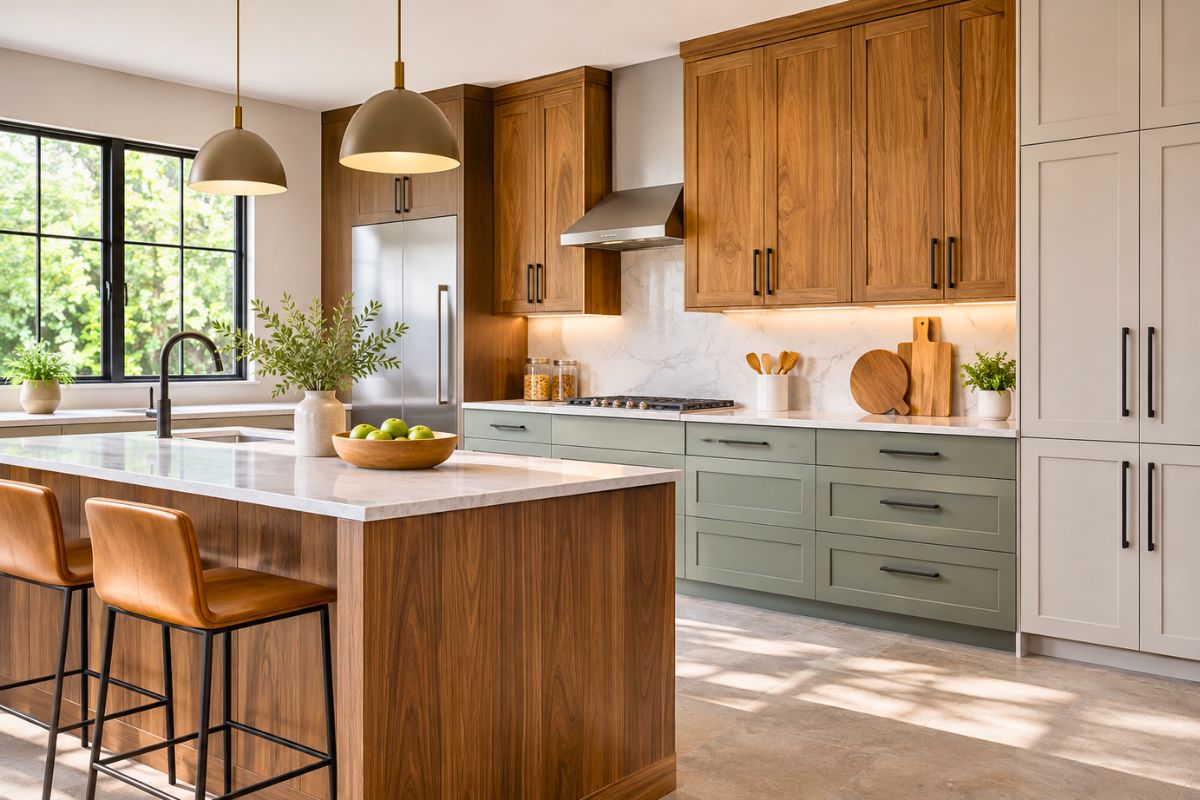
Kitchen cabinets endure daily wear from cooking, cleaning, spills, and moisture. The material you choose affects durability, upkeep, appearance, and long-term performance. Choosing the best material means balancing these factors with your renovation budget.
Common options include solid hardwood, plywood, medium-density fiberboard (MDF), particleboard, laminate, and stainless steel. Some support cabinet boxes and shelves; others form the finished surfaces of doors and drawer fronts. Knowing how they differ helps you choose the right material for each use.
This guide compares eight popular options and explains what to consider before you buy.
What Are the Best Materials for Kitchen Cabinets?
Most kitchen cabinets combine natural wood, engineered wood panels, and decorative surfaces. Plywood is common for cabinet boxes and shelves, while solid hardwood and MDF are popular choices for doors and drawer fronts. High-pressure laminate (HPL) and melamine add decorative finishes over engineered wood bases.
The best mix depends on the cabinet part, the product grade, the construction, the finish, and the installation conditions.
8 Popular Kitchen Cabinet Materials and Finishes: Durability, Cost, and Style
Each material has its own strengths. The comparison below gives a general overview of how they perform, what they cost, and where they are commonly used.
Kitchen Cabinet Materials at a Glance
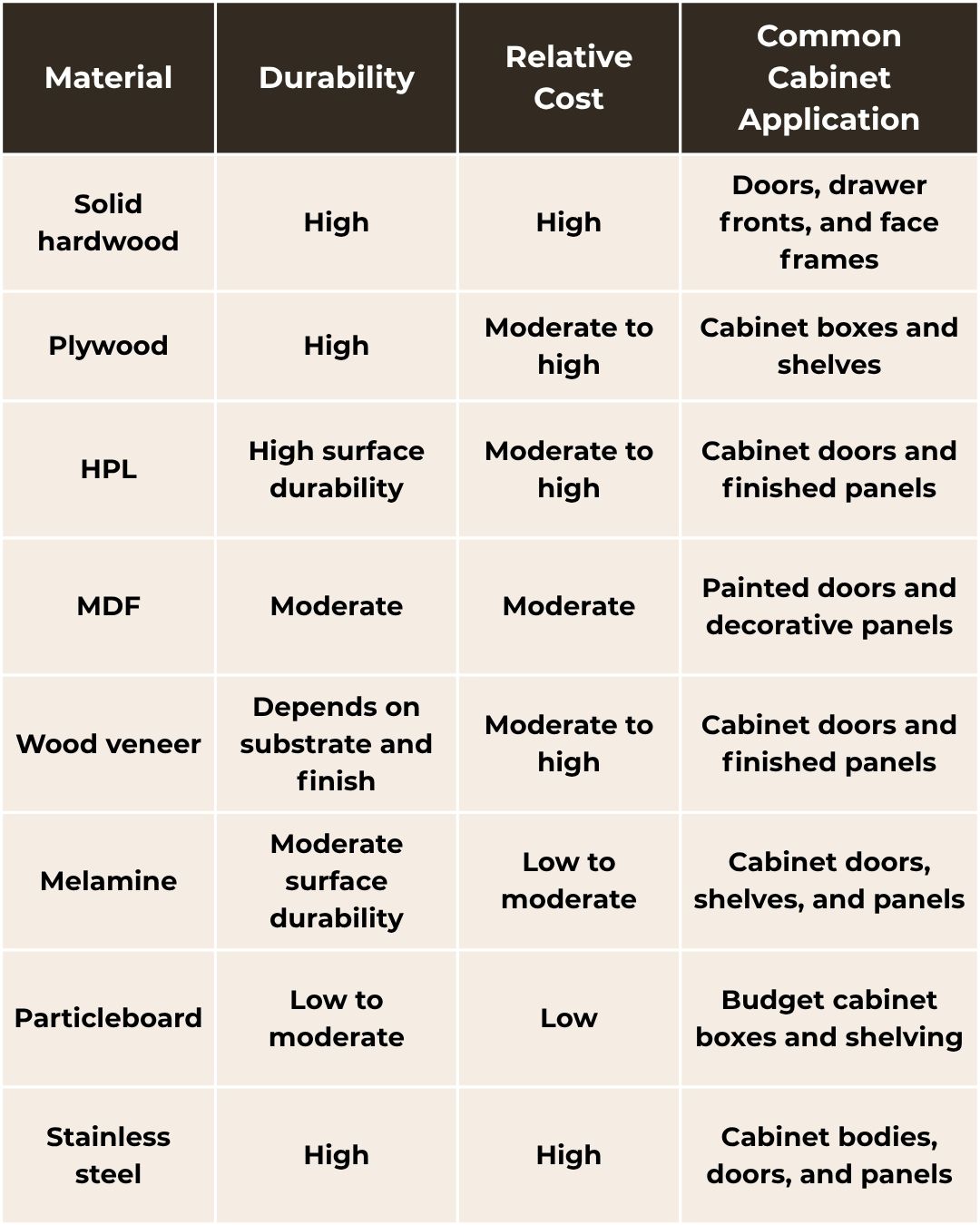
Note: These are general comparisons, not standardized ratings. Actual performance depends on product specifications, construction, finish, installation, and exposure conditions.
1. Solid Hardwood: Best for Natural Beauty and Refinishing Potential
Solid hardwood suits homeowners who value natural grain and traditional craftsmanship. Common cabinet species include oak, maple, cherry, walnut, and hickory, each with its own color, grain pattern, and hardness.
Hardwood can be shaped into many door profiles and finished with paint or stain. Depending on its thickness and condition, it can also be sanded and refinished to get rid of surface scratches and wear.
However, solid wood generally costs more than engineered alternatives. It expands when it soaks up moisture and contracts as it dries. Changes in humidity can affect doors, joints, and panels over time. Proper drying, storage, finishing, and installation help control this movement. The USDA Forest Products Laboratory’s guidance on wood moisture and dimensional changes explains how moisture control helps minimize these problems.
2. Plywood: Best for Strong Cabinet Construction
Plywood is made from thin wood veneers glued together with the grain of every layer running in alternating directions. This layering makes the panel stronger and more stable. That is why plywood is widely used for cabinet boxes, shelves, and structural supports.
High-quality plywood usually holds screws better than standard particleboard. Performance varies depending on panel thickness, core construction, veneer quality, and adhesive type.
Plywood is not waterproof. Prolonged exposure to leaks or standing water can cause swelling and delamination. Protective finishes and properly sealed edges help limit moisture penetration.
When comparing products, check the panel grade, thickness, core quality, and intended application. The APA’s Voluntary Product Standard PS 1-22 for Structural Plywood outlines requirements for structural plywood. Not all cabinet-grade plywood meets the same specifications.
3. High-Pressure Laminate: Best for Surface Durability
High-pressure laminate (HPL) is an ornamental surface material. It is made by bonding multiple layers together under heat and pressure. It is commonly applied to engineered wood substrates in cabinet doors, panels, and other finished surfaces.
HPL is available in many colors, textures, and patterns, including designs that mimic natural wood and stone. Depending on the grade, it can resist scratches, stains, heat, and everyday wear.
Manufacturer documentation helps buyers evaluate product specifications. When comparing HPL with melamine-faced panels, check the technical data. Do not assume every HPL product will outperform every melamine finish.
Damaged laminate is hard to repair, and moisture can reach the substrate through chipped surfaces or poorly sealed seams.
4. Medium-Density Fiberboard (MDF): Best for Painted Cabinets
Medium-density fiberboard (MDF) is made by bonding wood fibers with resin under heat and pressure. Its dense, uniform structure creates a smooth surface that takes paint well.
MDF suits painted cabinet doors because it has no prominent grain pattern, unlike solid wood. It can also be machined into detailed profiles for shaker-style and decorative designs.
Standard MDF absorbs moisture. Water entering through damaged surfaces or unsealed edges causes swelling and permanent warping. Moisture-resistant grades exist but still need proper finishing and protection.
5. Wood Veneer: Best for Natural Wood Appearance
Wood veneer is a thin sheet of natural wood bonded to an engineered substrate, such as MDF or plywood. It delivers authentic wood grain without requiring solid timber throughout the cabinet component.
Using a thin layer of premium wood over an engineered core makes certain species more accessible. The substrate also affects the finished product’s stability and performance.
Moisture seeping through the surface or exposed edges can weaken the adhesive, causing bubbling or peeling. Deep scratches are hard to repair because the natural wood layer is thin.
6. Melamine: Best for Affordable, Low-Maintenance Cabinets
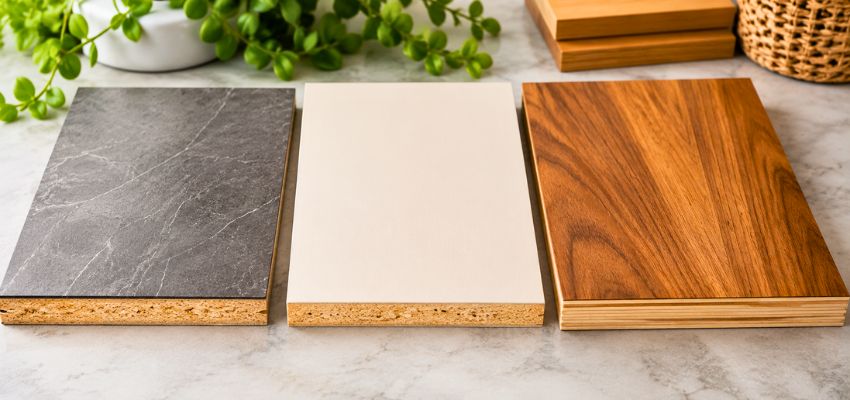
Melamine is a resin-based decorative surface bonded to an engineered wood core, usually particleboard or MDF. It gives cabinets a finished look without painting or staining.
Melamine comes in many colors, patterns, and wood-look designs that suit modern kitchens. It also holds up reasonably well to routine cleaning.
It can chip or scratch, and damage is often hard to repair. Water seeping through exposed edges or damaged joints can make the substrate swell.
7. Particleboard: Best for Budget-Friendly Cabinetry
Particleboard is made by pressing wood particles and bonding agents into panels. It is an affordable material often used in ready-to-assemble and lower-cost cabinetry.
Its smooth surface works well for melamine and laminate finishes. Particleboard has lower structural strength and screw-holding power than quality plywood. Repeated fastening in the exact spot can weaken it, and water exposure can cause swelling that is hard to reverse.
Quality varies with density, thickness, and manufacturing specifications. Check these details before buying. Do not judge the material by price alone.
8. Stainless Steel: Best for Moisture Resistance
Stainless steel is an alternative to traditional wood-based cabinetry. Because it does not absorb water or swell, it suits kitchens where moisture and frequent cleaning are concerns.
Its smooth surface wipes clean easily and never needs staining or painting. Stainless steel is common in commercial kitchens but also works well in contemporary homes.
Its drawbacks include a higher upfront cost and an industrial look that may not suit every interior. Fingerprints, smudges, and scratches can show easily. Corrosion resistance also varies with the steel grade, fabrication, and surrounding conditions.
Which Kitchen Cabinet Material is Best for Your Needs?
The best material depends on your budget, kitchen conditions, and the look you want. Keep these priorities in mind when comparing options.
- Best Material for Long-Lasting Kitchen Cabinets: Quality plywood works well for cabinet boxes, while solid hardwood suits doors and face frames that may need refinishing. Stainless steel is another durable choice for areas exposed to moisture and frequent cleaning.
- Best Material for Budget-Friendly Kitchen Cabinets: Melamine, particleboard, and MDF are worth considering when upfront cost matters. Do not choose based on material price alone. Compare panel thickness, edge treatments, hardware, and assembly methods too.
- Best Material for Humid Kitchens: Stainless steel and well-specified plywood handle humidity and occasional splashes well. Moisture-resistant MDF and melamine-faced panels can also hold up if their edges and joints are sealed. No wood-based cabinet material is completely waterproof. Ventilate the kitchen well, use suitable finishes, and fix plumbing leaks fast, especially near sinks and dishwashers.
- Best Material for a Natural Wood Appearance: Solid hardwood has authentic grain patterns and natural color variation, and it can be refinished. Wood veneer gives a similar look while using less timber. Reclaimed wood adds distinctive character when it is properly inspected and prepared for cabinet use.
What Should You Consider When Choosing Kitchen Cabinet Materials?
Choosing a material involves more than looks and price. Construction quality, exposure conditions, and product specifications also affect how well cabinets perform.
Durability and Structural Strength
Think about how much weight your cabinets will carry and how often you’ll open their doors and drawers. Cabinet boxes and shelves must be strong enough to hold cookware, dishes, and other kitchen essentials.
Compare each material’s panel thickness, density, joinery, and fastening methods. Make sure it suits the cabinet’s intended use.
Moisture and Heat Resistance
Cabinets near sinks, dishwashers, and cooking appliances face more steam, splashes, and heat, so they often need extra protection.
Choose sealed edges and suitable finishes. When possible, keep cabinet components away from direct heat and fix plumbing leaks promptly. Water can seep into seams, damaged coatings, and exposed edges. Over time, it damages the substrate underneath.
Maintenance and Repair Requirements
Solid wood may need occasional refinishing. Melamine and laminate usually need only routine cleaning with suitable products.
Consider how easily scratches and chips can be repaired. Solid wood can often be buffed and refinished depending on its condition. Damaged laminate and melamine surfaces may need replacement. Check the manufacturer’s care instructions before purchasing.
Cabinet Construction and Hardware Quality
Even quality materials can disappoint if cabinets are poorly built. Examine the joinery, panel thickness, edge treatments, and fastening methods.
Also check the hinges, drawer slides, and mounting hardware. These parts control how smoothly cabinets operate and how well they withstand repeated use. Proper installation keeps cabinets aligned, supported, and securely mounted.
Do your cabinets contain MDF, particleboard, or hardwood plywood? If so, ask about formaldehyde emission compliance. Under the U.S. EPA’s TSCA Title VI regulations for composite wood products, regulated products must meet set formaldehyde emission limits. They must also meet testing, certification, and labeling requirements. These categories include hardwood plywood, medium-density fiberboard (MDF), and particleboard.
Buying regulated composite wood products in the U.S.? Ask the manufacturer or supplier for product labels or compliance documentation.
Modern Kitchen Cabinet Materials and Finishes to Consider
Homeowners researching modern kitchen cabinet materials can consider established options such as thermofoil, acrylic finishes, and reclaimed wood. Each offers a different look and level of performance.
Thermofoil Cabinet Finishes
Thermofoil is a vinyl film applied to an engineered wood substrate, usually MDF. Heat and pressure mold the film around the cabinet component, creating a smooth surface.
It comes in many colors and finishes, including options that resemble painted wood. Excessive heat near ovens or appliances can cause the film to loosen or peel. Once the coating separates from the substrate, it is difficult to repair.
Acrylic Cabinet Finishes
Acrylic finishes have a smooth, reflective look and are commonly applied to engineered wood panels. They come in high-gloss and matte options.
High-gloss acrylic reflects light, while matte finishes look more understated. Fingerprints and scratches may show depending on the product. Check the specifications and care recommendations before you choose a finish.
Reclaimed Wood
Reclaimed wood is recovered from old buildings, structures, and other timber sources. Its varied grain, color, and weathered markings give cabinet fronts, shelving, and decorative features real character.
Before using reclaimed timber, ask an experienced woodworker to check it. They can assess its moisture content, condition, dimensions, and suitability. Environmental benefits also depend on how it is sourced, processed, transported, and used.
Frequently Asked Questions
What is the most durable material for kitchen cabinets?
Quality plywood, solid hardwood, and stainless steel are all durable, each suited to a different use. Plywood works well for cabinet boxes, hardwood for doors and frames, and stainless steel for moisture-prone areas.
Is plywood better than MDF for kitchen cabinets?
Plywood is usually the better choice for structural parts because it is strong and holds screws well. MDF is often preferred for painted doors because its smooth surface gives a consistent finish.
Are solid wood kitchen cabinets worth the extra cost?
Solid wood offers a natural look, customization, and the option to refinish it later. It suits homeowners who value authentic wood, though it needs proper finishing and protection from moisture.
What kitchen cabinet material is most resistant to water damage?
Stainless steel does not absorb moisture and is highly water-resistant. Sealed plywood and protected engineered panels handle everyday humidity and occasional splashes. Lengthy exposure to moisture can still damage them.
Choose the Best Kitchen Cabinet Material for Your Home
The best material for kitchen cabinets depends on your requirements and how you use your kitchen. Solid hardwood offers natural beauty, plywood provides structural strength, and MDF creates smooth painted surfaces. HPL, melamine, particleboard, and stainless steel suit other applications and budgets.
Before you choose, compare samples and check construction quality. Also ask about moisture protection, product specifications, and maintenance.
If natural wood is part of your kitchen design, explore hardwood and reclaimed timber options that complement your space. Visit Vintage & Specialty Wood to explore specialty and reclaimed timber and get guidance for your project.
Hire The Timber Experts For Your Next Project
Vintage & Specialty Wood should be your source of the highest quality timbers from around the world. When it comes to fabricating and installing reclaimed wood or specialty wood products in your home, we don’t cut corners. We offer many reclaimed wood and specialty wood products such as Douglas Fir, white oak, and much more. We also offer timber framing and wood flooring services as well. Contact our team today to speak to a timber expert about what Vintage & Specialty Wood can do for you.

This Blog Is Fact Checked
This content has undergone meticulous fact-checking by our team of internal experts. Gain a deeper understanding of the high editorial standards we uphold on our website here.

About The Author
Hi, I’m Corinne Grace, a nursing graduate from Riverside College who enjoys writing about woodworking. Read as I cover how to choose between hardwoods and softwoods, how stains and finishes perform on different species, and so much more. My goal is to give woodworkers clear, well-researched guides they can use for their next project.