Is Bamboo Strong? Exploring Its Durability and Uses
Published October 8, 2026
Bamboo may look lightweight compared with a large hardwood tree, but its structure gives it considerable strength. So, is bamboo strong? Yes. It has a high strength-to-weight ratio and performs well under tension, compression, bending, and other loads.
Bamboo’s strength depends on several factors: species, density, age, moisture content, processing, and product construction. Performance should always be evaluated based on the material’s intended use.
Is Bamboo Strong?
Bamboo is remarkably strong for its weight. Research shows it performs well under compression, tension, bending, and shear forces. Results vary by species, testing conditions, and product type. A round bamboo culm differs mechanically from a laminated bamboo panel or other engineered product.
Strength vs. Hardness vs. Durability
Strength, hardness, and durability describe different aspects of material performance. Strength refers to the loads a material can withstand before deforming or failing, including tensile and compressive forces.
Hardness describes how well a material resists indentation, dents, and surface wear. Durability measures how it holds up over time when exposed to moisture, insects, fungi, weather, and repeated use.
Strong mechanical properties don’t guarantee resistance to biological deterioration or outdoor exposure. Untreated bamboo can degrade when exposed to moisture, insects, or the elements.
How Strong Is Bamboo Compared With Wood?
How strong is bamboo compared with wood? The answer depends on the property measured. Bamboo’s fiber structure contributes to a high strength-to-weight ratio, especially when loads act along the culm’s length. The comparison below highlights general differences between bamboo and common wood products. It doesn’t assign a universal strength ranking.
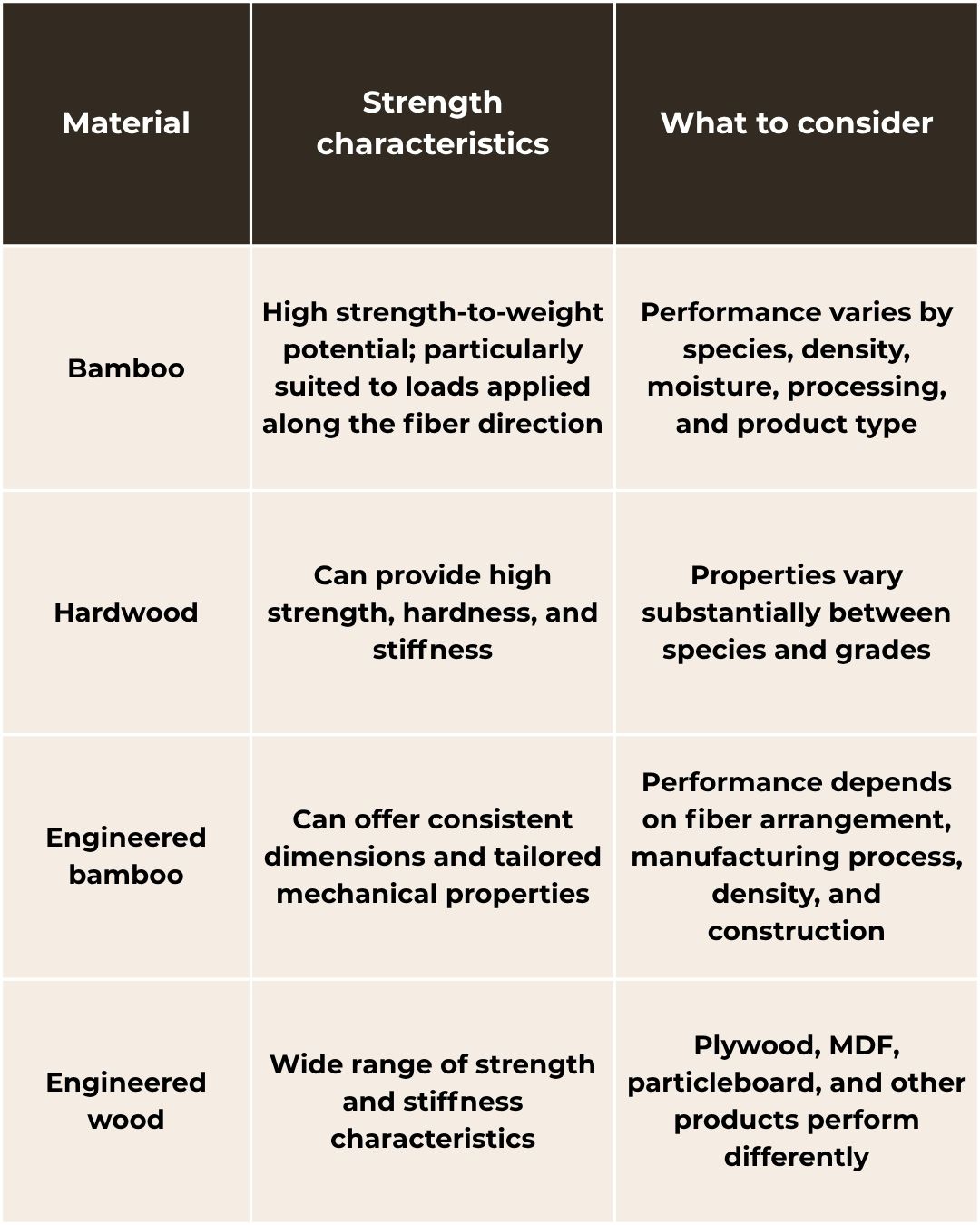
The best choice depends on the required mechanical property, loading conditions, and intended use.
Bamboo vs. Hardwood
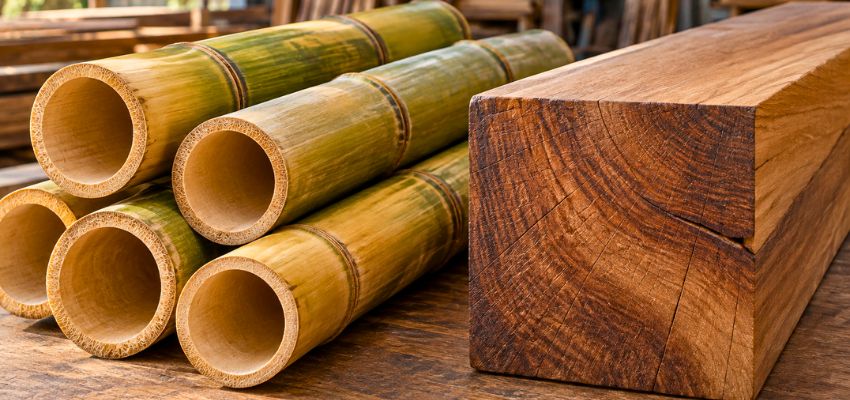
Hardwood is not a single material. Oak, maple, walnut, and teak differ in density, hardness, grain structure, and mechanical properties. Bamboo can offer a favorable strength-to-weight ratio. However, its performance should be compared to a specific wood species and product, not to hardwood as a broad category.
Durability also affects the comparison. A bamboo product designed for indoor use will perform differently from a naturally durable hardwood selected for outdoor exposure.
Bamboo vs. Engineered Wood
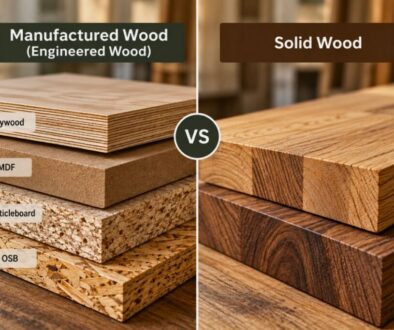
Engineered bamboo can be laminated, compressed, or otherwise processed. These methods allow manufacturers to achieve specific dimensions and performance characteristics. Engineered wood also comes in many forms. Plywood, MDF, particleboard, and other products are designed for different applications.
Before comparing materials for furniture and interior projects, review the product’s construction, specifications, and intended use.
Why Is Bamboo So Strong?
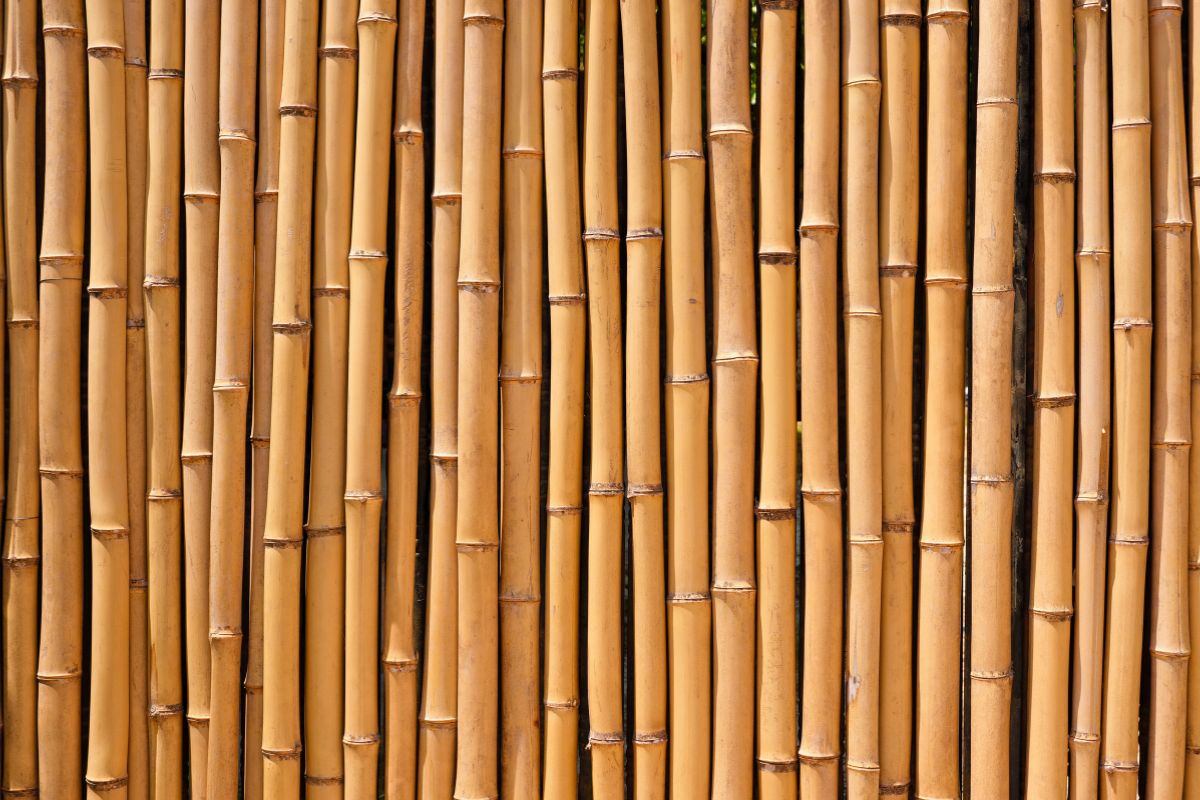
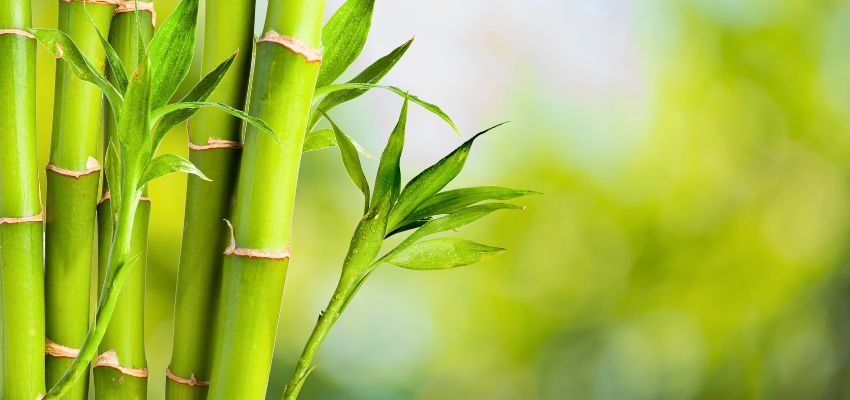
So, why is bamboo so strong? Much of the answer lies in its internal structure. Bamboo is a grass with hollow culms. Its vascular bundles and fiber sheaths run mainly along the culm’s length. This orientation allows bamboo to carry longitudinal loads effectively.
Bamboo’s Fiber Structure and Strength
Bamboo’s mechanical behavior is influenced by fiber orientation, distribution, and density. These properties vary by species and position within the culm. ISO 22157 provides standardized methods for assessing bamboo culms, including tests for compression, tension, and bending.
Bamboo’s Strength and Flexibility
Bamboo combines strength with flexibility, allowing some members to deform under bending loads before failure. However, it can still split, crack, buckle, or fail under unsuitable loads or poorly designed connections. Structural performance also depends on member dimensions, connections, supports, load paths, and service conditions.
What Affects Bamboo’s Strength and Durability?
Species, Age, and Material Quality
Bamboo species vary in physical and mechanical properties. Culm age, density, wall thickness, imperfections, and moisture content affect performance. An engineered bamboo panel should not be treated as equivalent to an untreated round bamboo pole, even if both are bamboo.
Moisture, Weather, and Environmental Exposure
Moisture affects bamboo’s dimensional stability and mechanical properties. Prolonged damp conditions increase the risk of biological deterioration. Untreated bamboo is vulnerable to fungi and insects, with natural durability varying by species and exposure.
Strength alone doesn’t make bamboo weatherproof. Outdoor applications require careful material selection, protection, detailing, and maintenance.
Treatment and Processing
Processing can substantially change how bamboo performs. Natural round culms, treated poles, and laminated or engineered bamboo products have distinct structures and manufacturing processes.
Treatment can improve resistance to biological deterioration. Engineered products tend to offer more consistent dimensions and performance. The right approach depends on the intended application, level of exposure, and whether the material is structural or non-structural.
Where Is Bamboo’s Strength Most Useful?
Bamboo is strong, lightweight, and versatile. These qualities make it well suited for both structural and interior applications.
Construction and Structural Applications
Bamboo works well for structural poles, framing, scaffolding, and architectural structures. However, this depends on careful material selection and proper design.
Structural applications require more than a general strength rating. Connections, member dimensions, material properties, load paths, service conditions, durability, and maintenance must be considered.
ISO 22156:2021 applies to certain structures where round bamboo serves as the primary load-bearing material. It sets out requirements for mechanical resistance, serviceability, and durability.
Furniture, Desktops, and Cabinetry
Bamboo is commonly used for furniture, desktops, tabletops, cabinetry, and shelving. In these interior applications, strength, hardness, appearance, and dimensional stability matter.
Performance varies between products, so compare specific options rather than relying on general assumptions. Construction, thickness, support, finish, and intended load affect how a product performs.
Flooring and Interior Surfaces
Bamboo is widely used for flooring and interior surfaces. Key performance factors include hardness, wear resistance, appearance, and dimensional stability. The finished product matters more than the material name alone. Construction, finish, installation, moisture exposure, and indoor conditions affect how the product performs.
How Do You Know if Bamboo Is Strong Enough for Your Project?
The more useful question is whether the specific bamboo product is suitable for the application.
Consider the Load and Intended Use
Start by identifying the material’s intended use:
- Is the application decorative or structural?
- What loads will it support?
- Will those loads be static or repeated?
- Will it experience bending, compression, or tension?
- Will it remain indoors or face weather exposure?
A bamboo desktop has different requirements from a structural beam, just as an indoor wall panel differs from an outdoor bamboo pole.
Check the Product’s Construction and Specifications
Before choosing bamboo for a demanding application, check:
- Material type and species, where relevant
- Dimensions and thickness
- Product construction
- Moisture condition
- Treatment or preservation
- Manufacturer specifications
- Intended application
- Installation requirements
For structural work, use products and designs supported by appropriate engineering information. ISO 22157 provides standardized methods for assessing bamboo culms, and ISO 22156:2021 provides requirements for certain structural applications using round bamboo.
Frequently Asked Questions
Is bamboo stronger than oak?
Not necessarily. Bamboo and oak vary by species, grade, and mechanical properties, so neither is universally stronger.
Does bamboo break easily?
Bamboo doesn’t inherently break easily. Its fiber structure and flexibility allow it to withstand significant loads, but it can still split, crack, buckle, or fail under unsuitable conditions or loads.
Is bamboo stronger than hardwood?
Not universally. The comparison depends on the specific bamboo and hardwood products and the property being measured.
Can bamboo be used for structural applications?
Yes. Bamboo is used in structural construction. For certain structures using round bamboo as the primary load-bearing material, ISO 22156:2021 addresses mechanical resistance, serviceability, and durability.
Does bamboo lose strength when it gets wet?
Moisture can affect bamboo’s mechanical properties and dimensions. Prolonged exposure increases the risk of biological deterioration. Brief exposure to water doesn’t automatically weaken bamboo. However, product type, duration of exposure, and level of protection all play important roles.
Is engineered bamboo stronger than natural bamboo?
Not automatically. Engineered bamboo can offer more consistent properties than natural bamboo. However, its performance depends on several factors, including fiber arrangement, processing method, density, adhesives, and final product design.
Is Bamboo Strong Enough for Your Project?
Bamboo offers substantial strength for its weight, especially in applications that take advantage of its fiber-oriented structure. For any project, consider whether the specific product meets your required strength, durability, and construction needs.
When comparing bamboo with wood for furniture, desktops, flooring, or other woodworking projects, focus on the properties that matter for your application. The material name alone isn’t enough to guide your decision. Vintage & Specialty Wood offers educational resources that can help you compare materials based on strength, durability, appearance, and intended use.
Hire The Timber Experts For Your Next Project
Vintage & Specialty Wood should be your source of the highest quality timbers from around the world. When it comes to fabricating and installing reclaimed wood or specialty wood products in your home, we don’t cut corners. We offer many reclaimed wood and specialty wood products such as Douglas Fir, white oak, and much more. We also offer timber framing and wood flooring services as well. Contact our team today to speak to a timber expert about what Vintage & Specialty Wood can do for you.

This Blog Is Fact Checked
This content has undergone meticulous fact-checking by our team of internal experts. Gain a deeper understanding of the high editorial standards we uphold on our website here.

About The Author
Experience, exploration, and knowledge are the hallmarks of writer Rei Bayucca. Her dedication to crafting articles that both inspire and educate will leave you thinking long after you’ve finished reading.