What Is Snakewood? Why This Rare Wood Is So Expensive
Published September 3, 2026
Most woodworkers never work with snakewood. Those who do quickly learn why it has such a reputation. Highly figured snakewood can command an extraordinary price per board foot before accounting for tool wear, splintering, and care required to work it properly. The premium isn’t just about appearance. It reflects a combination of a small tree, limited usable material, unpredictable figure, and exceptional density.
To understand snakewood’s value, look beyond its striking appearance. Its rarity, limited size, unpredictable figure, and extreme hardness all contribute to its premium price. Read on to see what makes this wood so unusual and valuable.
What Is Snakewood?
Snakewood is a South American hardwood prized for dark, mottled markings that resemble snakeskin. It comes from a small tree and rarely produces wide, clean boards. As a result, it’s more commonly sold as billets, turning blanks, or small logs rather than conventional dimensional lumber.
Snakewood’s Scientific Name and Origin
Snakewood is classified as Brosimum guianense in the Moraceae family, which also includes bloodwood. It’s native to tropical America, including parts of Central and South America. The tree can reach 65 to 80 feet in height, but its small trunk limits the amount of wide, usable lumber recovered from each tree.
Why Is It Called Snakewood?
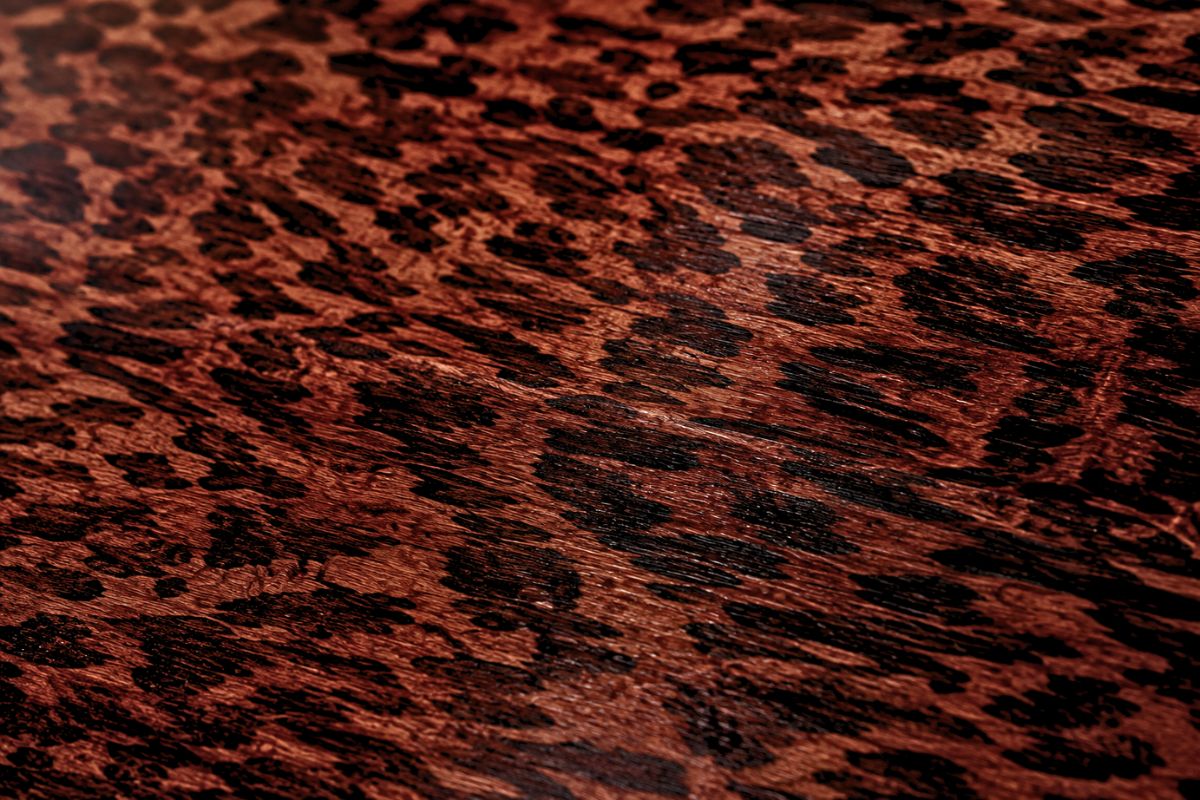
The name comes from the wood’s dark brown to black blotches against a reddish-brown or orange-brown background. Highly figured pieces have dense, angular markings that resemble snakeskin or hieroglyphic writing. This distinctive appearance is also linked to the names letterwood and amourette. Less-figured material is often marketed as amourette.
What Does Snakewood Look Like?
Pattern intensity can vary dramatically even within the same log, which is why individual pieces of snakewood can look so different.
Color, Grain, and Texture
The heartwood ranges from orange-brown to deep reddish brown, with irregular dark patches across the surface. The grain is generally straight, and the fine, even texture takes on a natural luster when polished. With age and light exposure, the contrast between the lighter background and darker markings gradually becomes less pronounced.
What Makes Highly Figured Snakewood So Valuable?
Not every piece of Brosimum guianense develops the dramatic figure associated with premium snakewood. Highly figured sections are more desirable, while plain material is sold as amourette.
Why Is Snakewood So Rare and Expensive?
Small Trees Produce Limited Usable Lumber
Snakewood trees typically have narrow trunks, rarely reaching a foot in diameter. This makes wide or long boards exceptionally uncommon. Much of the material appears as small logs, billets, and blanks suited to handles, inlay, and turned objects.
Defects, Checking, and Material Waste Increase Its Cost
Snakewood logs can develop pith checking, which are cracks that radiate outward from the center as the wood dries. Plain, unfigured sections can further reduce the amount of premium material recovered from a log. Someone buying a half log may therefore pay for considerably more wood than will ultimately become a finished, usable component.
Rarity of Figure Adds a Premium
Even when the species is available, strongly figured material in usable dimensions is harder to find. Snakewood’s high price reflects several factors. Trees are small, checking is common, and material waste is significant. Strongly figured pieces are unpredictable and rare. These challenges explain why exceptional snakewood commands such a premium.
How Hard and Dense Is Snakewood?
Snakewood Density and Janka Hardness
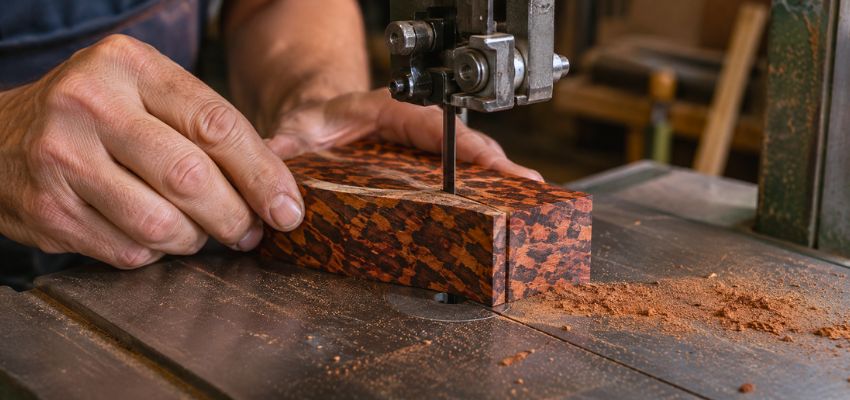
Snakewood has an average dried weight of about 75.7 pounds per cubic foot (1,210 kg/m³) and a Janka hardness rating of approximately 3,800 lbf (16,900 N), according to the Wood Database. Both figures are exceptionally high, placing snakewood among the densest and hardest commercial woods.
Strength and Durability
Snakewood also has high bending strength, crushing strength, and stiffness. It’s naturally durable and resists decay and insects. These properties suit small specialty applications but do not make snakewood practical for conventional outdoor construction. Its cost, limited dimensions, and tendency to check are also important considerations.
What Is Snakewood Used For?
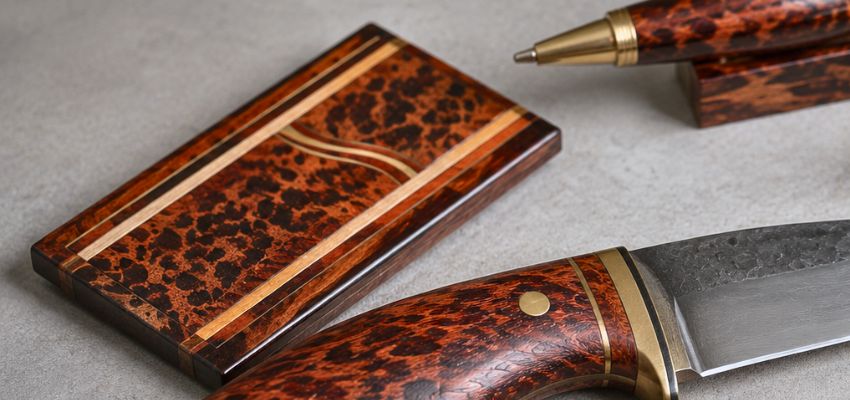
Because each tree yields little usable material, snakewood is rarely chosen for construction or large furniture components. Its strengths suit smaller, detail-oriented work where appearance and hardness justify the cost.
- Fine Woodworking and Decorative Inlay: Snakewood is used for inlay and veneer in high-end furniture and decorative woodworking. Even a small amount creates a strong visual accent, so craftspeople use it selectively rather than as a primary material.
- Knife Handles, Tool Handles, and Turned Objects: Its hardness, density, and ability to take a high polish make snakewood well suited to knife scales, tool handles, pen blanks, and other small turned objects. These uses make practical use of the small pieces in which the wood is commonly available.
- Musical Instruments and Bow Making: Snakewood has a long history in bow making, particularly for historical violin and other string-instrument bows. It’s also used for other specialized musical-instrument components.
Is Snakewood Difficult to Work With?
Snakewood’s impressive hardness comes with a price in the workshop: it can be demanding to machine and unforgiving of careless technique.
Why Snakewood Can Crack and Splinter
Its density and brittleness can make snakewood hard on cutting tools, while aggressive machining can cause splintering or chipping. Excessive heat should be avoided, especially during sanding or drilling. Sharp tools, controlled cuts, and careful handling are important.
As with other exotic hardwoods, use appropriate dust control and personal protective equipment when machining snakewood.
Cutting, Turning, and Finishing Snakewood
Despite these challenges, snakewood turns well on a lathe and develops a high natural polish. Sharp tools and light cuts help control the material during shaping. Patience is especially important when working near edges or existing checks. The wood rewards careful technique but punishes rushed machining.
How Much Does Snakewood Cost?
Snakewood is almost always more expensive than common hardwoods. No single price applies to every piece.
Why Snakewood Prices Vary
Price depends heavily on figure, dimensions, condition, and usable yield. A small blank with exceptional figure can fetch far more than a larger, plainer piece. Visible defects can also drive the price down. Since snakewood is often sold as specialty stock or individual blanks, comparing pieces by dimensions alone can be misleading.
Why Highly Figured Snakewood Costs More
Figure is a clear driver of premium pricing. Bold, well-defined snakeskin markings are more desirable than plain material. Because the final figure is difficult to predict before a log is opened and processed, highly figured, usable pieces carry a premium once their quality is confirmed.
How to Identify Genuine Snakewood
Look for Its Distinctive Figure and Color
Highly figured snakewood is easy to recognize. It features dark, irregular markings against a reddish-brown background. Plain sections are harder to identify. Without a strong figure, snakewood can look like other dense, reddish-brown hardwoods.
Check the Species and Source
The common name “snakewood” is not exclusive to Brosimum guianense. Other unrelated species can be marketed under the same name, so visual identification alone is not enough for a high-value purchase. The most reliable check is to confirm the botanical name Brosimum guianense and the material’s source.
Frequently Asked Questions
Is snakewood really the most expensive wood in the world?
Highly figured snakewood is among the most expensive woods sold by the board foot, although no universal ranking makes it definitively the world’s most expensive wood. Prices vary by figure, dimensions, condition, availability, and supplier. Less-figured material is generally much less expensive.
Why is snakewood called letterwood?
Highly figured pieces of snakewood feature dark, angular markings on their surface. These markings can look like written characters or hieroglyphics, which is how the name “letterwood” came about.
Is snakewood harder than ebony?
Snakewood’s Janka hardness is about 3,800 lbf, higher than many commonly used ebony species. However, ebony refers to several species, so the comparison depends on the specific species measured.
Does snakewood crack easily?
Snakewood is prone to checking, especially in log or half-log form. Its brittleness makes careful machining important, especially when sanding or drilling. Controlled cuts and avoiding excessive heat help reduce damage risk.
Is snakewood good for woodworking?
Snakewood suits small, detail-oriented projects such as inlays, handles, blanks, and turned objects. Its extreme hardness, brittleness, tool wear, and high cost make it a poor choice for beginners or large projects.
Why Is Snakewood So Valuable?
Snakewood’s value comes from several factors combined. The trees have small trunks, limiting usable lumber size. Checking and plain sections reduce how much usable wood is recovered from each log. The dramatic figure that makes snakewood desirable is unpredictable, so truly exceptional pieces are harder to find than ordinary material.
Snakewood is extremely dense and hard, making it more demanding to work than conventional hardwoods. It requires the right tools and techniques to handle successfully. Rarity, striking figure, limited dimensions, and difficult workability all add up. The best pieces are reserved for small, specialized applications where their distinctive appearance justifies the premium price.
If you’re drawn to rare hardwoods like snakewood, explore Vintage & Specialty Wood to compare it with other sought-after exotic species and specialty timbers.
Hire The Timber Experts For Your Next Project
Vintage & Specialty Wood should be your source of the highest quality timbers from around the world. When it comes to fabricating and installing reclaimed wood or specialty wood products in your home, we don’t cut corners. We offer many reclaimed wood and specialty wood products such as Douglas Fir, white oak, and much more. We also offer timber framing and wood flooring services as well. Contact our team today to speak to a timber expert about what Vintage & Specialty Wood can do for you.

This Blog Is Fact Checked
This content has undergone meticulous fact-checking by our team of internal experts. Gain a deeper understanding of the high editorial standards we uphold on our website here.

About The Author
Experience, exploration, and knowledge are the hallmarks of writer Rei Bayucca. Her dedication to crafting articles that both inspire and educate will leave you thinking long after you’ve finished reading.