Vertical Wood Siding: Modern Design Ideas And Benefits
Published March 31, 2026
Are you looking for an exterior finish that transforms your home’s curb appeal? While many homeowners choose standard horizontal siding, vertical wood siding stands out as a striking alternative. It enhances both architectural interest and structural performance, and its clean upward lines can make any home appear taller and more sophisticated. Whether you prefer a rustic farmhouse style or a modern facade, vertical siding serves as a distinctive and adaptable design solution.
In this article, you’ll find key information about vertical wood siding, including popular styles, material options, design trends, and answers to common questions about cost and durability.
What Is Vertical Wood Siding?
Vertical wood siding consists of panels or boards installed straight up and down, not side to side. This installation requires special techniques, such as horizontal furring strips, to ensure proper ventilation and moisture drainage.
Historically, vertical siding was used on barns and farmhouses. Its practicality helped seal structures against harsh weather. Over time, this functional approach evolved. It became a refined architectural feature now widely used in residential design.
The clean, structured look of vertical lines has made this siding style a favorite in modern architecture. It blends traditional character with contemporary simplicity. This makes it ideal for renovations and new builds alike.
Why Choose Vertical Wood Siding For Your Home
Enhancing Visual Height And Architectural Interest
Vertical lines naturally direct the eye upward. This optical illusion makes single-story houses look taller and gives larger homes a grand, stately presence.
Superior Water Drainage And Moisture Resistance
Gravity pulls rainwater straight down vertical siding boards and away from the house. This prevents water from pooling in the grooves, which reduces the risk of dampness and rot.
Durability And Weather Performance Across Climates
Vertical siding sheds water effectively and often outlasts horizontal options. It withstands heavy rain, snow, and temperature changes with fewer moisture-related issues.
Boosting Curb Appeal And Property Value
A well-designed exterior instantly increases your property’s perceived value. Vertical siding offers a custom, high-end look that makes your house stand out and attract potential buyers.
Versatility Across Modern, Farmhouse, And Rustic Styles
You can adopt vertical siding for almost any style. It works on both cozy woodland cabins and minimalist urban homes.
Best Materials And Wood Siding Types For Vertical Applications
Natural Wood Options (Cedar, Pine, Redwood)
Natural wood provides timeless beauty and rich texture. Cedar and redwood have natural resistance to insects and decay. Pine is a budget-friendly alternative. It also holds stains and paint well.
For homeowners seeking premium or reclaimed timber, suppliers such as Vintage & Specialty Wood are an option. These sources provide high-quality materials that bring together durability with a distinctive, aged appearance.
Engineered Wood
Engineered wood has the authentic look of timber and is made by combining wood fibers with exterior-grade resins. It offers enhanced strength and greater resistance to moisture, insects, and fungal decay.
Fiber Cement
Fiber cement combines cement, sand, and cellulose fibers to mimic the texture of wood. It’s also highly fire-resistant and low-maintenance.
Vinyl
Vinyl siding is lightweight, cost-effective, and easy to clean. While it lacks the premium feel of natural wood, it comes in many colors and needs little maintenance.
Metal Or Composite
Metal and composite siding offer a modern, industrial look and are highly durable and weather-resistant, requiring no painting or staining.
Vertical Wood Siding Types And Styles
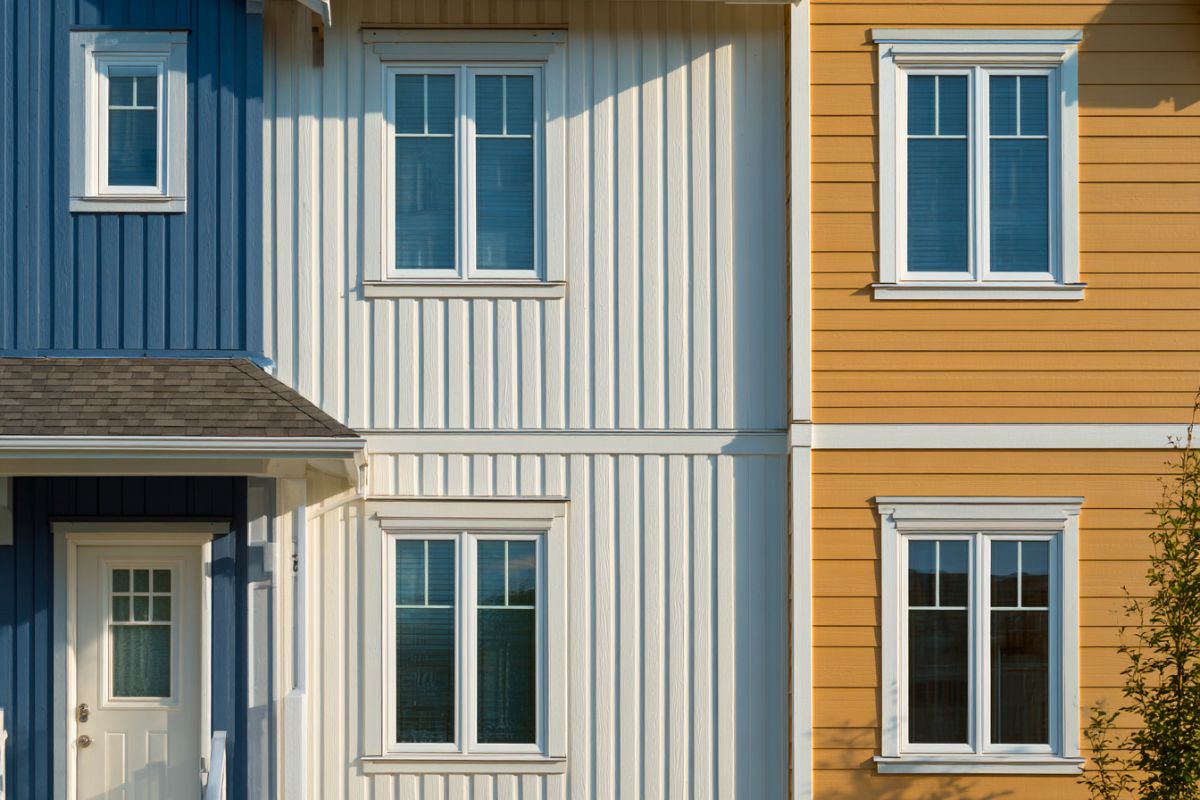
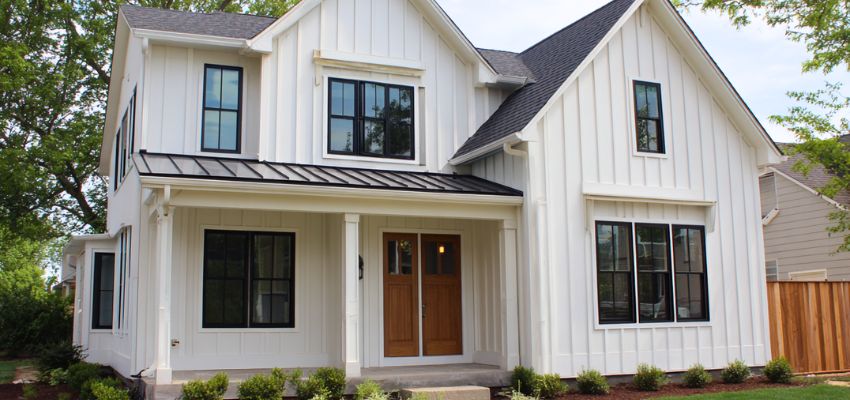
- Board and batten: This siding consists of wide vertical boards with narrow wood strips, known as battens, covering the seams. This technique adds texture to your home’s exterior. It creates a layered appearance, which is a key feature of the modern farmhouse style.
- Beadboard paneling: Beadboard features narrow vertical planks separated by a small indentation, or “bead.” It creates a delicate, detailed look often used for cottage exteriors and porch ceilings.
- V-groove panels: V-groove panels have beveled edges that create a “V” shape where the boards meet. This style provides the clean, sharp lines ideal for minimalist designs.
- Shiplap: While best known for interior walls, exterior shiplap uses overlapping boards to create a tight seal. A vertical installation creates a smooth, continuous surface. It holds up exceptionally well against harsh weather.
- Modern panel systems: Modern panel systems use large, flat sheets of wood or composite material with few visible seams. This approach creates a sleek, uninterrupted exterior that’s ideal for contemporary architecture.
Vertical Wood Siding Exterior Trends And Design Ideas
Minimalist And Contemporary Facades
For a modern look, opt for narrow v-groove boards or sleek panel systems. Finishing them with a clear stain highlights the natural wood grain, keeping the design simple and uncluttered.
Mix Materials For Visual Interest
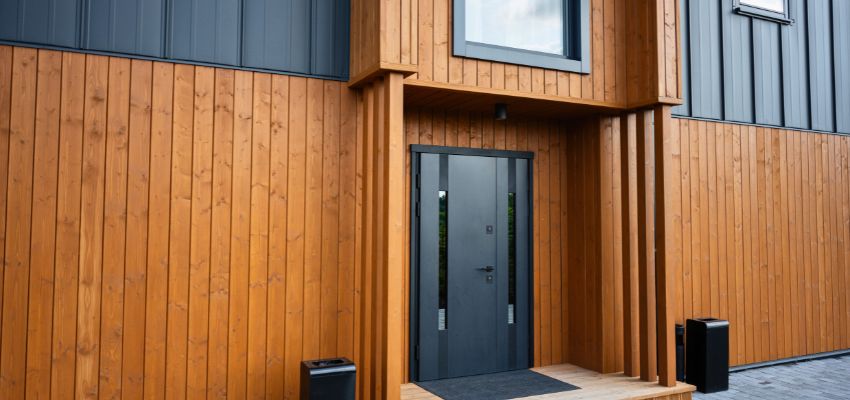
Combine vertical wood siding with stone, brick, or metal for a striking exterior. The contrast between warm wood and cool materials like a stone foundation or metal roof adds depth and character. Using reclaimed wood brings unique warmth and history to the design.
Experiment With Bold Or Neutral Color Palettes
Dark, moody colors like charcoal and navy look stunning on vertical siding. For a softer look, crisp whites or natural wood tones can create a warm, inviting exterior.
Create Visual Contrast With Accent Walls And Feature Sections
You don’t need to cover your entire home in vertical boards. Highlight an entryway, gable, or window bump-out to create a focal point.
Scandinavian, Modern Farmhouse, And Urban Design Inspirations
For a Scandinavian-inspired look, use light wood stains and black window frames. To achieve a modern farmhouse aesthetic, pair white board and batten siding with rustic timber columns.
Tips For Using Vertical Wood Siding Effectively
- Choosing the right board width and spacing: Consider the scale of your house when selecting board width. Wide boards suit large, sprawling homes, while narrow boards are better for smaller cottages.
- Combining vertical and horizontal siding for depth: Mix horizontal lap siding on the main section of the house with vertical siding on gables or other architectural features. This contrast breaks up large, flat walls and adds visual interest.
- Selecting the right finish: Protect natural wood with a high-quality sealant. Solid stains offer strong UV protection and bold color, while semi-transparent stains let wood grain show through.
- Strategic placement for visual impact: Install vertical siding in areas you want to highlight. For instance, using it on the upper half of a two-story home can balance a heavy brick or stone lower half.
- Detailing with trim, edges, and seams: Attention to detail is key. Use sharp, clean trim around windows, doors, and rooflines. This ensures the siding looks intentional and professional.
Frequently Asked Questions
What are the best vertical wood siding types for modern homes?
Cedar, thermally modified wood, and V-groove panels are popular choices for modern homes. They offer a clean look and durability.
Is vertical wood siding more durable than horizontal siding?
It often performs better due to improved water drainage.
How long does vertical wood siding last in different climates?
With proper care, wood siding can last decades, while engineered options may last even longer.
Is vertical wood siding exterior energy-efficient?
Wood acts as a natural insulator. When paired with high-quality house wrap and proper wall insulation, it helps improve your home’s energy efficiency.
What maintenance does vertical wood siding require over time?
You need to wash the siding yearly to remove dirt and mildew. You must also inspect it for insect damage and restain or repaint it every three to seven years.
Can vertical wood siding increase a home’s value?
Yes. Upgrading to vertical wood siding boosts your home’s curb appeal. A stylish and well-maintained exterior can also significantly increase its resale value.
Upgrade Your Exterior With Vertical Wood Siding That Combines Style And Performance
Vertical wood siding is a smart choice for your home. It offers modern style and long-term performance. It also enhances curb appeal while improving durability and moisture resistance. You can choose classic board and batten or sleek contemporary panels. This versatile option lets you create a distinctive exterior that suits your home’s character. With proper materials, installation, and maintenance, vertical wood siding will deliver lasting beauty and value for years to come.
Are you ready to transform your home with stunning, high-quality materials? Explore the incredible selection at Vintage & Specialty Wood to find the perfect siding for your next exterior project.
Hire The Timber Experts For Your Next Project
Vintage & Specialty Wood should be your source of the highest quality timbers from around the world. When it comes to fabricating and installing reclaimed wood or specialty wood products in your home, we don’t cut corners. We offer many reclaimed wood and specialty wood products such as Douglas Fir, white oak, and much more. We also offer timber framing and wood flooring services as well. Contact our team today to speak to a timber expert about what Vintage & Specialty Wood can do for you.

This Blog Is Fact Checked
This content has undergone meticulous fact-checking by our team of internal experts. Gain a deeper understanding of the high editorial standards we uphold on our website here.

About The Author
Experience, exploration, and knowledge are the hallmarks of writer Rei Bayucca. Her dedication to crafting articles that both inspire and educate will leave you thinking long after you’ve finished reading.