What Is Quarter Sawn Wood? Benefits, Uses, And Value
Published January 28, 2026
Have you ever poured your heart into a woodworking project, only to see it warp, twist, or cup months later? This is a frustrating experience for many builders. Standard lumber often means fighting against wood’s natural tendency to move. Quarter sawn wood offers a solution. By cutting logs at a precise angle, this method ensures superior stability and, for some species, grain patterns that standard cuts can’t match. For those focused on fine craftsmanship, quarter sawn wood is essential for creating pieces built to last generations.
In this article, we’ll explore what defines quarter sawn wood, how it is milled, and its key benefits for woodworking projects. Discover its common uses and a comparison with other sawing methods, helping you determine if it is the right choice for your next project.
Introduction To Quarter Sawn Wood
The way a log is processed into lumber has a profound impact on a board’s appearance, stability, and cost. As we move into the details of quarter sawing, it’s clear why this method is prized by woodworkers, cabinetmakers, and designers. This technique enhances both the performance and appearance of wood.
Defining “Quarter Sawn”—What Makes It Different
Quarter sawn wood is produced by first cutting a log lengthwise into four wedges, or quarters. Boards are then sawn from each quarter so the tree’s annual growth rings intersect the face of the board at roughly a 60- to 90-degree angle. This grain orientation is the defining feature of quarter sawn lumber. It’s responsible for the wood’s unique characteristics.
Quarter Sawn Vs. Plain Sawn Vs. Rift Sawn: A Quick Primer
- Plain sawn (flat sawn): The most common and economical method, where logs are sliced straight across. It yields wide boards with a cathedral grain pattern but is more prone to warping and cupping.
- Quarter sawn: Logs are quartered before sawing, producing boards with straight grain and improved stability. This method yields less lumber per log and is therefore more expensive.
- Rift sawn: Boards are cut at a consistent angle from the log to achieve the straightest grain possible. It offers excellent stability but generates the most waste and carries the highest cost.
Why Grain Orientation Matters
Grain orientation affects far more than appearance. In quarter sawn wood, growth rings are nearly perpendicular to the board face. This orientation makes the lumber much more dimensionally stable. Stability is critical for high-quality projects. It ensures flatness, tight joinery, and reliable long-term performance.
The Quarter Sawn Wood Milling Process
Milling quarter sawn lumber requires more effort than standard methods. This added work results in the premium qualities of the material. The extra effort brings significant benefits.
How Quarter Sawn Lumber Is Cut From Logs
After a log is divided into quarters, boards are sawn from each wedge at an angle that maintains a vertical grain orientation. This approach maximizes the number of boards with growth rings running perpendicular to the board face.
Grain Direction And Growth Rings Explained
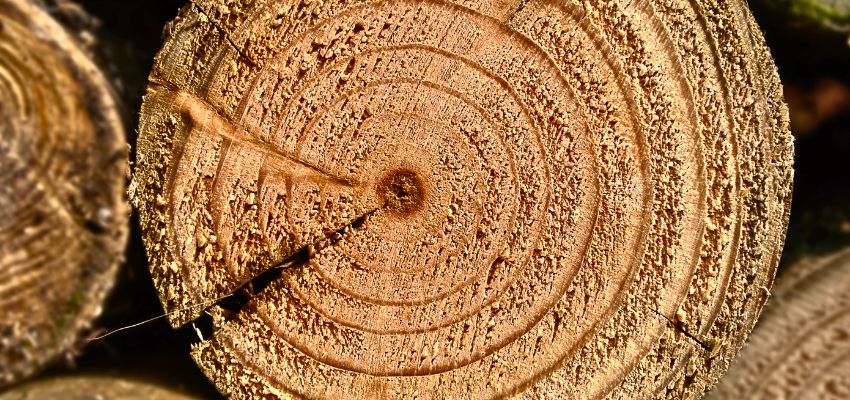
A tree’s growth rings appear as concentric circles when viewed in cross-section. The way these rings intersect a board determines its grain pattern. In quarter sawn wood, the perpendicular cut exposes the side view of the rings, producing a straight, uniform grain across the board.
Why The Cutting Method Affects Stability And Cost
Wood expands and contracts primarily along the direction of its growth rings. In quarter sawn boards, movement happens mostly in thickness. This reduces the risk of cupping or warping.
The trade-off is efficiency: quarter sawing produces narrower boards and more waste than plain sawing. The added labor and reduced yield make quarter sawn lumber more expensive—but also more reliable.
Core Benefits Of Quarter Sawn Wood
Quarter sawn wood is a smart investment, offering improved performance and longevity. This is especially valuable for precision woodworking.
Enhanced Dimensional Stability And Strength
Quarter sawn wood resists distortion from changes in temperature and humidity, making it ideal for flat, precise furniture and cabinetry.
Resistance To Warping, Cupping, And Shrinkage
All wood moves, but quarter sawn boards move less and more predictably. The vertical grain reduces expansion, helping finished pieces retain their shape.
Distinctive Grain And Aesthetic Appeal
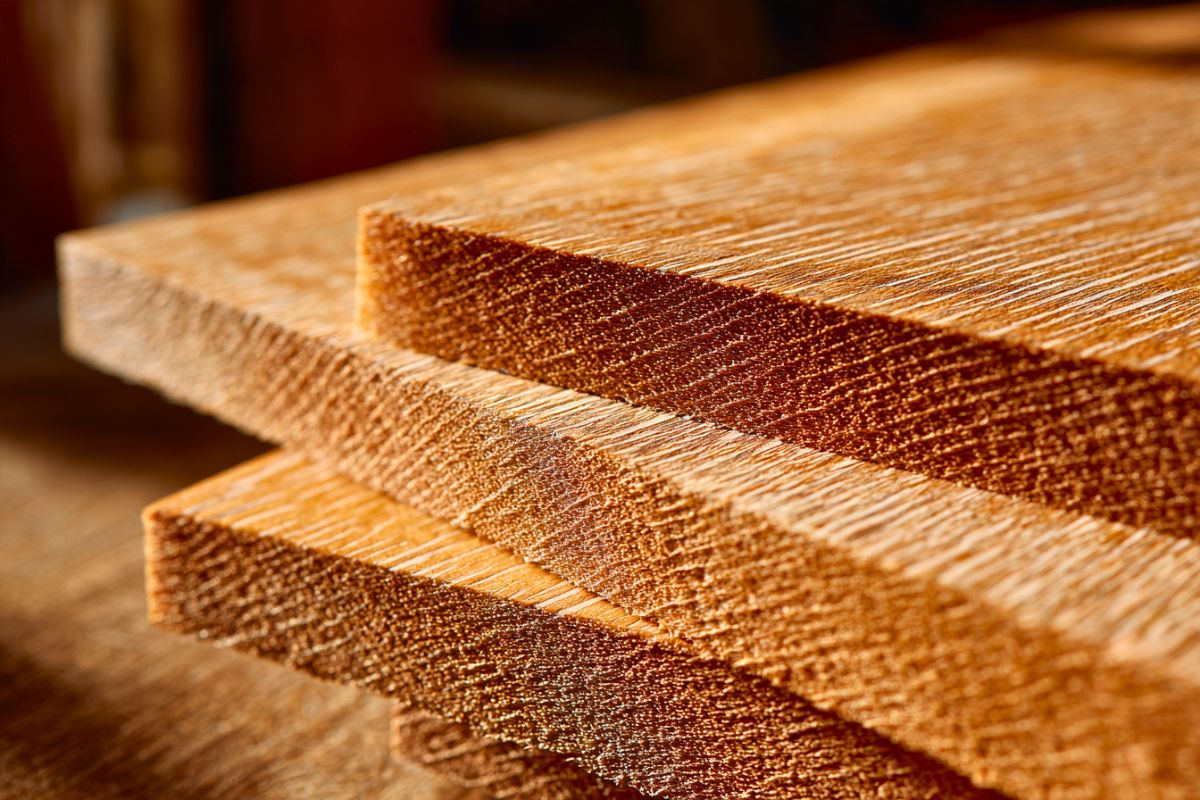
Quarter sawn wood is known for its clean, straight grain. In species like oak, this cut reveals medullary rays. These natural cellular structures appear as shimmering, ribbon-like flecks. They create a unique pattern across the surface of the wood. This “ray fleck” pattern is highly prized for its decorative character.
Common Uses For Quarter Sawn Wood
Quarter sawn wood combines durability with a refined look. This makes it a top choice for high-end projects.
- Furniture and cabinetry. Quarter sawn wood is a staple in heirloom-quality furniture and cabinetry. Cabinet doors, drawer fronts, and tabletops remain flat for decades.
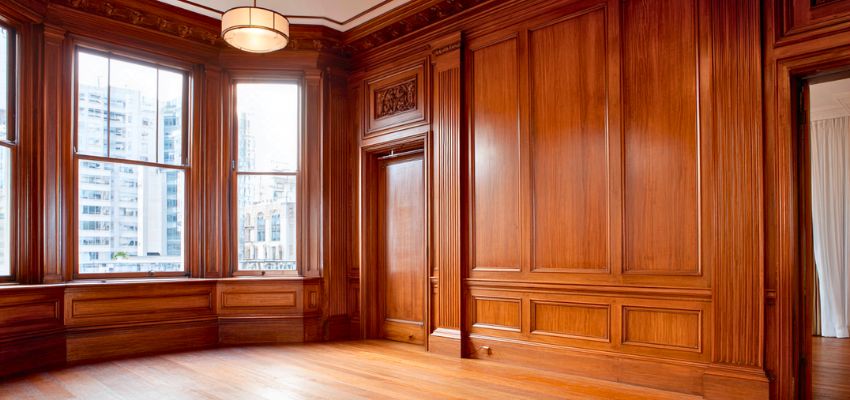
- Flooring and architectural woodwork. In flooring, quarter sawn boards wear evenly and resist movement. It excels in architectural trim, molding, and paneling for stability and consistency.
- Specialty applications. Quarter sawn wood is often selected for musical instruments. Its stability is vital to performance. It’s also favored by fine woodworkers for projects that emphasize straight grain and visual depth.
Is Quarter Sawn Wood Worth The Investment?
For many builders and designers, quarter sawn wood is ideal where longevity is a priority.
- Comparing long-term value and performance. The upfront cost is higher. However, quarter sawn wood is very durable. This reduces the risk of repairs and replacements over time. Choosing well-sourced lumber can enhance value further. Reclaimed or specialty wood from Vintage & Specialty Wood combines natural age stability with superior milling quality.
- Aesthetic benefits that elevate projects. Quarter sawn wood’s straight grain and ray flecks create a timeless, high-end look for furniture, flooring, and cabinetry.
- Choosing quarter sawn wood for custom and heirloom pieces. For custom or heirloom pieces, quarter sawn wood ensures stability and lasting beauty, making it the top choice for enduring craftsmanship.
Frequently Asked Questions
What does “quarter sawn” mean in woodworking?
It refers to a specific method of milling lumber where a log is cut into quarters, and then boards are sawn perpendicular to the tree’s growth rings. This technique produces wood with a straight grain and excellent dimensional stability.
How can I identify quarter sawn wood?
Look for a straight, parallel grain pattern running the length of the board. In species like red and white oak, you can also identify them by the presence of wavy, ribbon-like patterns known as ray flecks.
Does quarter sawn wood cost more than other sawing types?
Yes. The process is more labor-intensive and produces more waste than plain sawing, which results in a higher cost per board. It’s generally less expensive than rift sawn wood but more expensive than plain sawn wood.
Is quarter sawn wood more stable than plain sawn wood?
Yes. Its vertical grain makes it very stable. It’s much more resistant to cupping, warping, and shrinking than plain sawn wood. This is because plain sawn wood has a varied grain orientation that’s less reliable.
Why Quarter Sawn Wood Is the Foundation of Timeless Craftsmanship
Quarter sawn wood is a premium material known for its superior stability, resistance to warping, and distinct straight-grain appearance. This makes it an ideal choice for high-quality construction projects like fine furniture and durable flooring, where both performance and aesthetics are important. For those who value longevity and craftsmanship, choosing quarter sawn wood ensures the project maintains its integrity and value for years.
Ready to elevate your next project with the unmatched quality of specialty lumber? Explore the exceptional selection at Vintage & Specialty Wood to find the perfect high-quality reclaimed or specialty wood for your build.
Hire The Timber Experts For Your Next Project
Vintage & Specialty Wood should be your source of the highest quality timbers from around the world. When it comes to fabricating and installing reclaimed wood or specialty wood products in your home, we don’t cut corners. We offer many reclaimed wood and specialty wood products such as Douglas Fir, white oak, and much more. We also offer timber framing and wood flooring services as well. Contact our team today to speak to a timber expert about what Vintage & Specialty Wood can do for you.

This Blog Is Fact Checked
This content has undergone meticulous fact-checking by our team of internal experts. Gain a deeper understanding of the high editorial standards we uphold on our website here.

About The Author
Experience, exploration, and knowledge are the hallmarks of writer Rei Bayucca. Her dedication to crafting articles that both inspire and educate will leave you thinking long after you’ve finished reading.