What Is Composite Wood? Pros, Cons, And Uses Explained
Published April 22, 2026
Ever wondered what is composite wood and why it’s everywhere? You’ll find it in sleek kitchen cabinets and durable backyard decking. It’s become a staple in modern design. Traditional solid lumber is attractive, but it can be costly and needs regular maintenance to prevent warping or rot. Composite wood offers a practical, cost-effective alternative. But is it the right choice for your project?
In this article, we’ll explain what composite wood is and explore its most common types. We’ll also break down its pros and cons to help you make an informed decision.
What Is Composite Wood?
Composite wood, also called engineered or manufactured wood, is a man-made material. It’s formed by bonding wood fibers, particles, or veneers with adhesives and other chemicals.
Manufacturers combine wood scraps, sawdust, or chips with resins or glues, then apply heat and pressure to the mixture to form boards, sheets, and planks. They may also add plastics or chemical additives to improve durability, moisture resistance, and stability.
This controlled manufacturing process allows for consistent performance. It also makes efficient use of wood by-products.
Composite Wood Types You Should Know
Composite wood is a broad category that includes several widely used materials. Here are the most common types you should know:
Particleboard
Also known as chipboard, particleboard is made by compressing wood chips with resin. It’s lightweight, affordable, and commonly used in flat-pack furniture. A laminated finish often enhances its appearance.
MDF (Medium-Density Fiberboard)
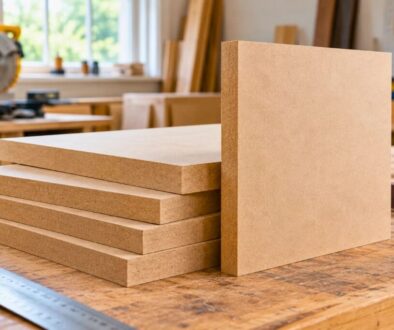
MDF takes wood chips a step further by breaking them down into individual fibers before mixing them with wax and resin. It has a smooth, uniform surface that’s easy to cut and paint, making it ideal for cabinetry and interior trim.
Plywood
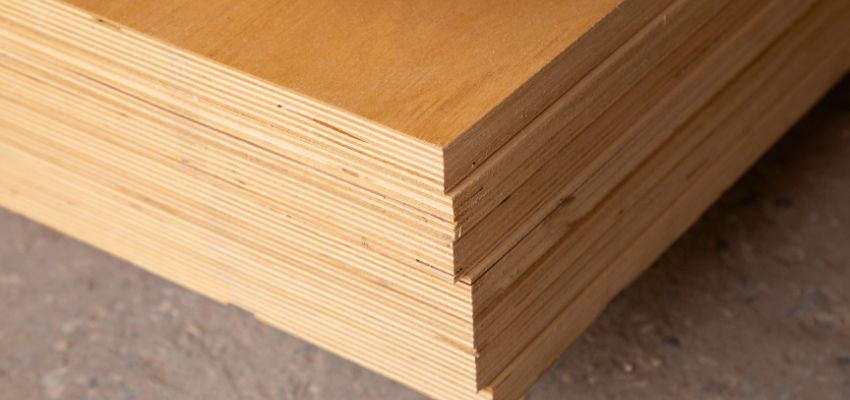
Plywood is incredibly durable due to its layered construction. It’s made by layering thin sheets of wood veneer with alternating grain directions. The cross-grain structure provides excellent strength and stability. This makes it suitable for furniture and structural applications.
Oriented Strand Board (OSB)
OSB is easily recognized by its distinct, interlaced wood strands. It’s manufactured from compressed wood strands arranged in specific orientations to enhance strength. OSB is commonly used in construction for wall sheathing, roofing, and subflooring.
Wood-Plastic Composites (WPC)
Wood-plastic composites blend wood fibers with thermoplastics. This creates a remarkably durable material. It’s moisture-resistant and commonly used for outdoor decking, fencing, and cladding.
Common Uses Of Composite Wood
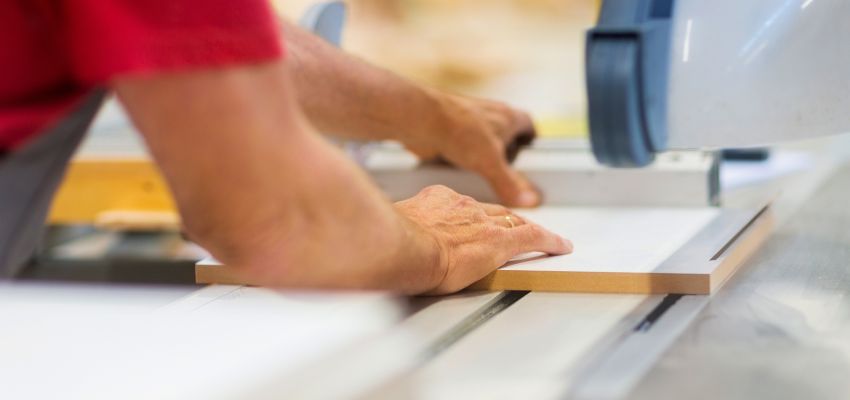
Thanks to its adaptability, composite wood is used across a wide range of applications:
- Furniture: Cabinets, shelving, wardrobes, and decks
- Interior design: Flooring, wall panels, trim, and moldings
- Outdoor applications: Decking, fencing, and exterior cladding (especially WPC)
- Construction: Structural panels, roofing support, and subflooring
Pros And Cons Of Composite Wood
Like any building material, engineered wood brings both benefits and limitations to the table.
Advantages
Composite wood offers several key advantages over traditional lumber.
- Cost-effective: Composite boards are typically much cheaper than solid hardwood.
- Sustainable: Many composite woods are made from recycled plastics and wood scraps. This reduces landfill waste.
- Uniform: Unlike natural lumber, engineered sheets lack knots or grain variations, making them easy to cut and customize.
- Durable: Many types, such as plywood and WPC, are resistant to warping, twisting, and cracking. These issues are common in traditional lumber.
Disadvantages
While composite wood has its advantages, there are several drawbacks to consider.
- Moisture-sensitive: Many types of engineered wood, like particleboard and MDF, can swell and crumble if wet.
- Shorter lifespan: They generally do not endure as long as high-quality hardwood.
- Off-gassing concerns: The glues and resins used in manufacturing can release volatile organic compounds (VOCs).
- Lower strength: Materials like particleboard have a lower load-bearing capacity and can sag under heavy weight.
Composite Wood Vs. Solid Wood: Key Differences
When selecting between composite and solid wood, weigh several crucial distinctions. Durability, cost, and maintenance remain essential considerations.
- Durability and strength: Solid wood offers superior load-bearing strength. Composite wood provides better dimensional stability in changing climates.
- Cost: Solid wood is more expensive, whereas composite wood is more budget-friendly.
- Maintenance and lifespan: Solid wood requires more upkeep but can last for generations. Composite wood needs less maintenance but usually has a shorter lifespan.
If your priority is authenticity and long-term value, solid wood is often the better choice. Companies like Vintage & Specialty Wood offer high-quality reclaimed timber that delivers both strength and distinctive character.
How To Choose The Right Composite Wood For Your Project
Your choice of material depends on whether your project is indoors or outdoors. For decks or fences, choose a moisture-resistant material. Wood-plastic composites work well here. For indoor projects like painted cabinets, use MDF.
Budget and durability matter too. For a temporary workbench, OSB is perfect. For custom kitchen cabinets, choose high-grade plywood for strength and water resistance. Always weigh your aesthetic preferences against the climate suitability of the material.
Maintenance And Care Tips For Composite Wood
Proper care extends the lifespan of composite wood. Follow these simple tips:
- Interior furniture: Dust and wipe surfaces regularly with a slightly damp cloth. Avoid soaking the wood, as this can result in swelling.
- Outdoor decking: Sweep away debris and clean the boards with mild soap and warm water. Ensure good drainage under the deck to prevent moisture damage.
- Minor scratches: For indoor laminated boards, use a specialized wax repair stick or touch-up marker to fix any damage.
Frequently Asked Questions
Is composite wood durable for long-term use?
Yes, depending on the type. WPC decking and high-grade plywood can last for decades. Particleboard furniture does not last as long.
What are the most common composite wood types?
Plywood, MDF, particleboard, OSB, and wood-plastic composites.
Is composite wood environmentally friendly?
It can be. Many types use recycled materials. They use wood waste and post-consumer plastics. This keeps these materials out of landfills.
Can composite wood be used outdoors?
Yes, but only specific types. Wood-plastic composites and marine-grade plywood are designed for outdoor exposure. MDF and particleboard will quickly fail outside.
How does composite wood compare to plywood?
Plywood is a type of composite wood. It’s generally stronger and more structurally sound than other composites like MDF or particleboard.
Should You Choose Composite Wood For Your Next Project?
So, what is composite wood, and should you use it for your next project? Composite wood is versatile and practical. It’s also cost-effective and has changed how we build. Engineered products solve many traditional lumber problems. This includes the strength of plywood and the luxury of composite decking. Choose engineered materials when you need uniformity, weather resistance, or a budget-friendly solution.
If your project requires the authenticity and strength of solid timber, composite materials may not be suitable. For unique character, Vintage & Specialty Wood offers high-quality reclaimed and specialty wood. Visit their website to find solid wood for your project.
Hire The Timber Experts For Your Next Project
Vintage & Specialty Wood should be your source of the highest quality timbers from around the world. When it comes to fabricating and installing reclaimed wood or specialty wood products in your home, we don’t cut corners. We offer many reclaimed wood and specialty wood products such as Douglas Fir, white oak, and much more. We also offer timber framing and wood flooring services as well. Contact our team today to speak to a timber expert about what Vintage & Specialty Wood can do for you.

This Blog Is Fact Checked
This content has undergone meticulous fact-checking by our team of internal experts. Gain a deeper understanding of the high editorial standards we uphold on our website here.

About The Author
Experience, exploration, and knowledge are the hallmarks of writer Rei Bayucca. Her dedication to crafting articles that both inspire and educate will leave you thinking long after you’ve finished reading.